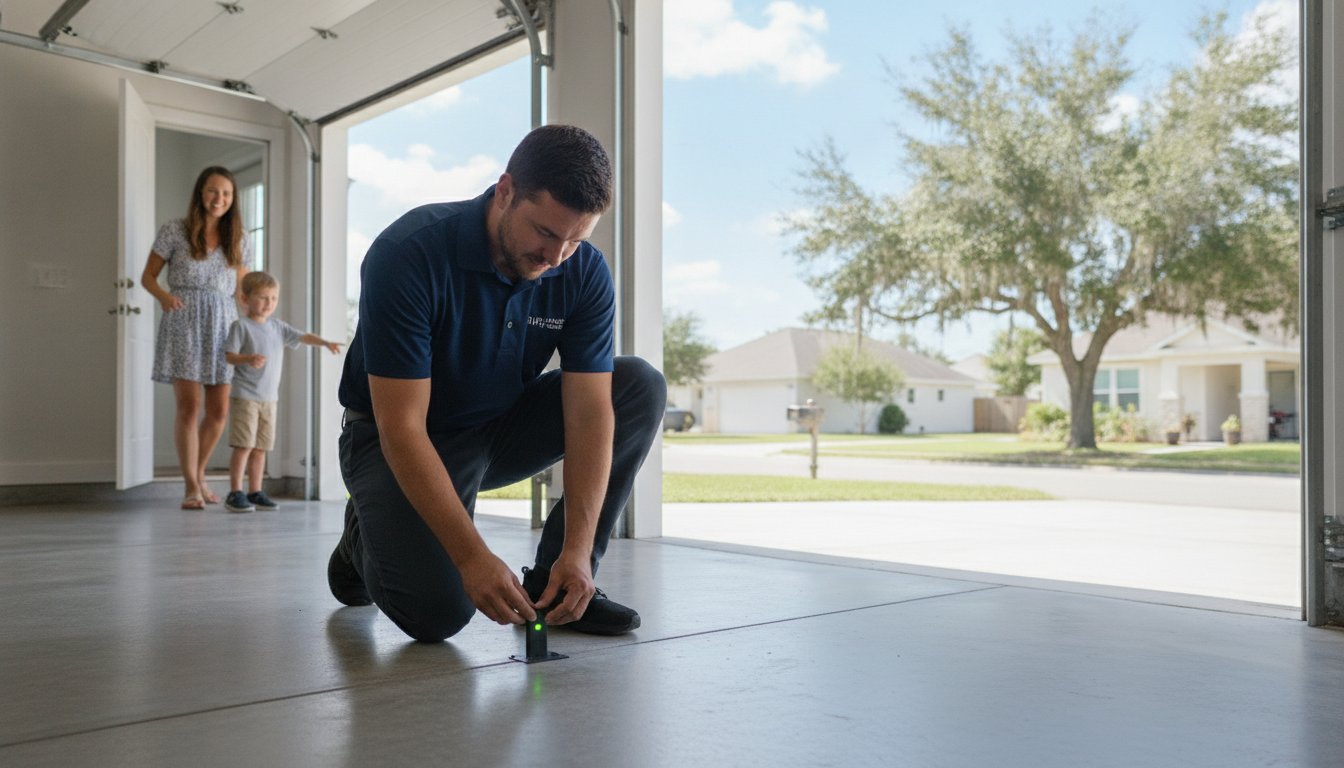
You're likely standing in your driveway, frustrated that your garage door won't stay down unless you're physically holding the wall button. It's a common scenario for Florida homeowners, where something as small as a Pensacola lizard or a bit of Gulf Coast humidity can trip up your safety system. When you need garage door safety sensor repair Pensacola residents can trust, understanding the reason behind that blinking light is the first step toward a functional home. Approximately 60 percent of sensor-related service calls are caused by simple misalignment, meaning a solution might be closer than you think.
We know that uncertainty about repair costs and the reliability of your auto-reverse feature can be unsettling for any family. This guide provides the clear, technical guidance you need to diagnose, align, and repair your sensors to restore your home's security. We'll walk through common local troubleshooting steps, from clearing humidity condensation to checking for structural shifts caused by our sandy soil. This information ensures you can move from a state of uncertainty to an informed decision, keeping your garage safe and your daily routine on track.
Key Takeaways
- Discover how your infrared "Photo Eye" system creates an invisible safety beam to protect your family and property.
- Identify how unique local factors, like salt air corrosion and high Florida humidity, specifically impact sensor performance in the Pensacola area.
- Master simple DIY alignment techniques, including the "String Test," to fix common sensor issues without specialized tools.
- Learn when to seek professional garage door safety sensor repair Pensacola residents rely on for complex issues like logic board diagnostics or wire terminal corrosion.
- Establish a monthly maintenance routine to keep lenses clear and brackets stable, ensuring your safety sensors last for their full 10 to 15 year lifespan.
Understanding Your Garage Door Safety Sensors: The First Line of Defense
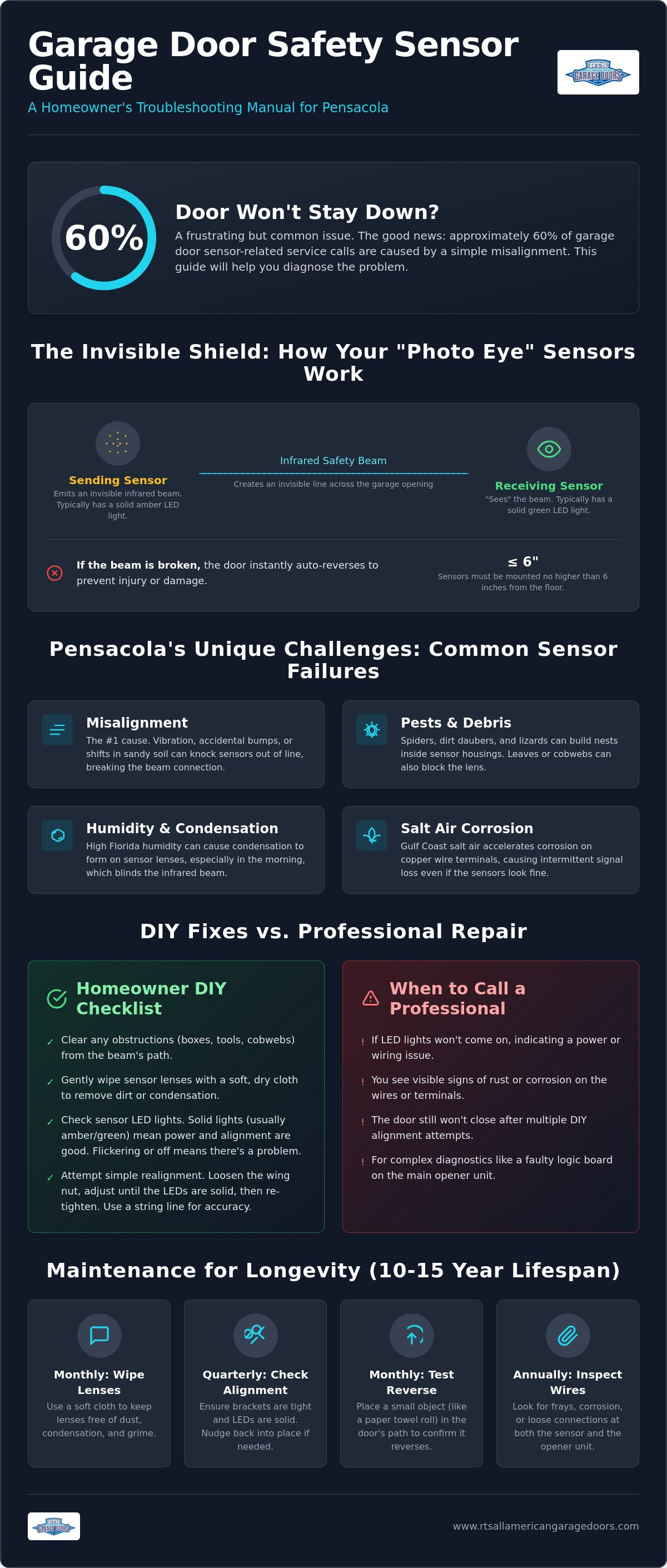
Your garage door is the heaviest moving object in your home. This makes the safety sensors your most critical defense against property damage or personal injury. These sensors utilize an infrared "Photo Eye" system to create an invisible safety beam across the bottom of your garage door opening. The Photo Eye sensor is the primary safety component of a modern garage door opener. If this beam is interrupted while the door is closing, the system triggers an immediate auto-reverse mechanism. This technology relies on two specific components: a "sending" sensor that emits the infrared light and a "receiving" sensor that captures it. When these two components lose their connection, the garage door motor will typically flash its lights several times to signal a blockage or a technical fault.
Compliance with safety standards isn't just a suggestion; it's a legal requirement. Since 1993, federal law 16 CFR Part 1211 has mandated that all residential garage door openers manufactured for use in the United States include these photoelectric sensors. Modern garage door openers must also adhere to the ANSI/CAN/UL 325:2023 safety standard. If your sensors are missing or bypassed, your system is not only dangerous but out of code. Seeking professional garage door safety sensor repair Pensacola is the only way to ensure your system meets these rigorous national standards while protecting your family.
How the Safety Reverse System Protects Your Family
The physics of the infrared beam are straightforward but life-saving. These sensors are mounted no higher than six inches above the garage floor to detect small children, pets, or low-lying obstructions like a car bumper. When an object breaks the beam, the "brain" of the opener stops the downward momentum instantly. You might find yourself frustrated when the door refuses to close, but that resistance is proof the system is working. You might be tempted to hold down the wall button to force the door shut. This is a manual override designed for emergencies, not a daily solution. Relying on this bypass ignores the underlying safety risk and puts your household in jeopardy.
Identifying Your Opener Brand and Sensor Type
Identifying your specific hardware is the first step in troubleshooting. Most Pensacola homes feature LiftMaster or Wayne Dalton systems. LiftMaster openers typically use external sensors with diagnostic LED lights. A solid green light on the receiving sensor and a solid amber light on the sending sensor indicate a healthy connection. If these lights are flickering or dark, it usually points to a power issue or a physical misalignment. Wayne Dalton systems may use integrated sensors within the tracks, but the operational logic remains the same. Regardless of the brand, if your LEDs aren't glowing steadily, it's time for a diagnostic check to determine if you need a simple cleaning or a full garage door safety sensor repair Pensacola residents can trust for long-term reliability.
Common Causes of Sensor Failure in Pensacola: From Pests to Salt Air
Pensacola homeowners face environmental challenges that don't exist in drier climates. While the federal consumer product safety standard ensures every opener has sensors, it doesn't account for Gulf Coast salt air. In areas like Pensacola Beach and Gulf Breeze, salt air accelerates corrosion on the thin copper wire terminals connecting your sensors to the motor. This oxidation creates high resistance, leading to intermittent signal loss even if the eyes look perfectly aligned. It's a subtle issue that often requires cleaning the contacts or stripping back the wire to find fresh, unoxidized metal.
High humidity is another local culprit. During our sweltering Florida summers, condensation can form on the sensor lenses, effectively blinding the infrared beam. This often happens in the early morning when the air is thickest. Additionally, our local pests see sensor brackets as prime real estate. Spiders and dirt daubers frequently build nests inside the housing, blocking the beam with webs or mud. If your door suddenly stops closing, check for these biological obstructions before assuming a mechanical failure. Over time, the vibration from daily operation can also loosen bracket screws, causing a slow shift out of alignment. If these environmental factors have compromised your system, professional garage door safety sensor repair Pensacola specialists can help restore your door's reliability.
Diagnosing LiftMaster Sensor Light Patterns
LiftMaster systems use specific light codes to communicate their status. A solid green light on the receiving eye and a solid amber on the sending eye mean the system is healthy and powered. If you see a blinking green light, the receiving eye is struggling to maintain a stable connection; it sees the beam, but it's flickering due to poor alignment or a dirty lens. If you see no lights at all, you're likely looking at a total power failure. Check for "staple-pinched" wires along the wall or ceiling, as a single punctured wire can kill the entire circuit.
The Impact of Direct Sunlight (The 'Sun Shadow' Effect)
The intense Florida sun can actually overpower the infrared beam. This "sun shadow" effect usually happens at dawn or dusk when the sun is low on the horizon and shines directly into the receiving lens. The sensor is blinded by the ambient light, making the system think an obstruction is present. You can often fix this by swapping the sending and receiving sensors to different sides of the door or by creating a small cardboard sun shield. For homes with persistent glare issues, we often recommend installing sensors with polarized lenses to filter out the interference and ensure consistent operation throughout the day.
DIY Alignment vs. Professional Sensor Repair: A Homeowner’s Guide
Many garage door issues can be resolved with a few minutes of troubleshooting before you need to schedule a service call. We believe in empowering our neighbors with the knowledge to handle simple fixes safely. Start by inspecting the sensor lenses for any debris. Use a soft, dry cloth to gently wipe away dust or spider webs. Avoid using harsh chemicals or window cleaners, as these can cloud the plastic lens over time and permanently block the infrared signal. Once the lenses are clear, check the physical stability of the brackets. Daily vibration from the door's movement can loosen the wing nuts. Hand-tighten these nuts to ensure the sensors don't wiggle during operation.
A reliable way to verify your sensors are "talking" to each other is the string test. Tie a piece of string tightly between the two sensor brackets. Use a small level to ensure the string is perfectly horizontal. If the sensors aren't centered on that level line, gently pivot the brackets until the indicator lights on the housing glow steadily. If you've cleaned the lenses and aligned the brackets but the door still won't close, you may be facing a deeper electrical issue. In these cases, attempting a complex garage door safety sensor repair Pensacola homeowners often find, can lead to more damage if you don't have the right diagnostic tools.
When to Call RTS All American for Professional Repair
There are specific scenarios where DIY efforts reach their limit. if both sensor lights remain dark after you've confirmed the garage door opener is plugged in and the circuit breaker hasn't tripped, the problem is likely a failed logic board or a severed power line. We also frequently see frayed or chewed wires in homes near wooded areas; rodents can strip the insulation, causing a short circuit. If your door closes most of the time but reverses randomly without an obstruction, it indicates an intermittent electrical fault that requires a professional multimeter to trace. These complex failures require the precision of a trained technician to ensure your safety system remains reliable.
The Risks of Improper Sensor Splicing
Homeowners often try to repair damaged wires using a simple "twist and tape" method. While this might work temporarily, the intense Florida heat and humidity will quickly degrade electrical tape, leading to corrosion and signal failure. Professional repairs utilize weather-resistant bell wire and waterproof crimp connectors to maintain a solid connection. It's also vital to remember that improper wiring or bypassing safety features can void the warranty on LiftMaster garage door openers. Our team ensures every garage door safety sensor repair Pensacola service call follows manufacturer specifications to protect your investment and your family's safety.
The RTS All American Repair Process: Reliability You Can Trust
When we arrive at your home for a garage door safety sensor repair Pensacola residents expect more than a quick fix. We perform a comprehensive diagnostic check of your entire opener system. This ensures the sensors aren't failing because of a larger mechanical issue or a failing motor. Our technicians don't just look at the photo eyes; they inspect the logic board to verify the "brain" of your opener is correctly receiving and processing the sensor signal. If the signal is weak or intermittent, we look for degraded lines. We replace those old, brittle wires with high-gauge, insulated copper wire designed to withstand the Florida elements.
Testing the logic board is a critical step that many general handymen overlook. We use specialized diagnostic tools to ensure the opener's circuit board is communicating with the sensors. If the board is faulty, even brand-new sensors won't fix the problem. When rewiring is necessary, we strip away the old, thin factory wire. We install professional-grade, high-gauge insulated copper lines. These lines are more resistant to the staple-pinches and environmental corrosion we discussed earlier. This level of technical proficiency is what defines our service and ensures your repair lasts for years, not just weeks.
Safety is our top priority. Once the repair is complete, we perform the industry-standard 2x4 safety reversal test. We place a 2x4 piece of wood flat on the garage floor in the door's path. If the door doesn't reverse immediately upon contact, the system isn't compliant with UL 325 standards. We won't leave your driveway until your system is fully calibrated and safe for your family. This test confirms your system meets federal requirements and provides immense peace of mind for parents and pet owners in our community.
Standardized Pricing: No Surprises for Pensacola Homeowners
Transparency is a core value of our business. We operate with standardized pricing structures so you never have to worry about hidden surcharges or surprise labor fees. We provide a firm, honest quote before any work starts on your sensors. If your system is showing signs of age, we often recommend a garage door tune-up service Mobile AL homeowners use to prevent sensor drift and mechanical wear. This proactive approach saves you money and stress by catching small issues before they become expensive emergencies.
Warranty and Long-Term Support
We stand behind our craftsmanship with a solid guarantee on both replacement parts and labor for every garage door safety sensor repair Pensacola service call. Our local technicians live and work in areas like Navarre and Pensacola Beach; they understand exactly how the coastal environment affects your hardware. You'll always have access to live, local support if you have follow-up questions about your system. If you're ready to secure your home and restore your door's function, schedule your sensor diagnostic today.
Maintaining Your Safety Sensors for the Long Haul
Consistent, small actions are the key to keeping your garage door system running smoothly for its full 15-year lifespan. We recommend a monthly "Quick-Check" to catch minor issues before they disrupt your daily routine. Start by wiping the sensor lenses with a soft, dry cloth to remove dust, pollen, or salt film. While you're down there, give the brackets a firm wiggle to ensure the wing nuts haven't vibrated loose from daily use. If you notice any flickering lights or loose hardware, addressing it immediately prevents a more urgent garage door safety sensor repair Pensacola service call later in the season.
External factors like landscaping and debris often cause "ghost" obstructions. Keep your grass trimmed and mulch pushed back at least six inches from the garage tracks. Weeds or tall grass can easily blow into the path of the beam, triggering the auto-reverse mechanism when you least expect it. This proactive care is a vital part of maintaining your Wayne Dalton garage door repair Pensacola efforts. Keeping the bottom of the tracks clear reduces overall strain on the opener and ensures the sensors have a clear line of sight across the threshold.
Living on the Gulf Coast requires specific preparation for hurricane season. Before high-wind events arrive, ensure your sensor brackets are tightened and the wiring is tucked away securely behind the tracks. High winds can rattle loose sensors or blow heavy debris into the housing, knocking the system out of alignment. Securing these components ensures your garage remains a reliable barrier during a storm. If your sensors aren't mounted firmly to the wall or track, they're much more likely to fail when the barometric pressure drops and the winds pick up.
Coastal Maintenance Tips for Gulf Breeze and Navarre
Salt crust buildup is a unique challenge for our neighbors in Gulf Breeze and Navarre. This thin layer of salt can act like a frosted lens, diffusing the infrared beam and causing intermittent failures. A 30-second visual check for terminal oxidation on the wire contacts can prevent a total system failure. Look for a greenish or white crust on the copper; if you see it, the wire needs to be cleaned or replaced. Ensure your bottom weather stripping is intact, as it serves as the first line of defense protecting your sensor wiring from salt-laden moisture and driving rain.
Upgrading to Modern Smart Sensors
If your current sensors are over a decade old, you might consider an upgrade to modern smart technology. MyQ-integrated sensors provide real-time alerts to your smartphone if the beam is blocked or if your door is left open. These newer designs are built with superior circuitry that better resists the sunlight interference common in our bright Florida climate. Upgrading your sensors is a cost-effective way to modernize an older system. Contact RTS All American to discuss a full system safety audit for your Pensacola home and ensure your family is protected by the latest industry standards.
Secure Your Home and Restore System Safety
We've explored how local factors like Gulf Coast humidity and salt air can disrupt your garage door sensors. While simple cleaning and alignment can resolve many issues, complex wiring faults or logic board failures require technical expertise. Ensuring your system functions correctly is about more than convenience; it's about meeting federal safety standards to protect your family and pets. For reliable results, trust a team that understands the unique environmental challenges of the Florida panhandle.
When you need garage door safety sensor repair Pensacola residents can depend on, RTS All American is here to help. As a family-owned and operated business with over 15 years of local experience, we take pride in our standardized, transparent pricing and commitment to excellence. We'll provide a clear, upfront quote and ensure your system is fully calibrated for long-term performance. Schedule your professional sensor repair with RTS All American today!
Don't let a malfunctioning sensor keep your home vulnerable. Take action today to restore the security and peace of mind you deserve.
Frequently Asked Questions
Why is my garage door sensor light blinking green?
A blinking green light on a LiftMaster receiving sensor indicates that the infrared signal is unstable. The eye "sees" the beam, but the connection is flickering due to a dirty lens, a loose bracket, or minor misalignment. Gently wipe the lens with a soft cloth and tighten the wing nut to stabilize the housing. If the blinking persists after these steps, the sensor might be failing internally or experiencing a wire short.
Can I bypass my garage door sensors if they are broken?
You cannot permanently bypass garage door sensors because they are a mandatory safety feature required by federal law since 1993. While you can temporarily override the sensors by holding the wall button down until the door fully closes, this is an emergency measure only. Bypassing these devices removes the auto-reverse protection that keeps children, pets, and vehicles safe from the downward force of the heavy door.
How much does it cost to repair garage door sensors in Pensacola?
Most homeowners pay between $85 and $200 for professional sensor repairs according to national industry data. If the sensors require a full replacement, the average cost typically falls around $160. These rates vary based on the complexity of the wiring and the specific parts needed for your system. For a garage door safety sensor repair Pensacola homeowners often find that professional calibration is more cost-effective than repeated DIY attempts.
Why does my garage door only close when I hold the button down?
Your garage door only closes when you hold the button because the opener has detected a fault in the safety sensor circuit. This is a built-in manual override designed to allow you to close the door when the sensors are blocked or broken. If you have to stand at the wall button every time you leave, your system needs a diagnostic check to find the signal break or clear a persistent obstruction.
Can sunlight really stop my garage door from closing?
Direct sunlight can definitely stop your door from closing by overpowering the infrared beam, a phenomenon known as the "Sun Shadow" effect. This usually happens when the sun is low on the horizon and shines directly into the receiving lens. You can solve this by swapping the sensor sides so the receiving eye is in the shade or by installing a small cardboard shield to block the glare from the lens.
Are garage door sensors universal across all brands?
Garage door sensors are not universal across all manufacturers. While many brands use similar technology, the voltage requirements and signal types vary between companies like LiftMaster and Wayne Dalton. Using the wrong sensor can damage the logic board or void your opener's warranty. It's always best to use manufacturer-approved parts that are compatible with your specific motor head to ensure the safety reverse system works correctly.
How do I know if my garage door sensor is misaligned or actually broken?
You can determine if a sensor is misaligned by checking the indicator lights on the housing. If the lights are flickering or dark, try pivoting the brackets until they glow steadily. If the lights are solid green and amber but the door still refuses to close, the problem is likely a lens obstruction, a failing logic board, or a deep electrical fault. Internal damage usually requires professional garage door safety sensor repair Pensacola specialists to diagnose.
What should I do if my garage door sensors have no lights at all?
If your sensors have no lights at all, you're looking at a total power failure in the safety circuit. First, ensure the garage door opener is plugged in and the outlet has power. If the motor head is working, inspect the low-voltage wiring for any breaks or staples that may have pinched the line. If the wires are intact, the issue likely resides in the opener's internal logic board or a failed sensor unit.