It is 6:00 AM, and you are trying to sneak out for work without waking the family, but your garage door sounds like a freight train crashing through the house. You might think you need to hire a professional immediately to fix noisy garage door systems, or perhaps you assume the screeching is just a natural sign of an aging door. In reality, most noise is a mechanical cry for help caused by friction, and many of the common beliefs about how to silence it are actually myths that can lead to bigger problems.
We understand the frustration of a door that feels like a safety hazard and the confusion over which lubricants are actually safe for your tracks. This guide will help you restore peace to your home by debunking five common myths that lead to unnecessary stress and expense. We will show you exactly which components are safe for a homeowner to touch, explain why your choice of spray matters, and clarify when a professional is required to ensure your door operates quietly and reliably for its full lifespan, which for most springs is between 7 and 14 years.
Key Takeaways
- Understand that excessive noise is a mechanical symptom of friction rather than an inevitable sign of an aging door.
- Learn why using standard WD-40 is a mistake and how selecting the right lubricant can help you fix noisy garage door issues safely.
- Identify how local humidity and salt air corrode steel rollers and why switching to nylon rollers provides a smoother, quieter operation.
- Recognize the dangerous "popping" sounds that signal spring failure and why these high-tension components require professional service for safety.
- Discover how upgrading to a LiftMaster belt drive or a Wayne Dalton insulated door provides a long-term, whisper-quiet solution for your home.
Is a Noisy Garage Door Normal? Debunking the 'Old Door' Myth
Many homeowners believe that a loud, rattling entrance is simply a trade-off for having an older home. This is a common misconception. Noise is almost always a symptom of mechanical friction or failing components, not an inevitable result of a door's age. When you attempt to fix noisy garage door issues, you are essentially reducing the resistance that forces your system to work harder than it should. Ignoring these sounds doesn't just annoy the neighbors; it places excessive strain on your opener and can lead to the premature failure of your springs.
A healthy system, such as a well-maintained Wayne Dalton door paired with a LiftMaster opener, should operate with a consistent, low-level hum. If you hear grinding, squeaking, banging, or intense vibrating, your system is struggling. Grinding often points to metal-on-metal contact where lubrication has dried out, while squeaking usually indicates that small moving parts are beginning to bind. Addressing these sounds early prevents a total system breakdown.
The Anatomy of a Quiet Garage Door
The modern Garage door relies on a complex network of rollers, hinges, and tracks working in perfect harmony. In a quiet system, the rollers glide smoothly within the tracks without wobbly side-to-side movement. The drive type of your opener also dictates the sound profile. For example, a LiftMaster belt drive uses a steel-reinforced rubber belt, which is significantly quieter than a traditional chain drive. However, the secret ingredient to silence is balance. If the door isn't balanced correctly, the motor must pull uneven weight. This creates a loud, labored sound during every cycle and wears down the internal gears of the opener.
Warning Signs You Shouldn't Ignore
Learning to distinguish between nuisance noise and danger noise can save you from a costly emergency. Banging or loud popping sounds are often the most serious. These typically indicate that a torsion spring is binding or that a cable is beginning to fray. Vibration noise is usually less dangerous but still problematic; it suggests that mounting hardware or tracks have vibrated loose over time. Scraping sounds are a clear signal of misalignment. If the door panels rub against the vertical tracks or the weather seal, the friction will eventually damage the finish of your Wayne Dalton panels and burn out the opener motor. Regular inspections of these components ensure your home remains both quiet and safe.
The WD-40 Trap: Why Your Choice of Lubricant Matters
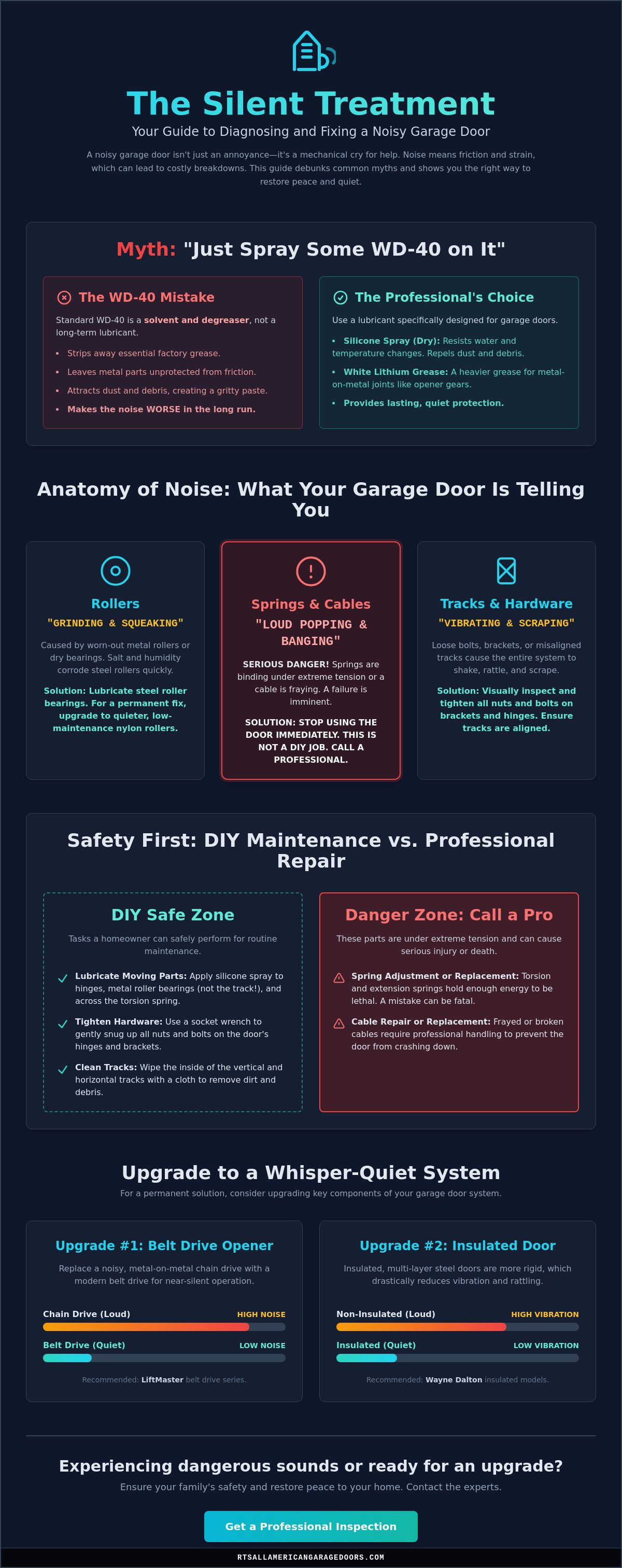
Reach for the blue and yellow can at your own risk. One of the most persistent myths in home maintenance is that standard WD-40 is the best tool to fix noisy garage door systems. In reality, standard WD-40 is a solvent and degreaser; it is designed to clean parts and break down rust, not provide long-term lubrication. When you spray it on your garage door hinges or rollers, it actually strips away the heavy duty factory grease that protects your hardware. This leaves the metal vulnerable to friction and corrosion, often making the noise worse within a few weeks.
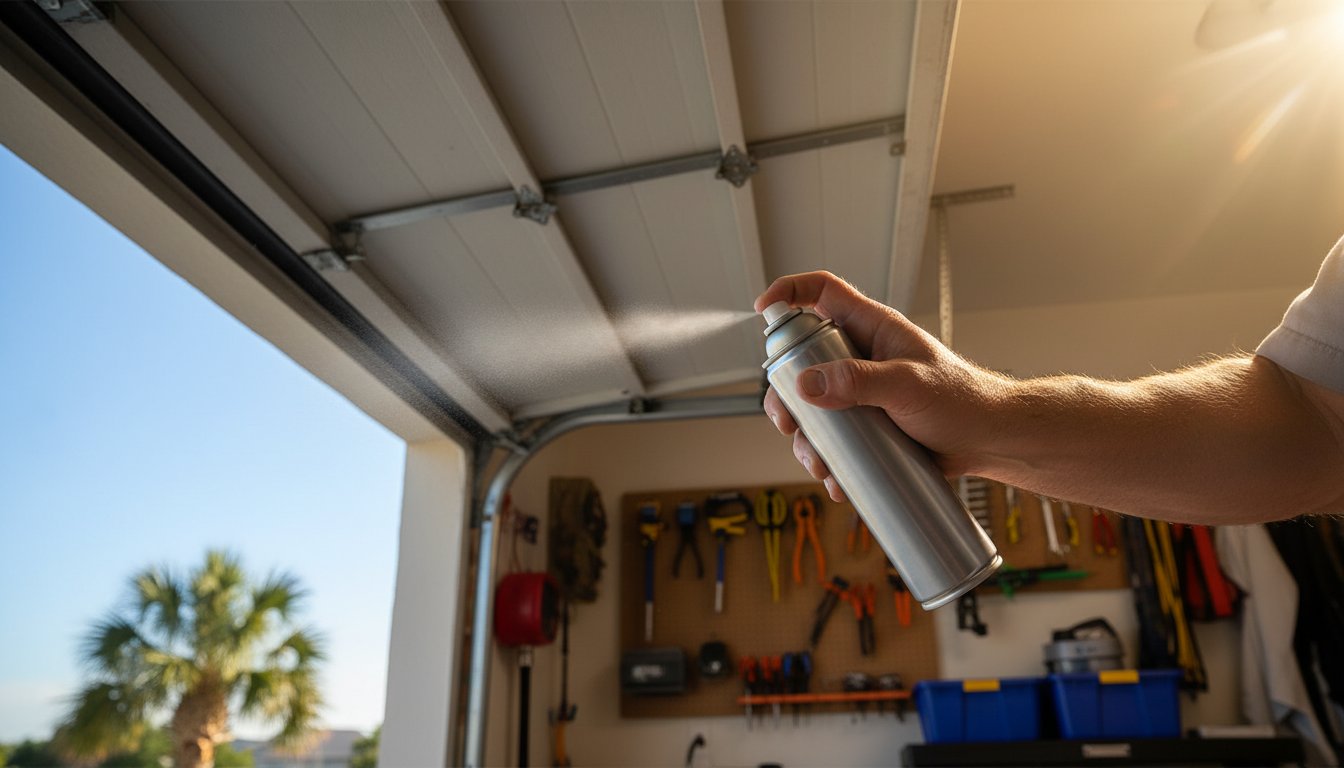
Selecting the right product depends on the specific needs of your mechanical parts. High-friction areas require a dedicated silicone spray or a white lithium-based lubricant. Silicone is preferred for its water-resistant properties and its ability to withstand extreme temperature shifts. For homeowners along the Gulf Coast, the humidity and salt air are major factors. A "wet" lubricant will attract sand, salt, and dust, creating a gritty paste that acts like sandpaper on your moving parts. Using a high-quality "dry" silicone spray ensures that your door stays quiet without becoming a magnet for debris.
The Professional's Lubrication Checklist
Effective maintenance starts with knowing your hardware. If your door has metal rollers, a small drop of oil on the central ball bearings is necessary. However, you should never lubricate nylon rollers; these are designed with sealed bearings that don't require additional oil. Adding spray to the nylon material can actually cause the plastic to degrade over time. When treating the torsion spring, use a light coating across the entire coil to prevent the "popping" sound caused by individual coils binding against each other. The International Door Association emphasizes that proper lubrication is a primary safety step, but warns that "less is more." Over-lubricating leads to messy drips on your car and garage floor.
Where to Spray (and Where to Stay Away)
Knowing where not to spray is just as important as knowing where to apply grease. You should never lubricate the actual garage door tracks. Lubricant in the tracks causes the rollers to slide rather than roll, which can lead to the door slipping or the opener motor burning out. Instead, clean the tracks with a damp cloth to remove any buildup. Focus your efforts on the pivot points: the hinges where the panels bend, the roller stems, and the bearing plates located at either end of the spring bar. If your door still screeches after a thorough cleaning and proper lubrication, it might be time to schedule a professional garage door tune-up to address underlying alignment issues.
Worn Rollers and Loose Hardware: Small Parts, Big Noise
Think of your garage door rollers as the tires on your car. If the tires are bald or out of round, you will feel and hear every vibration from the road. The same principle applies to your door. When rollers wear down, the smooth gliding motion turns into a jerky, loud struggle. In our local climate, particularly near Pensacola Beach and Baldwin County, AL, the environmental factors are unforgiving. The high humidity and salt air accelerate the corrosion of standard steel rollers. Rust builds up inside the unsealed bearings, causing them to seize and drag along the track rather than rolling. This creates a high-pitched screeching that no amount of lubricant can fully resolve.
Beyond the rollers, your door is held together by dozens of nuts, bolts, and hinges. Over time, the constant vibration of the door opening and closing causes these fasteners to back out. This creates "slop" in the hinges, leading to a distracting rattling sound every time the system moves. One of the most effective ways to fix noisy garage door problems is simply to perform a "wrench test." By ensuring every bolt is snug, you can often eliminate up to 50% of the operational chatter. However, be careful not to over-tighten, as this can strip the screw holes in thin steel panels or bind the hinges.
Steel vs. Nylon Rollers: The Silence Showdown
If you are looking for a quieter home, the material of your rollers is the most important factor. Steel rollers are durable and often come standard on basic models, but they are inherently noisy and prone to rust in Baldwin County humidity. Nylon rollers with internal ball bearings are the gold standard for whisper-quiet operation. They absorb vibration rather than amplifying it. To inspect your rollers, look for flat spots on the wheels or bearings that feel gritty when you spin them by hand. If the roller wiggles excessively in its bracket, it is time for a How to Fix a Noisy Garage Door replacement to restore a smooth ride.
Track Realignment and Hardware Tightening
A rhythmic "thumping" or "clunking" sound usually points toward a track issue. If a track is slightly bent or out of alignment, the rollers will hit that spot with force during every cycle. You can check for this by watching the rollers as the door moves; they should stay centered in the track without bouncing. Additionally, check your bottom weather seal. A worn or brittle seal doesn't just let in pests; it causes the door to "slap" the concrete floor with a loud bang. Replacing a flattened seal with a fresh Wayne Dalton weather seal provides a soft landing and keeps your garage quieter and better insulated against the elements.
When DIY Becomes Dangerous: Noise Related to Springs and Cables
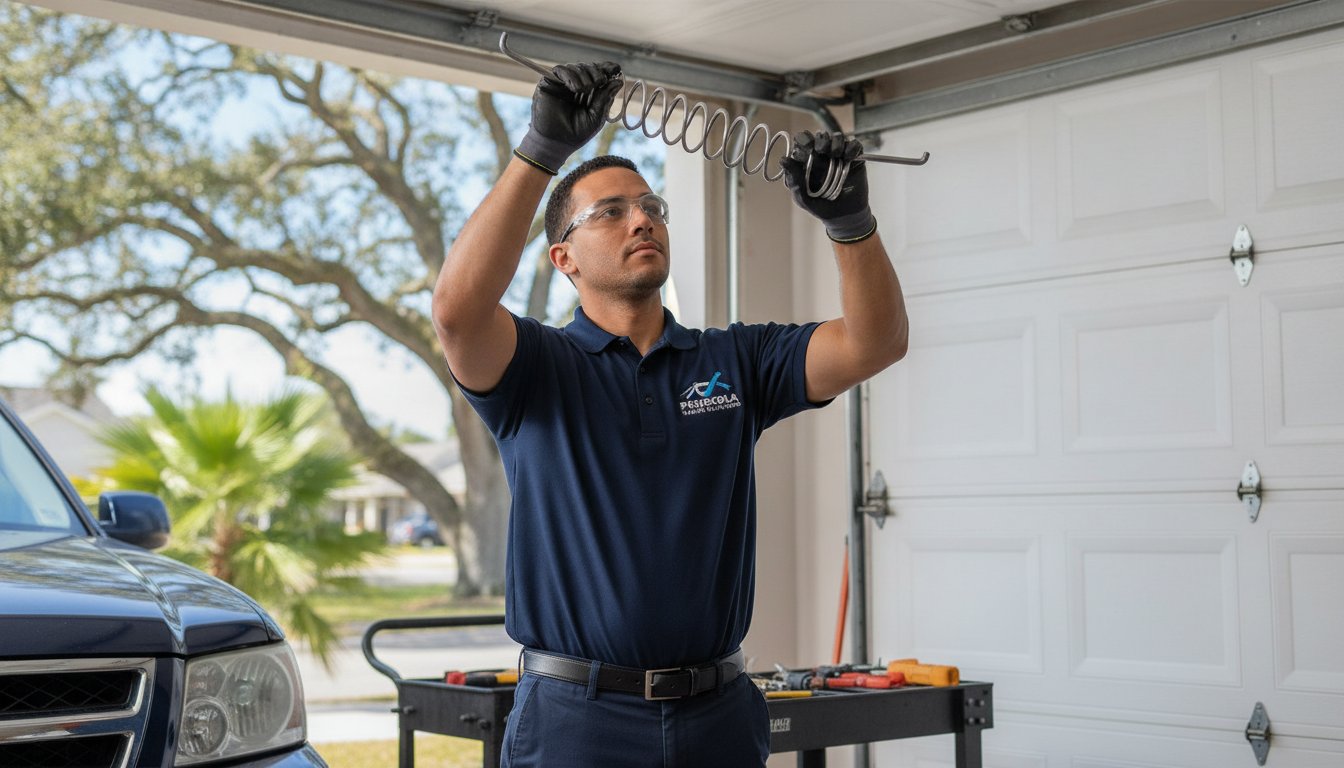
While cleaning tracks and tightening hinge bolts are safe weekend tasks, attempting to fix noisy garage door components like springs and cables is a different story. These parts are under extreme tension. A common myth suggests that you can simply "tighten" a squeaking or popping spring to silence it. In reality, a loud popping sound often indicates that the individual coils of a torsion spring are binding against one another or that the steel has reached its elastic limit. Most springs are rated for a lifespan of 10,000 to 20,000 cycles, which is about 7 to 14 years for the average home. If yours is screaming, it's likely reaching its end of life.
Improper tension also manifests as a "slapping" sound. This happens when the lifting cables lose their grip on the drums and strike the door panels or tracks during operation. This isn't just a noise issue; it's a major safety risk. If a cable snaps or a spring fails while you are nearby, the force released can cause severe injury or property damage. These high-tension components are the specific parts of the door that you should never attempt to disassemble without specialized tools and training.
Identifying Torsion vs. Extension Spring Issues
Determining if your system needs a simple adjustment or a full replacement requires a careful eye. Torsion springs sit on a bar above the door, while extension springs run along the upper tracks. In our coastal environment, salt air causes "spring fatigue" much faster than in inland areas. Micro-corrosion creates tiny cracks in the steel, leading to sudden breaks. Professional lubrication is the best way to prevent this, which is why it's a core part of our garage door maintenance service. We use specialized coatings that penetrate the coils to reduce friction without attracting the grit that plagues Gulf Coast homes.
Cable and Pulley Maintenance
Frayed cables are the silent killer of garage door safety. If you see even one strand of wire sticking out, the cable's integrity is compromised. On extension spring systems, a high-pitched screech usually points to worn pulleys. These small wheels have internal bearings that eventually seize. To test your system's health, use the "Hand-Check" rule. Pull the emergency release cord and try to lift the door manually. A well-balanced door should feel light enough to lift with one hand and stay in place halfway up. If it feels heavy or crashes down, the noise is a warning that your springs are no longer doing their job. For your safety, always contact a professional for torsion spring replacement when these signs appear.
Beyond Maintenance: Upgrading to a Whisper-Quiet System
If you've lubricated the hinges and tightened every bolt but still hear a racket, the problem might be the fundamental design of your hardware. Some older systems are simply built with loud, outdated technology that maintenance can't fully silence. To truly fix noisy garage door issues in homes where bedrooms are located near the garage, an upgrade to modern, high-performance components is often the most effective long-term solution. A quiet door does more than just preserve your morning peace; it increases your home's curb appeal and perceived value. Potential buyers often equate a silent, smooth-operating system with a home that has been meticulously maintained.
The geometry of the installation also plays a vital role in how much noise your system generates. Professional installation ensures that the tracks are perfectly plumb and the opener is mounted with the correct vibration-dampening hardware. When the system's alignment is off by even a fraction of an inch, it creates unnecessary friction that translates into audible groans and vibrations. Choosing the right combination of door and opener technology provides a foundation for years of silent operation.
Belt Drive vs. Chain Drive Openers
The opener is the primary source of sound in many residential systems. Traditional chain drive openers are reliable and strong, but they rely on metal-on-metal contact that naturally creates a significant amount of noise and vibration. If your garage is attached to your living space, a LiftMaster belt drive is the superior choice. These openers use a steel-reinforced rubber belt to move the door, which eliminates the clanking and rattling of a metal chain. Additionally, modern openers often feature DC motors with "soft start/stop" technology. Instead of the door jerking into motion with a loud bang, the motor gradually ramps up speed and slows down before reaching the floor, which significantly reduces the structural vibration felt throughout the house.
The Sound-Dampening Benefits of Insulated Doors
The door panels themselves can act like a giant drum, amplifying every small mechanical sound. This "drum effect" is most common in uninsulated, single-layer steel doors. Upgrading to Wayne Dalton classic steel doors with polyurethane insulation changes the sound profile of your entire garage. The dense insulation core doesn't just provide energy efficiency; it acts as a sound barrier that absorbs mechanical noise rather than reflecting it. This makes the door feel more solid and prevents the rattling sounds often heard during heavy winds. The final step to a silent home is scheduling a professional tune-up to sync your new hardware and ensure every component is performing at its peak efficiency.
Restore Peace and Safety to Your Home
A screeching garage door is more than a minor nuisance; it's a clear signal that your system is fighting excessive friction and mechanical wear. By debunking common myths about lubrication and identifying the difference between simple loose hardware and dangerous spring fatigue, you can take the necessary steps to fix noisy garage door problems before they result in a total breakdown. While tightening a few bolts is a productive DIY task, remember that high-tension components require specialized expertise to handle safely.
Our local Pensacola and Mobile technicians are here to help you navigate these mechanical challenges with family-owned integrity and transparent, standardized pricing. Whether you need expert torsion spring replacement or a whisper-quiet LiftMaster belt drive upgrade, RTS All American Garage Doors prioritizes your safety and peace of mind above all else. Don't let a grinding door disrupt your family's morning routine or compromise your security any longer.
Schedule your professional garage door tune-up with RTS All American Garage Doors today! We look forward to restoring your door to its peak performance and ensuring your home remains the quiet sanctuary you deserve.
Frequently Asked Questions
Can I use WD-40 to fix my noisy garage door?
You should avoid using standard WD-40 because it is a degreaser and solvent rather than a long-term lubricant. It actually strips away the essential factory grease from your hardware, which can lead to increased friction and noise over time. To effectively fix noisy garage door systems, use a dedicated silicone spray or white lithium grease. These products are designed to stay on the metal surfaces and provide a lasting protective barrier.
How often should I lubricate my garage door to keep it quiet?
Lubricating your garage door every six months is the best way to ensure a quiet and smooth operation. Regular applications prevent the hardware from seizing and reduce the workload on your LiftMaster opener motor. In our humid coastal climate, salt air can cause grease to break down faster. A semi-annual maintenance schedule helps you catch small issues before they turn into expensive repairs or complete system failures.
Why does my garage door make a loud banging noise when it opens?
A loud banging sound is usually a warning that your torsion spring is binding or that your cables are losing proper tension. This noise occurs when the spring coils catch on one another and then suddenly release with a violent pop. It is a signal that the spring is reaching the end of its 10,000 to 20,000 cycle lifespan. You should stop using the door and have a professional inspect the balance immediately to avoid a dangerous break.
Are nylon rollers really better than steel rollers for noise?
Nylon rollers with internal ball bearings are significantly quieter than standard steel rollers. Steel rollers are often unsealed, which allows dust and salt air to corrode the bearings and create a loud grinding sound. Nylon wheels absorb vibrations rather than amplifying them through the metal tracks. This makes them the ideal choice for homeowners who have bedrooms located directly above or adjacent to the garage.
Is it safe for me to tighten the springs on my garage door myself?
It is never safe to adjust or tighten garage door springs yourself. These components are under extreme torque and can cause severe injury or death if they snap or if your tools slip during the process. While you can safely tighten hinge bolts or clean your tracks with a damp cloth, spring work requires specialized training. Always rely on a professional to handle high-tension parts like torsion springs and lifting cables.
How much does a professional garage door tune-up cost in Pensacola?
Professional tune-up costs in the Pensacola area generally align with national averages for preventative maintenance and safety inspections. These services typically include a full diagnostic check, hardware tightening, and professional-grade lubrication of all moving parts. Homeowners should look for providers who offer standardized pricing and transparent labor rates. Investing in a tune-up can prevent the need for much more expensive part replacements later on.
What is the quietest type of garage door opener available?
The belt drive opener is the quietest technology currently available for residential use. Unlike chain drives that rely on metal-on-metal contact, belt drives use a steel-reinforced rubber belt to move the door panels. When paired with a DC motor, these systems provide a "soft start and stop" feature. This prevents the door from jerking or banging against the floor, which eliminates the structural vibrations that often echo through a home.
Why is my garage door noisier in the winter than in the summer?
Cold temperatures cause metal components to contract and traditional lubricants to thicken or become "gummy." When the grease loses its viscosity, it cannot properly coat the bearings and pivot points, leading to increased friction and noise. Additionally, the contraction of the metal tracks can lead to slight misalignments. Using a high-quality silicone-based lubricant helps mitigate these issues because it remains effective across a much wider range of temperatures than petroleum-based products.