Did you know that when a standard garage door fails during a storm, the resulting internal pressure can create up to 140 pounds per square foot of uplift force on your roof? This single opening is often the most vulnerable point in your home's defense against the Gulf Coast's volatile weather. You might feel overwhelmed by technical jargon like "wind load" versus "impact ratings," or perhaps you're skeptical about hidden fees often tucked into complex quotes. We understand that you just want a straight answer and a door that won't buckle when the wind picks up.
Proper hurricane proof garage door installation is about more than just a heavy piece of steel; it's a complete system of tracks, springs, and hardware designed to keep your roof attached and your family safe. This guide explains how to choose a system that meets the latest 8th Edition Florida Building Code standards while preparing for the upcoming 9th Edition regulations scheduled for late 2026. We'll walk you through selecting the right Wayne Dalton reinforced panels, the importance of high-cycle torsion springs, and how a professional setup can lead to lower insurance premiums and genuine peace of mind.
Key Takeaways
- Differentiate between wind load pressure and impact ratings to ensure your home meets specific Gulf Coast building codes.
- Compare steel and aluminum options to find the best balance of structural strength and corrosion resistance for your coastal property.
- Learn why a professional hurricane proof garage door installation requires specialized mounting points and a thorough inspection of your door jambs and headers.
- Identify the signs of "white rust" on galvanized hardware and how to protect your system from salt air in areas like Pensacola Beach and Gulf Breeze.
- Discover how standardized pricing models eliminate hidden fees while ensuring your installation follows a disciplined, transparent process.
Understanding Wind Load and Impact Ratings for the Gulf Coast
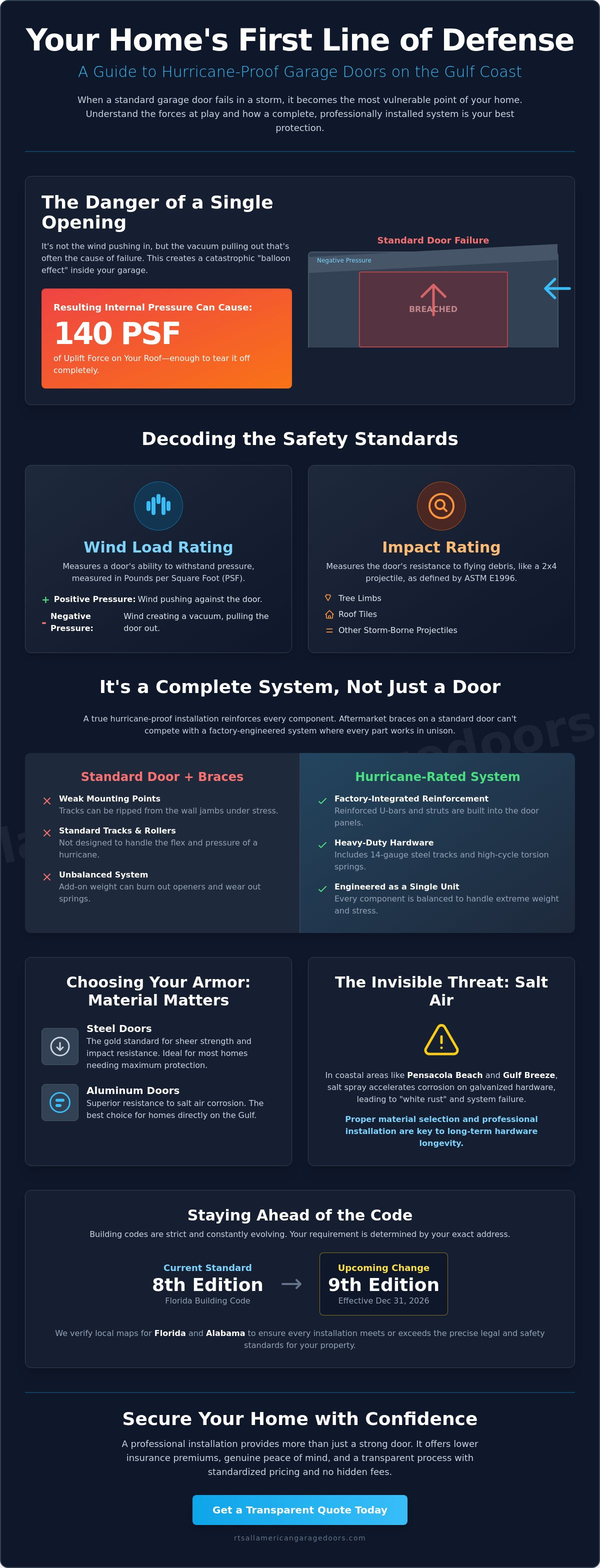
When you live along the Gulf Coast, your garage door is more than just a convenience; it's a structural shield. Most homeowners use the terms "wind load" and "impact rated" interchangeably, but they refer to two very different safety standards. Wind load is the measure of a door's ability to withstand both positive pressure (wind pushing against the door) and negative pressure (wind pulling the door away from the house). A door's rating tells you how many pounds per square foot (PSF) of pressure it can handle before the system fails. On the other hand, an impact rating measures the door's resistance to flying debris, such as tree limbs or roof tiles. A true hurricane proof garage door installation ensures that the entire system, from the tracks to the rollers, can survive both the crushing weight of the wind and the high-speed impact of storm-borne projectiles.
You might wonder why a "hurricane-ready" door is different from a standard door with a few extra braces. Standard doors often rely on vertical or horizontal reinforcement that might stop the panels from bending, but they don't always address the integrity of the tracks or the mounting points. A hurricane-rated system is engineered as a single unit. This involves heavier-duty garage door construction, including reinforced struts, 14-gauge steel tracks, and high-cycle springs that keep the door locked in place even when the house begins to shift under extreme stress.
Florida vs. Alabama Building Codes
In Pensacola, we currently follow the 8th Edition of the Florida Building Code, though the 9th Edition is scheduled to take effect on December 31, 2026. These codes are among the strictest in the nation, especially for High-Velocity Hurricane Zones. Across the state line in Baldwin County, Alabama, requirements vary based on your specific wind-borne debris region. You can't rely on a "one size fits all" approach; your specific PSF requirement is determined by your street address and proximity to the open water. We always verify these local maps to ensure your hurricane proof garage door installation meets the exact legal and safety standards for your specific lot.
The Science of Negative Pressure
It's a common misconception that the wind "blows the door down." In reality, the vacuum created on the downwind side of your home often pulls the door out of its tracks. This failure triggers a "balloon effect" where air rushes into the garage, pushing upward on the ceiling while the storm sucks the roof from the outside. This combined force can create an uplift of 70 to 140 pounds per square foot, which is often enough to lift the roof right off the house. The ASTM E1996 standard defines the specific performance requirements for these exterior doors to resist such wind-borne debris and pressure changes during a hurricane event.
Choosing the Right Hurricane-Rated Garage Door for 2026
Selecting the right material is your first major decision. Steel remains the gold standard for sheer strength and impact resistance. However, for homes sitting directly on the Gulf, aluminum offers superior resistance to salt air corrosion. While aluminum is naturally lighter, modern engineering allows it to meet high wind load requirements through reinforced internal structures. A proper hurricane proof garage door installation requires a door that won't just stay in the track, but one that can take a direct hit from a flying 2x4 without breaching the building envelope.
Factory-integrated designs are always superior to add-on reinforcement kits. When a door is built at the factory to meet specific wind loads, every component is balanced to handle the extra weight. This ensures your opener doesn't burn out prematurely and your springs stay under the correct tension. If you want a system that balances local code compliance with long-term reliability, it's best to look at models designed specifically for coastal environments.
Wayne Dalton Wind Load Options
Wayne Dalton provides some of the most reliable factory-integrated solutions on the market. Unlike aftermarket kits that can be clunky, Wayne Dalton classic steel doors are engineered from the ground up to handle extreme pressure. These models often feature reinforced U-bars and heavy-duty 14-gauge steel hinges that prevent the door from folding under negative pressure. We often recommend these for their balance of aesthetics and brute strength. For maximum debris protection, some modern models even offer specialized Fabric-Shield systems that act as a secondary barrier.
Insulation and Energy Efficiency
Insulation does more than just lower your power bill. In a hurricane-rated door, polyurethane insulation is injected between the steel skins, where it expands and hardens. This creates a solid "sandwich" core that significantly increases the door's rigidity. We've seen how insulated garage doors in Mobile, AL provide a quieter operation and better structural integrity than non-insulated single-layer doors. This extra density also dampens the rattling and vibration that occurs during high-wind events, which can prevent hardware from vibrating loose over time.
Finally, consider the trade-off between solid panels and impact-rated windows. Solid panels are the most cost-effective way to achieve high PSF ratings. Impact-rated windows are beautiful and provide natural light, but they come at a higher price point because the glass must meet the same missile-impact standards as the door itself. If you're unsure which configuration fits your budget and safety needs, you can view our full range of hurricane-rated options to see what works best for your home's architecture and your specific hurricane proof garage door installation requirements.
The Hurricane Proof Garage Door Installation Process
A successful installation begins long before the first panel is lifted into place. We start with a rigorous structural inspection of your garage door jambs and the header. If the wood is soft or the framing isn't properly anchored to the home's foundation, even the strongest door will fail during a storm. We ensure the mounting surface is solid enough to transfer the massive wind loads from the door into the home's structure. This preparation phase is the most overlooked part of a hurricane proof garage door installation, but it's what keeps the entire system from pulling away when pressure builds.
Once the opening is verified, we focus on the hardware. Every component in a hurricane-rated system is beefier than standard residential gear. We don't just "hang" the door; we integrate it into the building envelope. This involves a disciplined approach to fastener placement and track alignment that leaves zero room for error. After the physical installation, we perform a series of checks to ensure the weather seals are airtight. A tight seal prevents wind from sneaking under the door, which is often the first step toward a catastrophic roof failure.
Reinforced Track and Hardware Setup
Standard garage doors typically use 17-gauge steel tracks, but a hurricane-rated system requires 14-gauge steel. This thicker material provides the rigidity needed to keep the rollers seated during high-wind events. We also install specialized jamb brackets at much closer intervals than a standard door requires. These brackets act as the primary anchors between the track and your home. Precise track realignment is critical here; if the tracks aren't perfectly vertical and spaced, the door panels won't lock into the "storm-ready" position, rendering the wind-load reinforcements useless.
Spring and Opener Compatibility
The extra steel struts and insulation in a hurricane door add significant weight. You cannot use standard springs for these systems. We install high-cycle torsion springs that are specifically calibrated to the door's exact weight to ensure smooth, balanced operation. Never attempt a DIY spring replacement on these heavy doors. The high tension required is dangerous for anyone without professional tools and training. To maintain safety during a storm, we pair these systems with LiftMaster openers that include a battery backup. This ensures you can still operate the door when the power grid fails, allowing you to secure your vehicles or exit the home safely.
Salt Air Corrosion and Hardware Longevity
If you live in Pensacola Beach, Navarre, or Gulf Breeze, you know that salt air is a constant presence. While most homeowners focus on wind speed, the chemical reality of living near the Gulf is that salt spray can compromise your door's structural integrity long before a storm ever hits. Salt air accelerates corrosion, which can weaken the very bolts and brackets holding your door in place. For a high-quality hurricane proof garage door installation, you must account for this corrosive environment to ensure the system remains "storm-ready" for years, not just months.
Many homeowners first notice a chalky, white powder on their tracks and hinges. This is known as "white rust," a phenomenon where the protective zinc coating on galvanized steel begins to oxidize and sacrifice itself. Once this layer is gone, the underlying steel is vulnerable to red rust, which eats through the metal and leads to hardware failure. In coastal zones, standard galvanized hardware often isn't enough. We recommend powder-coated hardware or specialized coatings that provide a much thicker barrier against the salt air. This prevents the hinges from seizing and ensures the door can actually move when you need to close it ahead of a hurricane.
Best Materials for Coastal Environments
For homes sitting directly on the water, material choice is critical. Fiberglass and vinyl-coated steel are excellent options because they don't rust or rot like traditional materials. Beyond the door panels, proper garage door weather seal installation is your first line of defense. A high-quality seal keeps salt-heavy mist out of your garage, protecting your tools, vehicles, and the interior hardware of the door system. If your home is within one mile of the Gulf, we strongly advise using stainless steel rollers. They resist the pitting and sticking that common steel rollers suffer from in high-salinity air.
Annual Storm-Ready Maintenance
Every March, before the hurricane season begins, you should perform a thorough hardware inspection. Check all fasteners for "track creep," which happens when vibration and thermal expansion cause the mounting bolts to loosen over time. Use a high-quality silicone-based lubricant on all moving parts; avoid WD-40, as it can actually attract salt and grit. Finally, test the door's balance by disconnecting the opener and lifting the door halfway. If it doesn't stay in place, your springs are losing tension. A balanced door is essential because an overstrained motor might fail exactly when you're trying to secure your home. If you notice rust or balance issues during your inspection, contact us for a professional hardware evaluation to ensure your system is ready for the next big blow.
Securing Your Home with RTS All American Garage Doors
Choosing the right hardware is only half the battle. The other half is choosing a team that understands the specific demands of the Gulf Coast. RTS All American Garage Doors has spent over 15 years serving the Mobile and Pensacola markets. We've seen firsthand how a proper hurricane proof garage door installation can be the difference between a minor repair and a total home loss. We don't use faceless call centers or subcontract our labor to unvetted crews. When you work with us, you're working with local technicians who take pride in their craft and their community's safety.
Our approach is built on a foundation of integrity. We utilize a standardized pricing model that eliminates the ambiguity often found in home repair quotes. You won't find hidden fees for hurricane-rated upgrades or unexpected surcharges after the job begins. We believe in a "verbal handshake" backed by technical excellence, ensuring you know exactly what you're paying for before the first bolt is turned. This transparency is why thousands of homeowners across the panhandle trust us to secure their largest home opening.
The RTS Standard: Transparency and Integrity
We take the stress out of the technical requirements. Our team handles the entire permitting process for new installations, ensuring your door fully complies with the 8th Edition Florida Building Code or Baldwin County's wind-borne debris standards. We're also here when the unexpected happens. If a storm causes damage, we offer 24/7 availability for emergency repairs to secure your home immediately. Our commitment to honest labor rates and punctuality means you get the service you need without the runaround.
Next Steps for Your Storm Protection
Getting started is straightforward. You can begin by measuring the width and height of your garage opening to help us provide an initial quote. Once you've selected a style, we'll perform a professional wind-load assessment to confirm the PSF requirements for your specific lot. Keep in mind that custom Wayne Dalton wind-load doors are built to order, so it's best to start the process well before the peak of the season. Don't wait for a tropical system to appear on the radar to think about your home's structural integrity. Protect your home today with RTS All American and gain the peace of mind that comes with a job done right.
Secure Your Home Before the Next Storm Hits
You now have the knowledge to distinguish between simple reinforcement and a true hurricane-rated system. A proper hurricane proof garage door installation is a technical task that requires precise track alignment, heavy-duty 14-gauge steel, and springs calibrated for extra weight. By addressing salt air corrosion early and following the latest Florida and Alabama building codes, you ensure your home remains a fortress against the elements. These steps don't just protect your vehicles; they preserve the structural integrity of your entire roof and living space.
RTS All American brings over 15 years of Gulf Coast experience to every project. We rely on our own local technicians rather than faceless call centers to maintain our high standards of craftsmanship. Our standardized honest pricing model means you'll never face hidden fees or vague estimates. We're proud to help our neighbors protect their property with integrity and transparency. We treat every residential system with the care it deserves, ensuring your installation meets every safety standard required for our coastal environment.
Get Your Free Wind-Load Assessment from RTS All American today. Take control of your home's safety now so you can rest easy when the clouds begin to gather. Your peace of mind is worth the investment.
Frequently Asked Questions
Do I really need a hurricane-rated garage door in Pensacola?
Yes, a hurricane-rated door is a legal requirement under the current Florida Building Code for homes in our region. These regulations ensure your home can withstand the specific wind speeds and pressure changes common to the Gulf Coast. Beyond just following the law, a rated door is your best defense against the structural failure of your roof during a major storm event.
How can I tell if my current garage door is hurricane-proof?
Check the interior side of your door panels for a permanent manufacturer's label or sticker. This label lists the design pressure in pounds per square foot and the wind speed the door is rated to handle. If you don't see a sticker, look for heavy-duty horizontal struts or reinforced tracks. If the panels feel flimsy or lack internal steel bracing, the door likely isn't rated for hurricane-force winds.
What is the difference between a wind-load door and an impact-rated door?
A wind-load door is designed to resist the pushing and pulling forces of high winds, while an impact-rated door is also tested to withstand flying debris. In many coastal zones, your door must pass a large missile impact test to be fully compliant. A complete hurricane proof garage door installation often requires meeting both of these standards to ensure your home's interior stays protected from projectiles.
Will a new hurricane-rated door lower my Florida homeowners insurance?
Most Florida insurance providers offer premium discounts for homes with verified wind mitigation features. Once your new door is installed, you can schedule a wind mitigation inspection to document the upgrade for your insurance agent. This verification often leads to lower annual premiums because the insurer recognizes your home is at a much lower risk for catastrophic damage during a hurricane.
Can I just buy a reinforcement kit for my existing garage door?
While add-on reinforcement kits are available, they are rarely as effective as a factory-integrated system. These kits add significant weight without the necessary spring and track upgrades required to handle the extra load safely. Using an unrated door with a DIY kit may fail to meet local building codes or insurance requirements, leaving your home vulnerable and potentially voiding your storm damage coverage.
What happens if my garage door fails during a major hurricane?
If your garage door fails, air rushes into the garage and creates massive internal pressure that pushes upward on your ceiling. Combined with the suction from the wind passing over your home, this "balloon effect" can lift the roof structure right off the walls. This failure usually leads to the total destruction of the home's interior and can cause the entire building to collapse.
How long does a hurricane-rated garage door installation take?
A standard hurricane proof garage door installation usually takes between four and six hours for a professional team to complete. This timeline includes removing your old door, reinforcing the jambs, and precisely calibrating the new high-tension springs. While the physical labor is completed in one day, keep in mind that custom-ordered wind-load doors can take several weeks to arrive from the manufacturer during peak season.
Are hurricane-rated doors more expensive to maintain?
Maintenance costs are similar to standard doors, though the hardware requires more diligent care in salt-air environments. You should lubricate the hinges, rollers, and springs every six months with a silicone-based spray to prevent corrosion and seizing. Because these doors are heavier than standard models, keeping the system balanced is essential to prevent premature wear on your LiftMaster opener and the torsion spring system.