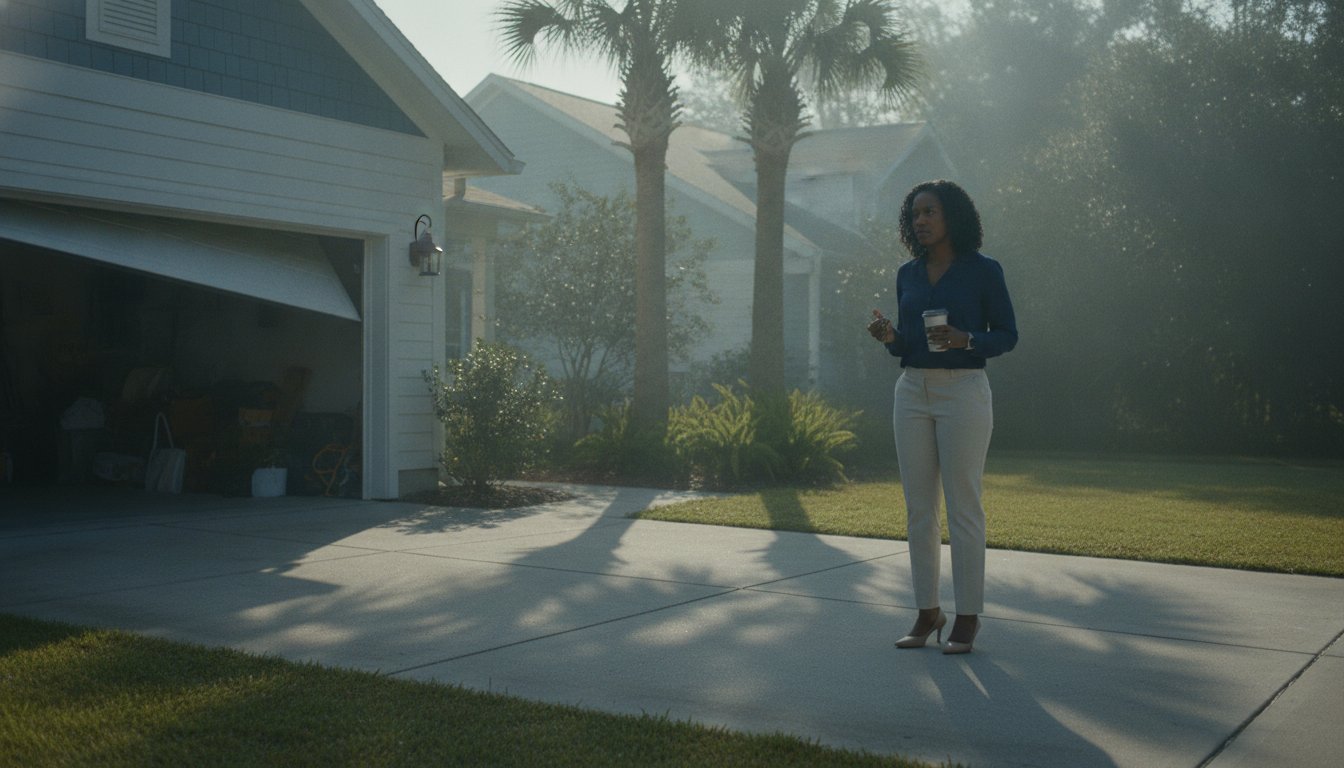
You're already five minutes late for work, your coffee is cooling in the cup holder, and you press the remote only to hear a strained hum while the door stays firmly shut. It's a high-stakes moment that leaves you wondering exactly what to do when garage door is stuck and your car is trapped inside. We know that a jammed door is more than an inconvenience; it's a safety risk and a major disruption to your household. You're likely worried about the potential for injury or the fear of being overcharged by a repair company for a simple fix.
Our goal is to give you back your peace of mind and get your day back on track. This guide will teach you how to safely troubleshoot a jammed door, identify which parts are safe to touch, and recognize the critical signs that require a professional technician. We'll walk through common mechanical issues like misaligned tracks or broken springs. By the end, you'll know how to handle the situation safely and how to find a reliable local expert who offers the honest, transparent service you deserve.
Key Takeaways
- Prioritize safety by stopping the opener immediately and clearing the area to prevent motor burnout or accidental injury.
- Learn exactly what to do when garage door is stuck by checking for simple sensor misalignments or small track obstructions before calling for help.
- Identify the "Snap" test and other visual cues that signal dangerous mechanical failures like broken torsion springs or frayed cables.
- Protect your hardware from Gulf Coast humidity and salt air with specific maintenance routines and monthly balance checks.
- Gain the confidence to distinguish between a quick DIY fix and a complex repair that requires a technician with transparent, standardized pricing.
Immediate Safety Steps: How to Safely Handle a Jammed Garage Door
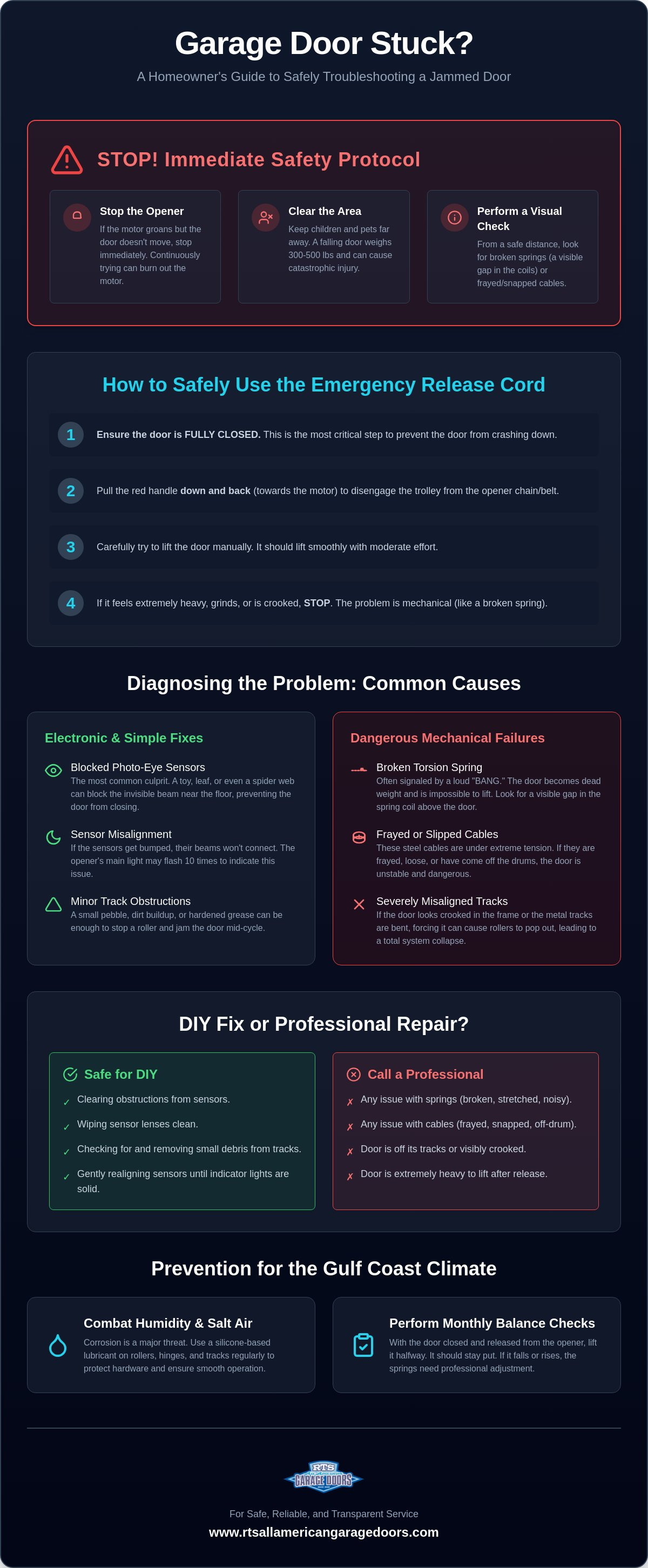
If you press the wall button and the motor groans without moving the door, stop immediately. Continually cycling the opener while the door is jammed can burn out the motor or strip the internal gears. This turns a simple mechanical fix into a more expensive opener replacement. Your first priority is safety. Knowing what to do when garage door is stuck begins with one rule: stop and clear the area. Keep children and pets well away from the garage. A residential door can weigh between 300 and 500 pounds; if a component fails while the door is under tension, it can fall with enough force to cause catastrophic injury.
Perform a quick visual assessment before touching any hardware. Look at the springs located above the door or along the sides. If you see a visible gap in the coils, the spring is broken. Check the steel cables to see if they are frayed or have come off the drums. These components are under extreme tension and are the most dangerous parts of the system. The emergency release cord, usually red, is one of the most critical garage door opener safety features. It disconnects the door from the automated carriage, but you must use it correctly to avoid an accident.
The 5-Step Emergency Release Protocol
Pulling the red cord is the standard way to transition to manual operation, but it requires caution. First, verify the door is in the fully closed position. If you pull the release while the door is partially open, it could crash down because it's no longer supported by the opener. Once the door is down, pull the red handle down and back toward the motor. This should disengage the trolley. Next, try to manually lift the door slowly. If you feel heavy resistance or hear grinding, the door is likely misaligned or has a broken spring. Never release the door if it's stuck in the up or mid-position; the lack of mechanical control makes it a falling hazard.
Assessing the Risk Level
Recognizing high-tension hazards is vital for any homeowner. If the door feels incredibly heavy or looks crooked in the tracks, it's considered a "hot" door. This means it is under dangerous, uneven tension. Do not attempt to force the door open or closed. Forcing a jammed system can cause a cable to snap or a roller to pop out of the track entirely. If the door isn't moving freely after you've pulled the release cord, the problem is mechanical and requires specialized tools. At this stage, the safest move is to leave the door exactly where it is and wait for a professional to stabilize the system.
Common Reasons Your Garage Door Is Getting Stuck
Identifying the root cause is the next step in knowing what to do when garage door is stuck. The most frequent culprit isn't a broken motor; it's a simple misalignment of the photo-eye sensors. These "eyes" sit near the floor on either side of the track. If a spider web, a stray leaf, or even a child's toy blocks the invisible beam, the system assumes there's an obstruction. The door will refuse to close or might reverse immediately. It's a safety feature designed to protect your family, but it's also a common source of frustration when the sensors get bumped out of alignment.
Mechanical failures are often more obvious. A broken torsion spring is the silent reason a door won't budge. You might have heard a loud "bang" earlier in the day; that was the spring snapping under tension. Without that spring, the door is dead weight. Similarly, track obstructions can halt a door mid-cycle. In our Gulf Coast climate, salt-air corrosion can build up on the tracks or rollers, creating friction that eventually seizes the system. A small pebble or a buildup of hardened grease can be enough to stop a 500-pound door in its tracks. If you suspect a mechanical failure, you can schedule a professional inspection to ensure every component is functioning safely.
Electronic vs. Mechanical Failures
Modern systems like a LiftMaster opener use diagnostic lights to tell you what's wrong. If the main light bulb flashes ten times, it usually points to a sensor issue. However, electronic failures aren't always that simple. Gulf Coast storms frequently bring power surges that can fry the logic board inside your opener. You can often distinguish a "stuck" motor from a "stuck" door by listening. If the motor hums but nothing moves, the door is likely mechanically jammed. If there's no sound at all, the issue is probably electrical.
The Role of Hardware Degradation
Garage door tracks are precision-engineered. Even a 1/4 inch shift in the track alignment can cause the rollers to bind, stopping the door completely. This often happens if the mounting brackets have loosened over time or if the track has been struck by a vehicle. Roller failure is another common issue; plastic rollers can crack, while steel rollers can seize due to rust. When these components stop spinning, they slide against the metal track, creating immense friction. This puts unnecessary strain on your hinges and opener, eventually leading to a total system lockdown.
DIY Troubleshooting: What You Can Safely Fix Yourself
While high-tension components require a specialist, many common obstructions are within a homeowner's ability to fix. Knowing what to do when garage door is stuck includes identifying which tasks are safe for a Saturday morning and which require a service van. Start with the simplest possibilities. Often, the solution doesn't require tools at all, just a bit of attention to the safety systems and the path of the door.
Basic maintenance can resolve about half of all "stuck door" calls. Begin by inspecting the hardware that isn't under tension. You can safely tighten the bolts on the tracks and the screws on the hinges using a standard socket wrench or screwdriver. If you hear a rhythmic clicking or scraping, check the rollers. If a roller is wobbly or the metal stem is bent, it needs replacement to prevent the door from seizing entirely. For general upkeep, use a silicone-based spray or white lithium grease on the hinges and rollers. Avoid using WD-40 as a permanent lubricant; it's a degreaser that will eventually cause the metal to grind.
Restoring the Sensor Connection
Your photo-eye sensors are the most common point of failure. Look for the small LED lights on each sensor near the floor. One is usually amber (the sender) and the other is green (the receiver). Both must be glowing steadily. If the green light is flickering or dark, the beam is broken. In our Gulf Coast environment, humidity fog or salt spray often coats the lenses, tricking the system into thinking something is in the way. Wipe the lenses with a clean, soft cloth. If the lights still flicker, check the alignment. You can usually adjust the sensor by hand or by tightening the wing nut on the bracket to stop it from vibrating when the motor runs.
Track and Roller Maintenance
A clean track is a functional track. Use a damp cloth to wipe out the inside of the vertical and horizontal tracks to remove dirt, hair, and salt buildup. Never apply grease or oil directly into the tracks. While it seems counterintuitive, grease actually traps debris and salt air particles, creating a thick paste that eventually jams the rollers. Use a level to check the vertical tracks; if they've shifted slightly, you can loosen the mounting brackets and gently tap them back into a plumb position. Finally, inspect the rollers for "flat spots." If the outer wheel has worn down unevenly, it will cause the door to stutter and eventually get stuck. Replacing these rollers is a straightforward DIY task that can prevent a total system failure. If these steps don't resolve the issue, it's time to consider what to do when garage door is stuck due to more serious mechanical damage.
When DIY Is Dangerous: Recognizing Professional Repair Needs
If your initial troubleshooting hasn't resolved the issue, you must recognize the limit of safe home maintenance. Knowing what to do when garage door is stuck means understanding that certain components are under enough tension to cause severe injury or property damage. If the door is physically crooked in the opening or if you hear the motor straining without any movement, put the tools away. Forcing a jammed door can lead to a total structural failure, potentially causing the door to fall from its tracks.
The "Snap" test is your first visual diagnostic for a major mechanical failure. Look at the torsion spring located on the header above the door. If you see a clear two inch gap between the coils, the spring has snapped. A broken spring is the most common reason a door won't lift; the motor simply cannot handle the dead weight of the panels alone. Similarly, inspect the steel cables on either side. If they look "bird-nested", tangled and frayed around the drum, the door is no longer supported safely. Identifying what to do when garage door is stuck often involves looking for these critical mechanical failures that render the door unsafe to operate manually.
The Danger of High-Tension Components
Most residential systems, including those featuring a Wayne Dalton Classic Steel Garage Door, rely on springs with a specific lifespan, typically rated for 10,000 cycles. When these springs reach their limit, they fail suddenly. Replacing them requires specialized winding cones and bars to manage the immense torque. Attempting to adjust these with standard pliers or screwdrivers is a leading cause of garage-related accidents. For a deeper look at these risks, read our guide on Is a Broken Garage Spring Dangerous? Safety First. Professional technicians use calibrated tools to ensure the door is perfectly balanced, preventing premature wear on your LiftMaster opener.
Structural and Alignment Emergencies
An off-track door is a structural emergency. This usually happens when a cable jumps the drum or a roller pops out of the track. A crooked door is inherently unstable and creates a significant risk of a crushing injury if it shifts further. While some repair companies use vague "call for estimate" traps that lead to unexpected costs, RTS All American Garage Doors utilizes a strictly defined, standardized pricing structure. We believe in labor transparency, ensuring you know the cost of your emergency repair before the work begins. If your door is hanging precariously or won't budge despite your best efforts, contact us for transparent repair services to secure your home today.
Prevention: Keeping Your Door Moving in the Gulf Coast Climate
While the previous sections addressed immediate fixes, long-term reliability depends on a proactive defense against our local environment. High humidity and salt air are constant corrosive agents that target metal components every single day. Performing a monthly balance test is the single best way to avoid wondering what to do when garage door is stuck on a Monday morning. Simply disconnect the opener using the red release cord and lift the door to the halfway point. If it stays in place, your springs are doing their job; if it crashes or shoots upward, the tension is incorrect and will eventually strain your motor to the point of failure.
Consider upgrading your hardware to better suit our coastal conditions. Replacing standard steel rollers with sealed nylon rollers is a smart investment. Nylon doesn't rust, and the sealed bearings keep out the fine sand and salt spray that seize up traditional metal wheels. They provide a much quieter operation and handle the moisture of the Gulf Coast without the swelling or sticking issues common with neglected steel components. This simple hardware change significantly reduces the friction that often leads to a door getting caught mid-cycle.
Salt Air and Corrosion Protection
Homeowners in Pensacola Beach, Gulf Breeze, and Baldwin County face unique maintenance challenges. Salt spray can cause oxidation on tracks and hinges within just a few years of installation. Inspect your weather seals monthly to ensure they aren't brittle or cracked, as failing seals allow moisture to sit inside the track system. For those living within five miles of the coast, we recommend choosing galvanized hardware for any replacements. This extra layer of protection is vital for maintaining structural integrity. Wipe down your tracks regularly to remove salt buildup before it hardens into a gritty paste that jams the rollers.
Scheduling Your Annual Maintenance
A professional tune-up covers technical adjustments that go beyond standard home maintenance. A technician will check the force settings on your opener, tighten every lag bolt, and inspect the internal drive gears for signs of wear. The approach at RTS All American Garage Doors is built on integrity and technical proficiency. We provide a clear, standardized checklist so you know exactly what was inspected without worrying about hidden surcharges. For a full breakdown of what a local expert looks for during a visit, see The Ultimate Guide to Garage Door Tune-Up Service in Mobile, AL (2026). Investing in an annual visit is the best way to ensure your system remains dependable regardless of the weather.
Restore Security and Reliability to Your Home
A jammed garage door is more than a mechanical failure; it's a disruption to your family's safety and schedule. By following the steps in this guide, you now know exactly what to do when garage door is stuck, from clearing simple sensor obstructions to identifying dangerous spring failures. Remember that while basic track cleaning and sensor alignment are safe DIY tasks, high-tension components like cables and torsion springs require specialized tools and expert handling to prevent injury. Prioritizing safety and regular maintenance in our humid Gulf Coast climate will keep your system running smoothly for years to come.
Don't let a malfunctioning door compromise your home's security or leave your vehicle trapped. Our team of local technicians lives and works in your community, so you'll never deal with a faceless call center. We specialize in Wayne Dalton and LiftMaster systems, ensuring every repair meets the highest industry standards. With our commitment to standardized labor rates and no hidden fees, you can move forward with confidence and financial clarity. Get Expert Emergency Garage Door Repair in Pensacola & Mobile today. We're here to help you get your day back on track with honest, dependable service.
Frequently Asked Questions
Why is my garage door stuck halfway up?
A door stopping halfway usually indicates a mechanical obstruction in the tracks or a broken spring that can no longer support the weight. Check for pebbles, salt buildup, or a visible gap in your torsion spring. If the tracks are bent or the door is crooked, stop using the opener immediately to prevent burning out the motor.
Can I manually open my garage door if it is stuck?
You can only manually open the door if it's in the fully closed position and the springs are intact. Pull the red emergency release cord to disconnect the opener. If the door feels incredibly heavy or won't move, don't force it. This is a clear sign of a broken spring or a jammed cable that requires professional tools.
What does it mean if my garage door opener is making a clicking sound but not moving?
A clicking sound often points to a sensor obstruction or an electrical issue within the logic board. Check your photo-eye sensors for a steady light first. If the lights are solid, the clicking might indicate stripped internal gears or a failed motor capacitor. These components are essential for the lifting process and often need replacement after Gulf Coast power surges.
How do I know if my garage door sensors are misaligned?
Misaligned sensors are identified by flickering or dark LED lights on the sensor units near the floor. One sensor should have a steady green light and the other a steady amber light. If either light is blinking, the invisible beam is broken. Gently adjust the brackets by hand until both lights glow steadily to restore the connection.
Is it safe to replace a garage door spring myself?
No, replacing a garage door spring isn't a safe DIY task. Torsion springs are under enough tension to cause life-threatening injuries if they snap or if a winding bar slips. Professional technicians use specialized equipment and training to manage this torque safely. Attempting this without experience is a leading cause of garage-related emergency room visits.
Why does my garage door start to close and then immediately reverse?
This reversal is a safety response triggered by the photo-eye sensors or the opener's force settings. It often happens when a leaf or cobweb blocks the sensor beam. In our humid climate, fog can also coat the lenses. If the sensors are clear, check the tracks for salt-air corrosion or debris that might be creating enough friction to trigger the auto-reverse.
What is the "red handle" on my garage door opener for?
The red handle is the emergency release cord designed to disconnect the door from the automated opener. This allows you to operate the door manually during a power outage or when you need to troubleshoot what to do when garage door is stuck. Only pull this cord when the door is fully closed to prevent it from crashing down unexpectedly.
How often should I lubricate my garage door to prevent it from sticking?
You should lubricate your door every six months to combat the corrosive effects of salt air and humidity. Use a silicone-based spray on the hinges, rollers, and springs. Avoid using thick grease in the tracks, as it traps dirt and creates a paste that eventually jams the system. Regular lubrication is the best way to prevent the hardware from seizing.