A standard double-car garage door can weigh over 400 pounds; the only thing keeping that massive weight from crashing down is a coil of steel under extreme tension. When that steel snaps, it's not just a loud noise. It's a mechanical failure that puts your property and your safety at immediate risk. Many homeowners wonder, is a broken garage spring dangerous, or can the repair wait until next week? The truth is that a snapped spring turns your door into a dead weight that can snap cables or burn out your opener motor in seconds.
We know the frustration of a car trapped in the garage and the fear of a repair bill you didn't plan for. It's a stressful situation that requires a clear head and an honest assessment of the risks. You'll learn exactly why professional repair is the only safe way to restore your home's security and protect your family from the mechanical energy stored in these systems. We'll preview the specific hazards of high-tension torsion springs and explain how a trustworthy expert handles the job with the technical precision your home requires.
Key Takeaways
- Understand why a broken spring turns your heavy garage door into a dangerous dead weight that can snap cables or cause serious injury.
- Learn the physics of stored energy to see why the answer to is a broken garage spring dangerous is a definitive yes.
- Discover how attempting to operate a door with a snapped spring can quickly burn out your LiftMaster opener and lead to more expensive repairs.
- Identify how salt air and humidity in the Pensacola, Gulf Breeze, Navarre, Pensacola Beach, and Baldwin County, AL areas cause steel springs to corrode and fail prematurely.
- See why professional tools and technical IPPT calculations are required to safely restore the balance and security of your home.
Table of Contents
- Busting the 'Harmless' Myth: Why a Broken Spring is a Serious Safety Hazard
- The Science of Tension: How Stored Energy Becomes a Projectile
- Collateral Damage: How One Broken Spring Threatens Your Entire System
- Gulf Coast Corrosion: Why Pensacola and Mobile Homes Face Unique Spring Risks
- Safe Resolution: Why Professional Replacement is the Only Secure Option
Busting the 'Harmless' Myth: Why a Broken Spring is a Serious Safety Hazard
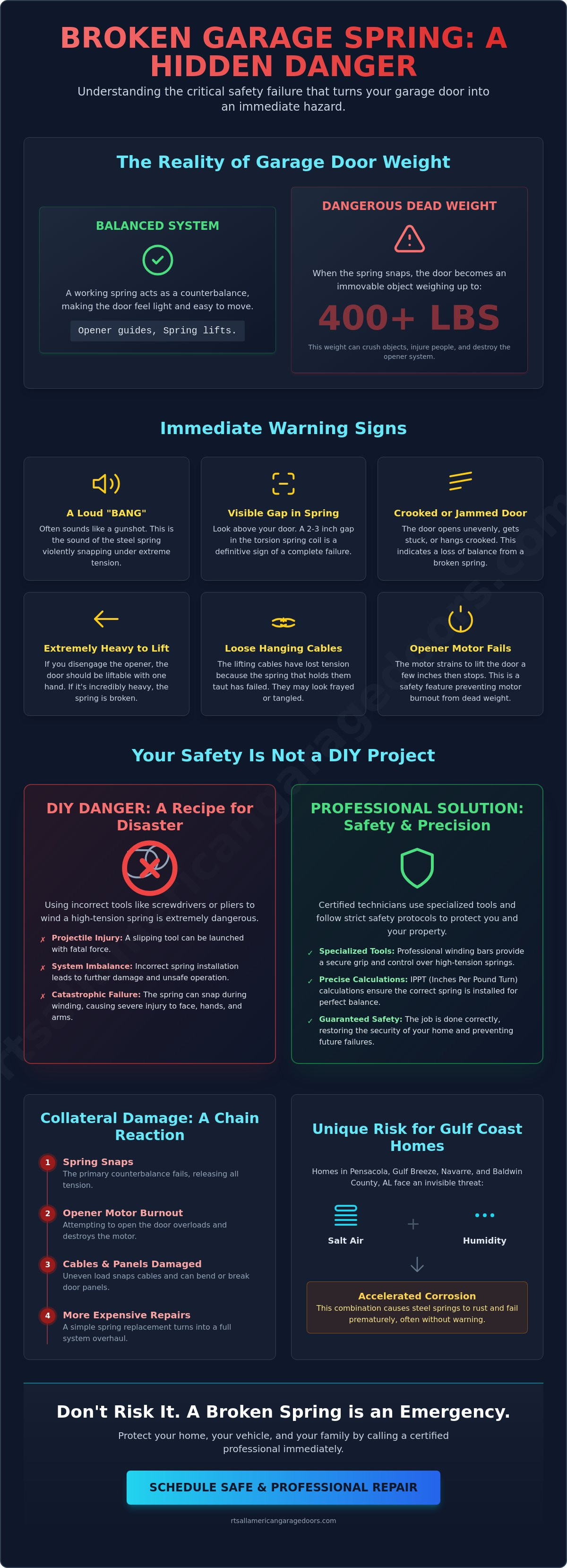
If you're standing in your garage looking at a snapped coil, you're likely asking: is a broken garage spring dangerous? The answer is a definitive yes. It isn't just a minor mechanical inconvenience that keeps your car stuck; it's a critical safety failure. A garage door spring isn't a secondary part. It's the primary counterweight for a door that can weigh anywhere from 130 to 400 pounds. Without that tension, you're dealing with a massive dead weight that can fall with enough force to crush anything underneath it. The danger is immediate and unpredictable.
Some homeowners believe that safety cables provide total protection. While these cables are designed to keep an extension spring from flying across the room during a break, they don't help with the weight of the door itself. Once that spring fails, the balance of the system is gone. The danger doesn't end after the initial snap, either. Every time you try to move that door, you risk the second spring failing or cables snapping under the uneven load. Understanding garage door spring mechanisms helps you realize that these components are under thousands of pounds of torque. They aren't DIY projects for a Saturday afternoon; they're high-tension industrial components that require specialized handling and professional tools.
The Reality of Garage Door Weight
Many people assume the electric opener does the heavy lifting. That's a dangerous misconception. The opener is only meant to guide the door; the springs provide the actual muscle. When a torsion or extension spring breaks, those 300-plus pounds of steel become a free-falling hazard. A standard Wayne Dalton door becomes an immovable dead weight the moment it loses its counterbalance. If you try to lift it manually, you're putting your back and limbs at extreme risk. The weight of an insulated double door can exceed 400 pounds, making it impossible for a person to hold if it begins to slide down the tracks without warning.
Identifying the 'Loud Bang' and Other Warning Signs
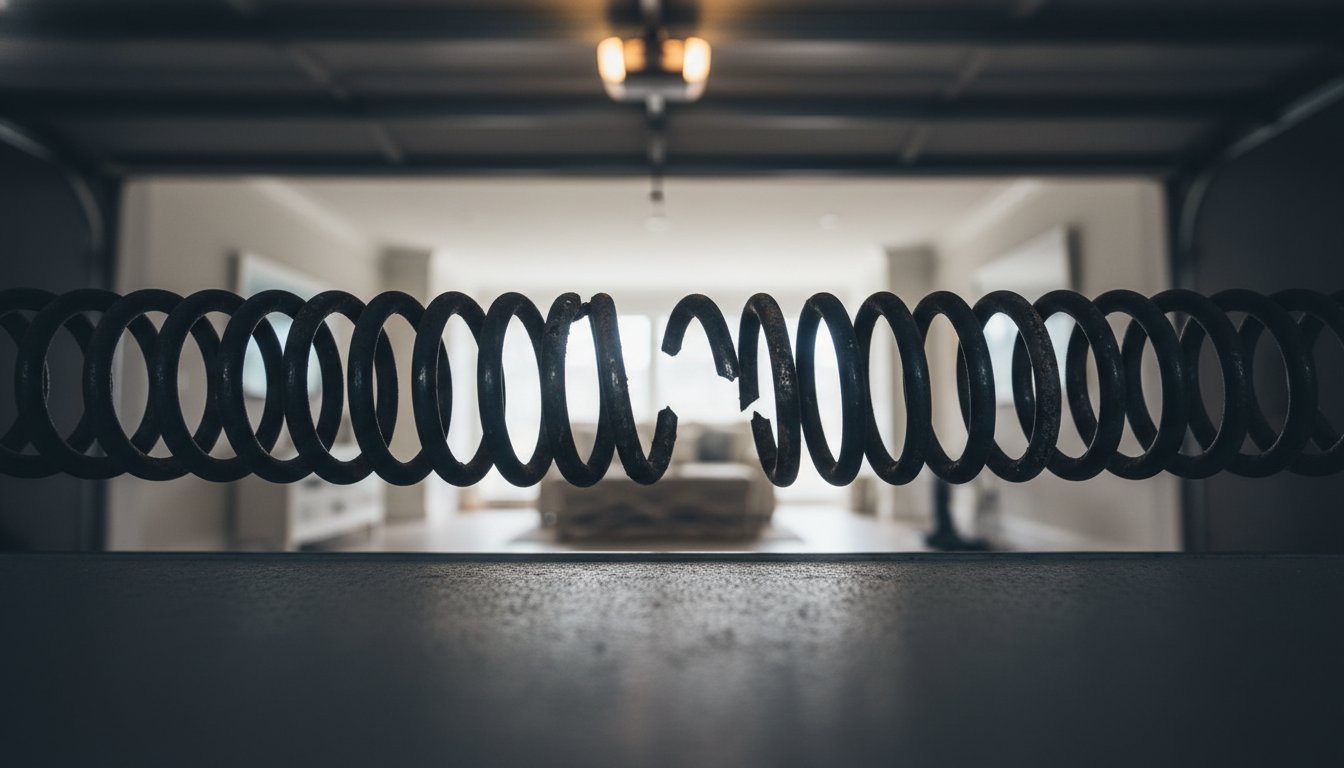
You usually hear a spring break before you see it. It sounds like a gunshot or a car crash echoing through the house. If you didn't hear it, look for a visible gap in the coils above the door. A gap of two or three inches in the spring is a definitive sign of failure. Another red flag is a door that only opens two inches before the opener stops. Don't try to force it. That's the safety system telling you the door is too heavy to lift safely. Other signs include:
- The door feels extremely heavy when you try to lift it manually.
- Cables are hanging loose or look frayed.
- The door is crooked in the tracks as it tries to open.
Ignoring these signs doesn't just damage the door; it puts everyone in your household at risk. A broken spring means the door is no longer under control. It can drop at any moment, turning a simple repair into a life-threatening emergency. If you're still wondering is a broken garage spring dangerous, remember that it's the only thing holding back hundreds of pounds of steel from falling on your family or your vehicle.
The Science of Tension: How Stored Energy Becomes a Projectile
A wound garage door spring is essentially a high-capacity battery for mechanical energy. When a technician installs a torsion system, they use specialized winding bars to twist the steel, packing it with thousands of pounds of torque. This stored potential energy remains active as long as the spring is under tension. If the steel snaps due to fatigue or corrosion, that potential energy converts to kinetic energy in a fraction of a second. This violent transition is exactly why asking is a broken garage spring dangerous leads to such a serious warning. You aren't just looking at a broken part; you're looking at a mechanical explosion waiting to happen.
The physics involved are immense. A torsion spring can exert enough force to lift a 400-pound door, and that same force is redirected toward anything in its path when the metal fails. Homeowners who attempt to "DIY" the winding process often use improper tools like screwdrivers or pliers. This is a recipe for catastrophe. If the tool slips, the spring's torque will launch that metal object across the garage with enough speed to cause a fatal injury. Professional winding bars are the only safe way to manage this tension.
Torsion Springs vs. Extension Springs
Torsion and extension springs handle energy differently, but both carry significant risks. Torsion springs are mounted on a metal shaft above the door opening. They use a system of drums and cables to distribute weight, supported by center and end bearings that manage the high-torque load. Extension springs, however, stretch along the horizontal tracks. Because they lack the central shaft of a torsion system, they can become "unguided missiles" if they snap without a safety cable in place. Understanding the specific differences between torsion vs extension springs is vital because each requires a unique safety protocol and specialized knowledge to repair safely.
The Projectile Risk: Beyond the Door
The danger of a snapping spring extends far beyond the door itself. Shards of high-carbon steel from a failing extension spring have been known to pierce drywall or shatter car windshields. This projectile risk is why you should never stand directly under or near a moving door if you suspect a spring is weak or nearing the end of its life cycle. The International Door Association safety tips emphasize that the recoil effect from a break can also pull cables off drums and bend tracks, creating secondary hazards that make the door even more unstable. If you notice your door acting strangely or making straining noises, it's safer to contact a local expert for a tension test before a total failure occurs.
- Potential Energy: The energy stored in the coiled spring while the door is closed.
- Kinetic Energy: The rapid movement of the spring or door when that energy is suddenly released.
- Torque: The rotational force that makes torsion springs particularly dangerous to adjust without professional training.
- Recoil: The backward movement of the spring after it snaps, which can damage rollers and track alignment.
Collateral Damage: How One Broken Spring Threatens Your Entire System
Most homeowners think the danger of a broken spring is limited to the moment it snaps. However, the true risk often comes in the minutes following the break when you reach for the remote. If you're asking is a broken garage spring dangerous, you have to consider the collateral damage to the rest of the system. Attempting to force a 400-pound door to open with only half its lifting power puts a catastrophic strain on components that weren't designed for that load. You aren't just risking a loud noise; you're risking a total system failure that can quadruple your repair costs.
The garage door operates as a balanced machine. When one part of that balance fails, every other component has to work harder to compensate. This chain reaction happens fast. A single broken spring leads to frayed cables, bent tracks, and eventually, a door that is completely stuck or dangerous to be near. Understanding these risks helps you avoid the #1 mistake: trying to "help" the door open while the spring is snapped.
Opener Burnout and Stripped Gears
Your automatic opener is designed to move the door, not lift its dead weight. When a spring fails, a high-quality LiftMaster motor will try to compensate, but it's a losing battle. The internal nylon gears can strip in seconds as they struggle against hundreds of pounds of unassisted steel. The motor can also burn out from the excessive electrical draw. Replacing a motor is a significantly more expensive project than a standard spring repair. Look for these warning signs that your opener is in trouble:
- A loud humming noise without any door movement.
- A distinct smell of burning plastic or ozone from the motor head.
- A grinding sound that indicates stripped drive gears.
- The door starts to move but immediately reverses or stops.
Cable Snap and 'Off-Track' Disasters
The cables and drums work in perfect synchronization with the springs. When one spring breaks, the tension becomes uneven across the door's width. This causes the cables to jump off the drums or fray under the sudden, lopsided stress. A door hanging by a single cable is essentially a guillotine. It's unstable and prone to crashing down at any moment. This imbalance also pulls the rollers out of alignment, which can bend the tracks or cause the panels of a Wayne Dalton door to buckle under the pressure.
Never pull the red emergency release cord if you suspect a broken spring. This cord disconnects the door from the opener carriage, which might be the only thing holding the door in place. Without the opener's resistance or the spring's tension, the door will plummet to the floor. This "off-track" disaster often leads to a total overhaul of the tracks, rollers, and cables. It's an avoidable mess if you leave the door alone until a professional can secure it. If you're still wondering is a broken garage spring dangerous, consider that a falling door can easily crush a car hood or, worse, anyone standing in the garage.
Gulf Coast Corrosion: Why Pensacola and Mobile Homes Face Unique Spring Risks
Living near the water in Baldwin County or Pensacola Beach brings a specific set of challenges for your home's mechanical systems. While we enjoy the coastal breeze, that salt-laden air is a constant threat to high-carbon steel. If you've lived here through a few summers, you know that rust never sleeps. Is a broken garage spring dangerous in this environment? Absolutely. Corrosion creates "pitting" in the metal, which leads to sudden, violent breaks that happen much sooner than the manufacturer's cycle rating suggests. In our humid climate, a spring rated for 10,000 cycles might fail at 6,000 due to chemical fatigue.
We often see "invisible" rust during our service calls. This is oxidation that hides deep inside the tight coils of a torsion spring where it's impossible to see during a quick glance. As the spring winds and unwinds, these rusted areas rub against each other, creating heat and friction that further weakens the steel. This is why local knowledge matters. A technician from an inland city might not prioritize corrosion resistance, but for a Gulf Coast home, it's a matter of basic safety and system longevity.
Salt Air and Metal Fatigue
The chemical reaction between salt spray and raw steel is aggressive. It causes the metal to become brittle over time. For homeowners with Wayne Dalton classic steel doors, the springs are the most vulnerable point because they are under constant tension. We recommend galvanized or powder-coated springs for homes within five miles of the coast to provide a barrier against the elements. Regular lubrication with a high-quality silicone spray is also essential. It doesn't just keep the door quiet; it creates a protective film that keeps salt from eating the steel from the inside out.
Storm Pressure and Structural Integrity
Hurricane season readiness is a way of life in Mobile and Pensacola. Your garage door is the largest opening in your home's structural envelope. If a spring is weak or broken, you cannot properly secure the door against high winds. Pensacola building codes require wind speed designs that comply with ASCE 7-22. In Mobile County, minimum wind speeds are set at 160 mph for residential structures. A compromised spring makes it impossible for the door to maintain its balance and structural integrity under these extreme pressures. This is why hurricane proof garage door installation must always include heavy-duty, high-cycle springs. These springs are designed to withstand the added weight of reinforced, wind-rated panels without snapping when you need them most.
Don't wait for a tropical storm to find out your springs are failing. If you see orange dust on your coils or hear a grinding sound, schedule a local spring inspection today to ensure your home is ready for whatever the Gulf throws our way. We believe in getting the job done right the first time so you can have peace of mind through every season.
Safe Resolution: Why Professional Replacement is the Only Secure Option
Accepting that a snapped spring is a life-threatening hazard is the first step toward a safe home. If you've been asking is a broken garage spring dangerous, the technical requirements for a proper repair provide the ultimate proof. Replacing these components requires more than just a trip to the local hardware store. It demands specialized tools designed to withstand immense pressure, such as high-torque wrenches, heavy-duty vice grips, and professional-grade steel winding bars. Using makeshift tools like screwdrivers or pliers is the leading cause of DIY injuries. These items can easily slip under the spring's tension and turn into high-speed projectiles in an instant.
Beyond the physical danger of the repair itself, the engineering must be exact. Every garage door has a specific "IPPT" (Inches Per Pound Turn) rating. This calculation ensures the spring's lifting power matches the door's dead weight exactly. If the IPPT is off by even a small margin, your door will be out of balance. An unbalanced door puts unnecessary strain on your LiftMaster belt or chain drive opener and can cause cables to fray or jump the tracks. Professional technicians use precise measurements to ensure your door is virtually weightless when operated manually. This balance is the hallmark of a correctly installed system and the only way to ensure long-term safety.
The RTS Professional Process
At RTS All American, we don't just swap out a part and head to the next job. Every spring repair includes a comprehensive 25-point safety inspection to ensure your entire system is sound. We check the track alignment, inspect the rollers for wear, and verify that the cables are seated correctly on the drums. Our goal is to restore the entire system to its peak operational state. When you call our team, you speak to a live, local expert who understands the specific needs of homes in Pensacola and Mobile. We treat your residential system with the same level of care we'd give our own families, ensuring every bolt is tightened and every cycle is smooth.
Standardized Pricing and Peace of Mind
We believe in integrity and transparency. That's why we utilize a strictly defined, standardized pricing structure for all our labor and parts. You won't face hidden surcharges or vague estimates that change once the work begins. This "no-surprises" approach is our verbal handshake with the community. Professional replacement also provides long-term value through warranties that DIY attempts simply cannot match. If you suspect a failure, secure the area immediately and keep children and pets away from the garage. Contact RTS All American for emergency spring repair today and let our specialized team handle the high-tension work safely and efficiently.
Secure Your Home with Expert Spring Care
A snapped spring is more than a loud noise; it's a mechanical emergency that leaves your home vulnerable. We've explored how thousands of pounds of torque can turn into a projectile and why the humid Gulf Coast air makes these failures happen sooner than expected. You now understand that is a broken garage spring dangerous because it compromises the balance of your entire 400-pound door system. Attempting a DIY fix or forcing the door to open only leads to more expensive repairs like motor burnout or track misalignment.
RTS All American brings over 15 years of Gulf Coast experience to every driveway. Our live, local technicians in Mobile and Pensacola are ready to restore your peace of mind with disciplined craftsmanship. We use a standardized pricing structure with no hidden fees, so you know exactly what to expect before the work begins. Don't let a volatile spring threaten your safety or your property's security.
Schedule Your Professional Spring Safety Inspection with RTS All American
Take the first step toward a functional, balanced door today. We're here to help you get back to your routine with a system that's built to last and safe for your family to use.
Frequently Asked Questions
Can I open my garage door manually if the spring is broken?
You should not attempt to open your garage door manually when a spring is broken. A standard steel door can weigh over 150 pounds; a carriage house model can exceed 400 pounds. Without the spring's counterweight, you are attempting to lift that entire dead weight alone. This puts extreme strain on your back and risks the door crashing down if you lose your grip. It is a safety hazard that can lead to severe physical injury.
How much does it typically cost to replace a garage door spring in 2026?
Spring replacement costs depend on the specific mechanical requirements of your door, including its weight and the required cycle rating. Torsion springs generally require more technical labor than extension springs. We utilize a standardized pricing structure to ensure you receive an honest rate without hidden surcharges or unexpected fees. Factors like the Inches Per Pound Turn (IPPT) and the choice of high-cycle steel will influence the final investment in your system's long-term reliability.
What is that loud bang I heard in my garage even though nothing looks broken?
That loud bang is almost certainly a torsion spring snapping under pressure. Because these springs are under thousands of pounds of torque, the sudden release of energy sounds like a gunshot or a car crash. You might not see the damage immediately if the spring is inside a tube or if the gap is small. Check the metal coil above your door for a visible break or a separation in the steel winding.
Is it dangerous to leave a broken garage spring for a few weeks?
Yes, is a broken garage spring dangerous if left unrepaired for any length of time. An unbalanced door puts constant, uneven pressure on the tracks and rollers. In the Gulf Coast region, a compromised door is a major liability during high-wind events or sudden storms. Leaving the system in a broken state also increases the risk of the second spring failing, which could cause the door to fall unexpectedly on property or bystanders.
Should I replace both garage door springs if only one is broken?
You should always replace both springs at the same time. Garage door springs are manufactured to have the same cycle life; they have likely opened and closed the same number of times. If one has reached its fatigue point and snapped, the other is almost certainly nearing the end of its life. Replacing them as a pair ensures the door remains perfectly balanced and saves you the cost of a second service call a few months later.
Can a broken garage door spring fall on my car?
A broken spring itself is usually secured by a torsion shaft or safety cable, but the door it supports can absolutely fall on your vehicle. If the remaining spring or the lifting cables fail while the door is partially open, the weight of the panels will plummet to the floor. This can crush a car hood or shatter a windshield. Never park your vehicle directly under a door that has a known spring failure.
How do I know if I have torsion or extension springs?
Torsion springs are located on a metal shaft directly above the garage door opening. They slide onto the bar and wind tightly to create torque. Extension springs are found on the sides of the door, running parallel to the horizontal tracks that extend into the garage. Torsion systems are the modern industry standard because they offer better balance and increased safety. If you see long, thin springs stretching as the door closes, you have an extension system.
What are the first steps I should take when I realize my spring is snapped?
Your first step is to stop using the door immediately. Do not try to use the automatic opener, as this will likely burn out the motor or strip the gears. Secure the area and ensure that children and pets stay away from the garage. Once the area is safe, call a live, local technician to perform a professional inspection. They have the specialized winding bars and technical knowledge required to release the remaining tension and install a new, balanced spring system.