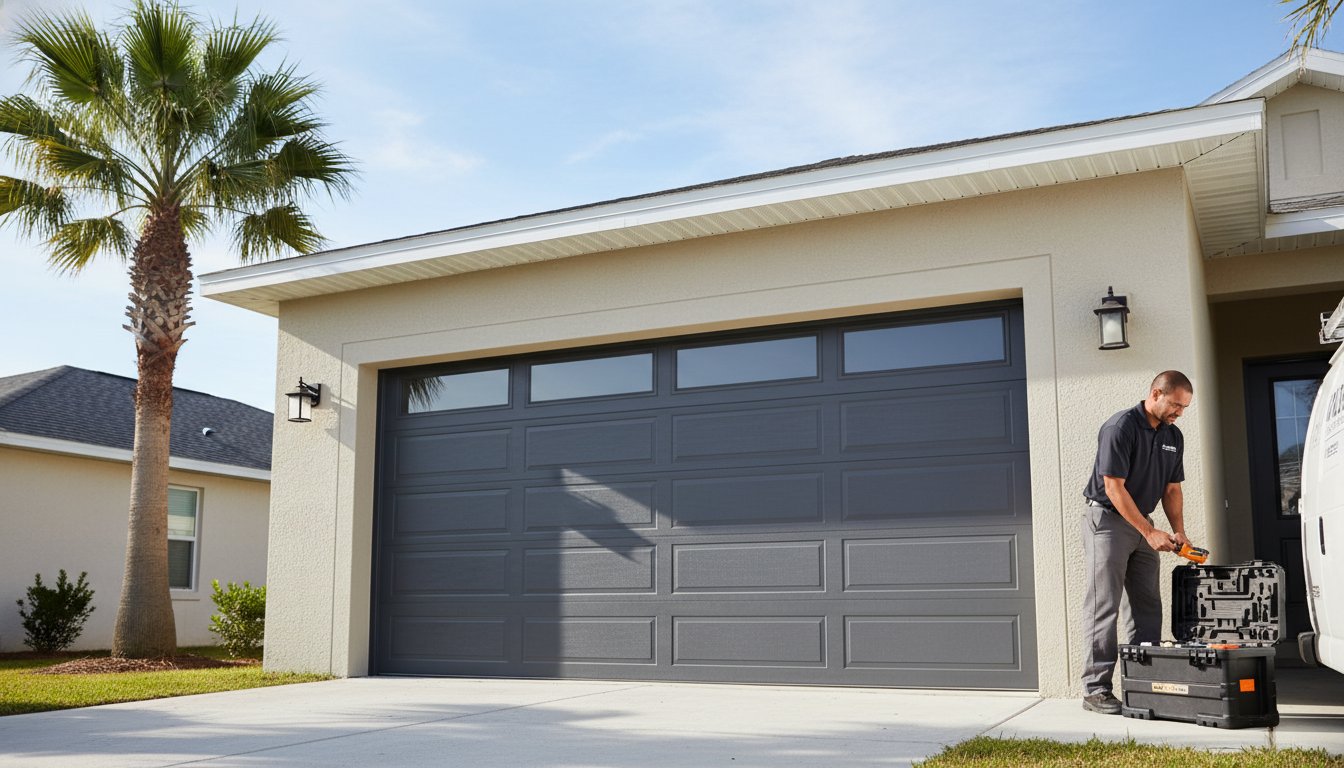
Did you know that a garage door failure is often the primary reason a home loses its roof during a major hurricane? When the largest opening in your house gives way, the resulting internal pressure can literally lift the structure from the inside out. For homeowners along the Gulf Coast, your garage door is more than just a convenience; it is a critical piece of structural armor. You likely chose this model for its legendary thermal performance, but a successful Wayne Dalton 8300 installation requires more than just basic DIY skills to meet the 150 mph wind-load standards mandated by the Florida Building Code.
It is normal to feel some hesitation regarding the technical wind-load requirements or the safety risks of handling high-tension torsion springs. We agree that your family's safety and your home's integrity are the top priorities. This guide will help you master the technical requirements and the installation process to ensure your door operates quietly and provides maximum energy efficiency. We will provide a clear timeline for the project, a full list of required tools, and a breakdown of which safety-critical steps require a professional touch to ensure your home remains fully protected against the next big storm.
Key Takeaways
- Discover why the polyurethane insulation of the Model 8300 is a top choice for managing the intense heat and humidity in Pensacola and Mobile.
- Learn how to verify your garage opening for squareness and ensure your door meets the specific WindSafe requirements for Gulf Coast storm protection.
- Follow our technical breakdown of the Wayne Dalton 8300 installation process to achieve a precise, level fit and a proper weather seal.
- Understand the mechanics of high-tension torsion springs and how to recognize the warning signs of an unsafe or incorrect setup.
- Gain a routine maintenance checklist for coastal homes, including the best lubricants for salt-air environments and how to test critical safety features.
The Wayne Dalton 8300: Understanding the Thermal and Structural Requirements
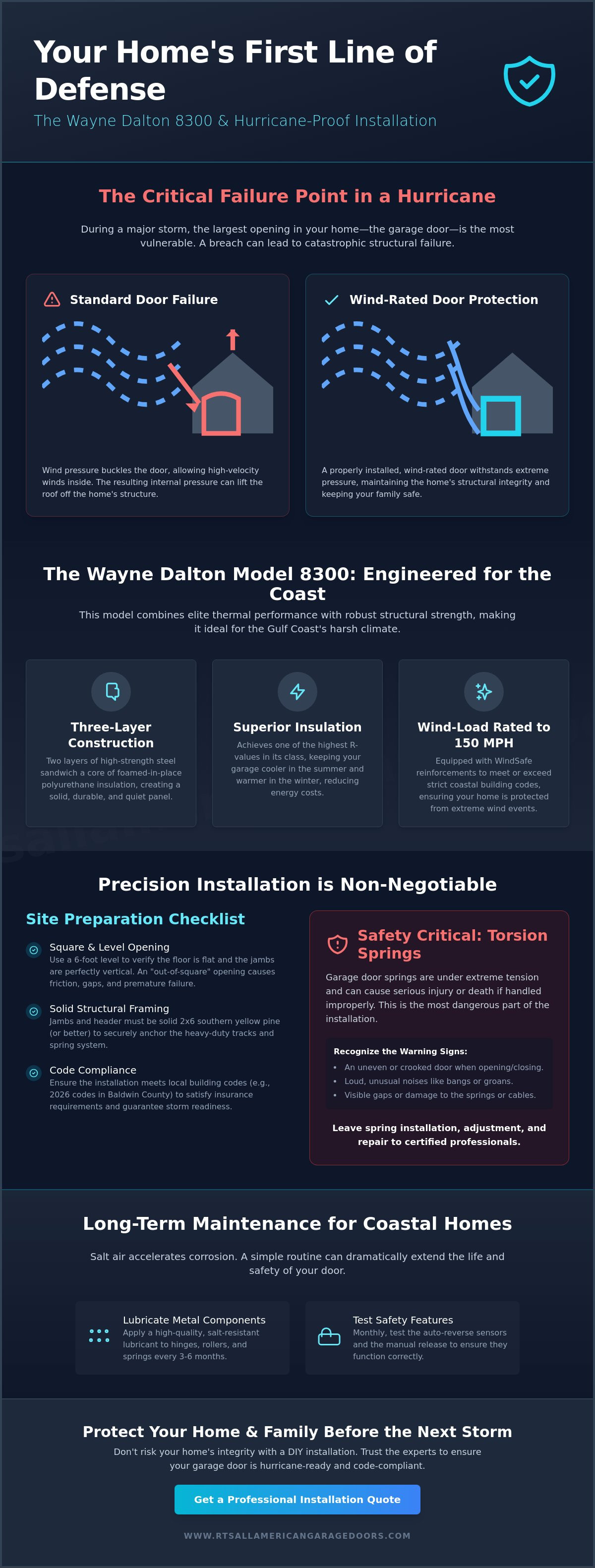
The Wayne Dalton Model 8300 stands as a benchmark for premium residential garage doors. It is a polyurethane insulated door designed specifically for homeowners who demand high thermal performance and long-term durability. In the coastal environments of Pensacola and Mobile, the weather is often unforgiving. High humidity and salt spray can degrade standard doors, but the 8300's three-layer construction provides a robust defense. It features two layers of high-strength steel that encapsulate a core of foamed-in-place insulation.
This insulation is measured by its R-value, a standard rating for thermal resistance. For the 8300, this rating is among the highest in its class. A well-executed Wayne Dalton 8300 installation ensures that this thermal barrier remains unbroken. Understanding the various garage door components is the first step in appreciating how this system works. From the tracks to the heavy-duty hinges, every part must support the weight and seal of these thick panels to keep your garage temperature stable throughout the year.
Structural integrity is equally vital for a hurricane proof garage door installation. Because the garage door is the largest opening in your home, it is the most vulnerable point during a storm. The 8300 model can be equipped with WindSafe reinforcements to meet local building codes that require resistance to wind speeds of 150 mph or higher. This structural stiffness prevents the door from buckling under extreme pressure, which is a common cause of roof failure in high-wind events.
Key Features of the Classic Steel 8300
The polyurethane insulation used in this model is foamed directly into the door sections. This process allows the insulation to expand and bond to the steel skins, creating a solid, monolithic panel that is incredibly strong and quiet. To prevent air infiltration, the door features a bulb-shaped bottom weather seal. This seal acts as a barrier against drafts, rain, and pests, ensuring your garage stays clean and dry. These high-performance features are available across all panel designs in the Wayne Dalton classic steel doors collection, offering a blend of traditional aesthetics and modern engineering.
Why Proper Installation is Non-Negotiable
Precision is the difference between a door that lasts twenty years and one that fails in five. If the tracks are even slightly out of alignment, the door won't sit flush against the jambs. This creates gaps that allow heat to pour in and conditioned air to escape. During a Wayne Dalton 8300 installation, every section must be perfectly level to ensure the interlocking joints seal correctly. In Baldwin County, meeting the 2026 building codes is a legal requirement for your insurance coverage. A professional-grade install guarantees that your WindSafe reinforcements are anchored properly to the home's structure, providing the peace of mind that your property is ready for hurricane season.
Site Preparation and Wind-Load Compliance for the Gulf Coast
Before you begin your Wayne Dalton 8300 installation, you must ensure the garage opening is prepared to handle a high-performance system. A door this heavy requires a perfectly square and level foundation. Start by using a 6-foot level to check the floor across the entire width of the opening. If the floor slopes significantly, the bottom seal won't sit flush, which invites water and pests into your garage. You should also check the vertical jambs and the horizontal header for squareness. If the opening is "racked" or leaning, the tracks won't align, leading to friction and premature motor failure.
Structural soundness is the next priority. The header and jambs must be constructed of solid material, typically 2x6 southern yellow pine or better, to securely anchor the lag screws. In Pensacola and Mobile, the 2026 building codes are strict because of our hurricane risk. You aren't just installing a door; you're installing a wind-rated barrier. Most coastal areas now require a rating of at least 150 mph. If you're unsure if your current framing can handle the load, it's best to have a local professional inspect your garage opening before you unbox your new door.
Gathering the right tools is essential for safety and precision. You will need:
- A 6-foot level and a tape measure
- Steel winding bars (never substitute these with screwdrivers)
- An impact driver with a full socket set
- Locking pliers (C-clamps)
- Safety glasses and heavy-duty work gloves
Measuring Your Opening for a Perfect Fit
Precision measurements prevent costly delays. Measure the width and height of the finished opening to the nearest fraction of an inch. For side-room, the Model 8300 typically requires 3.75 inches on each side for the vertical tracks. Backroom is equally critical; you need the door height plus an additional 18 inches of clear space to accommodate the horizontal tracks. If you plan to install LiftMaster garage door openers, ensure you have at least 12 inches of headroom above the header for a standard torsion spring setup.
Wind-Load Reinforcement Strips
In high-wind zones, the Wayne Dalton 8300 relies on continuous reinforcement strips, often called U-bars or struts. These steel components are fastened to the interior of the door panels to prevent them from bowing or blowing in during a storm. The number of U-bars required depends on your specific door width and local wind-speed requirements. You can consult the DASMA technical guidelines to verify the correct strut configuration for your zone. Once installed, verify that the Florida Product Approval or Miami-Dade NOA sticker is visible on the door. This sticker is your proof of compliance for insurance premium discounts.
Step-by-Step Guide to Installing the Wayne Dalton 8300
Your Wayne Dalton 8300 installation begins at the garage floor. If the first section isn't perfectly level, every subsequent panel will be crooked, leading to gaps at the top. Start by attaching the vinyl weather stripping to the bottom rail of the first panel. Place this section in the opening and center it. You can use a few nails partially driven into the stop molding to hold the panel in place while you level it. Once the bottom section is secure, you'll begin stacking the remaining panels one by one. Each section interlocks with the one below it, creating the tight thermal seal that makes this model so efficient.
Panel Assembly and Roller Placement
As you stack the panels, you must install the hinges and rollers. Use a staggered hinge approach for maximum structural strength. This means placing the hinges at the pre-marked locations provided by the factory. When driving screws into the 8300’s steel skin, don't over-tighten them. You want a snug fit that doesn't strip the metal. Ensure each roller is fully seated in its hinge tube before moving to the next section. Following the International Residential Code garage door provisions ensures that these structural attachments meet the necessary safety standards for residential use. This precision prevents the panels from shifting during operation.
Next, you will mount the torsion bar and the center bearing bracket. The bracket must be mounted to a solid wood pad on the header. It's vital that the torsion bar is level across the entire width of the door. Slide the springs and cable drums onto the bar before lifting it into the end bearing plates. At this stage, the cables should be routed behind the rollers and attached to the bottom fixtures. Keep the cables clear of the tracks to prevent fraying or snapping during the first test run.
Track Alignment and Clearance
Setting the tracks requires a delicate touch. You want a 1/8-inch gap between the door and the track to allow the weather seal to compress without binding the door. Secure the vertical tracks to the jambs using track brackets and lag screws. For the horizontal tracks, use punched angle iron to hang them from the ceiling joists. This bracing must be rigid; if the tracks sway, the door will be noisy and unstable. Before you even think about attaching an opener, test the manual balance. A correctly installed door should stay in place when opened halfway. This indicates that your Wayne Dalton 8300 installation is technically sound and ready for the final tensioning steps.
The final track adjustments are what lead to a "whisper-quiet" operation. Tighten all fasteners only after you've verified that the door moves freely through the radius of the track. If you feel any resistance or hear scraping, stop and re-check the track spacing. Small adjustments now will prevent major repair bills later.
The Safety Boundary: Handling Springs and Tension
Torsion springs are the most dangerous component of any garage door system. These steel coils store enough mechanical energy to lift a heavy, insulated door with ease, but that same energy can be lethal if released uncontrollably. During a Wayne Dalton 8300 installation, the springs must be wound to a specific number of turns based on the door's weight and height. This is the exact point where a homeowner's DIY project should stop. If a winding bar slips or a set screw isn't tightened correctly, the spring can unwind instantly, causing severe injury or property damage.
You can identify incorrect tension by paying attention to how the door behaves. If the door is difficult to lift manually or slams shut when released from a halfway point, the springs are under-tensioned. Conversely, if the door flies upward or won't stay closed, the tension is too high. Both scenarios put excessive strain on your opener's motor and gears. Wayne Dalton often utilizes the TorqueMaster system, which houses the springs inside a tube for added safety. However, many wind-rated 8300 models in our region use standard torsion springs for better performance in high-wind zones. Because of these technical complexities, RTS All American Garage Doors recommends that you contact a professional technician to handle the final tensioning and calibration of your system.
Torsion vs. Extension Springs on the 8300
The Model 8300 is a premium, three-layer door. Its weight requires the steady, controlled lift provided by a torsion spring system. While extension springs are common on lighter, non-insulated doors, they lack the longevity and balance needed for a high-R-value door. Torsion springs sit above the header and distribute weight evenly across the entire shaft. This reduces wear on the rollers and tracks. If you ever notice a gap in the coils or hear a loud bang from the garage, you should learn how to tell if garage door spring is broken before attempting to operate the door again.
Professional Calibration and Warranty
Precision isn't just about safety; it's about protecting your investment. A DIY spring mishap during your Wayne Dalton 8300 installation can void the manufacturer warranty, leaving you responsible for future component failures. A professional start ensures your Wayne Dalton garage door repair Pensacola needs are kept to a minimum. RTS All American Garage Doors performs a "drop test" and a balance check to ensure the door stays perfectly level in the tracks. This calibration is what allows your door to operate for years without the need for emergency service calls.
Final Adjustments and Long-Term Maintenance for Coastal Homes
Once your Wayne Dalton 8300 installation is complete, the focus shifts to longevity and safety. A high-performance door is only as good as its ongoing maintenance, especially in the harsh environments of the Gulf Coast. Start by applying a high-quality silicone lubricant to all moving parts, including the rollers, hinges, and torsion spring coils. Avoid using grease or WD-40, as these substances attract grit and salt, which can grind down the metal components over time. A light coating of silicone spray twice a year keeps the operation smooth and prevents the chatter often heard in older systems.
Safety testing is your next priority. You must verify that the auto-reverse features on your opener are functioning correctly to protect your family and vehicles. Place a 2x4 piece of wood flat on the garage floor directly under the door's path. Close the door using the wall button. The door should reverse instantly upon striking the wood. If it doesn't, you need to adjust the down-limit and force settings on your motor. For homeowners who prefer a professional eye, you can schedule a garage door tune-up service in Mobile, AL to ensure every safety sensor and mechanical limit is calibrated to factory standards.
Coastal Corrosion Prevention
Living near Pensacola Beach or the Baldwin County coastline means your door is constantly exposed to salt air and high UV levels. Salt is highly corrosive to steel, even with the Model 8300's premium finish. Wash the exterior of your door every three to six months using a soft cloth and a mild, non-toxic biodegradable detergent. This simple step removes salt deposits before they can pit the steel. While cleaning, inspect the weather seals for dry rot. The intense Alabama sun can cause the vinyl to become brittle and crack. If the seals no longer feel pliable, they won't provide the draft exclusion you need for maximum energy efficiency.
Your 6-month maintenance checklist should include:
- Tightening all track bolts and hinge screws that may have vibrated loose.
- Clearing debris and cobwebs from the photo-eye safety sensors.
- Inspecting lift cables for any signs of fraying or rust near the bottom brackets.
- Wiping down the interior tracks with a clean rag to remove dust buildup.
The RTS All American Garage Doors Advantage
Precision and honesty are the foundations of our service. Our local technicians are experts in specific Wayne Dalton 8300 configurations, ensuring your wind-load reinforcements are installed exactly as the manufacturer intended. RTS All American Garage Doors understands that home repairs can be stressful, which is why we utilize a strictly defined, standardized pricing structure. You will never deal with hidden surcharges or vague estimates. We treat every residential system with the highest level of care, mirroring the traditional service values of punctuality and integrity. If you are ready to upgrade your home's protection, contact RTS All American Garage Doors today for a professional installation quote in Baldwin County.
Secure Your Home and Comfort for the Long Term
Your home is your most significant investment. Ensuring your garage door acts as a reliable shield against the elements is a responsibility we take seriously. By focusing on precise site preparation and adhering to strict wind-load standards, you've taken the first steps toward a safer property. The energy efficiency of this three-layer system depends entirely on a tight seal and perfect track alignment. While the assembly is a manageable project for many, the high-tension requirements of the spring system are a clear boundary where professional expertise prevents dangerous accidents.
A successful Wayne Dalton 8300 installation provides more than just curb appeal; it offers peace of mind during hurricane season and lower utility bills year-round. Our team brings over 15 years of local Gulf Coast experience to every project. We employ expert Wayne Dalton authorized technicians and operate with standardized, transparent labor rates to ensure you receive the best value without hidden costs. We are proud to serve our neighbors with integrity and excellence.
Get a Professional Wayne Dalton 8300 Installation Quote Today
Protect your household with a door that is built to last and installed to the highest standards. We look forward to helping you secure your home.
Frequently Asked Questions
How long does a Wayne Dalton 8300 installation typically take?
A professional installation usually takes between three and five hours for a standard residential opening. If you are a homeowner tackling this as a DIY project, you should set aside a full day or a weekend. The total time depends on your experience level and whether your garage requires structural modifications to meet local wind-load codes.
Can I install a Wayne Dalton 8300 myself?
You can manage the track assembly and panel stacking yourself, but the spring tensioning should be left to a professional. The Wayne Dalton 8300 installation involves heavy steel panels and high-tension torsion springs that can cause severe injury if mishandled. We recommend completing the physical assembly and then calling a technician to safely wind the springs and calibrate the balance.
What is the wind-load rating for the Wayne Dalton 8300 in Florida?
The Model 8300 is available with WindSafe reinforcements that allow it to meet Florida wind-load requirements of 150 mph or higher. These ratings are specific to your local building department and your home's proximity to the coast. Always verify the Florida Product Approval number on the door's label to ensure it matches the design pressure required for your specific zip code.
Do I need a new opener for the Wayne Dalton 8300?
You don't need a new opener if your existing unit is in good condition and rated for the weight of an insulated steel door. However, because the 8300 is a premium, heavy door, we suggest a high-torque LiftMaster Belt Drive or Wall Mount system. These openers handle the weight smoothly and complement the door's quiet operation without putting excessive strain on the motor gears.
What tools are required for a Wayne Dalton 8300 installation?
You will need a 6-foot level, a tape measure, an impact driver with a socket set, locking pliers, and a ladder. It's critical to use professional-grade steel winding bars for the torsion springs; never substitute these with screwdrivers or rebar. Having the right tools on hand before you start the Wayne Dalton 8300 installation ensures the tracks are perfectly plumb and the panels stay level.
Is the Wayne Dalton 8300 heavy enough to require special springs?
Yes, the three-layer polyurethane construction makes this door heavy enough to require specific torsion springs that are matched to its deadweight. This model almost never uses extension springs because they can't provide the balanced lift needed for such a thick door. Using incorrectly sized springs will cause the door to feel heavy, which can quickly destroy your opener's internal components.
How much does professional installation for a Wayne Dalton 8300 cost?
Labor costs for installation depend on the size of the door and the complexity of the wind-load hardware required for your area. We provide honest, standardized pricing to ensure you receive a fair rate without the worry of hidden surcharges. Factors like the condition of your existing door frame and header will also play a role in the final service quote.
What should I do if my Wayne Dalton 8300 panels are misaligned?
You should first check the vertical tracks with a level to see if they have shifted. If the tracks are plumb, inspect the rollers and hinges to ensure they are seated correctly in their tubes. If the door still looks crooked, the issue is likely uneven cable tension or a spring that wasn't wound correctly. In these cases, it's safest to have a technician reset the cables and balance the door.