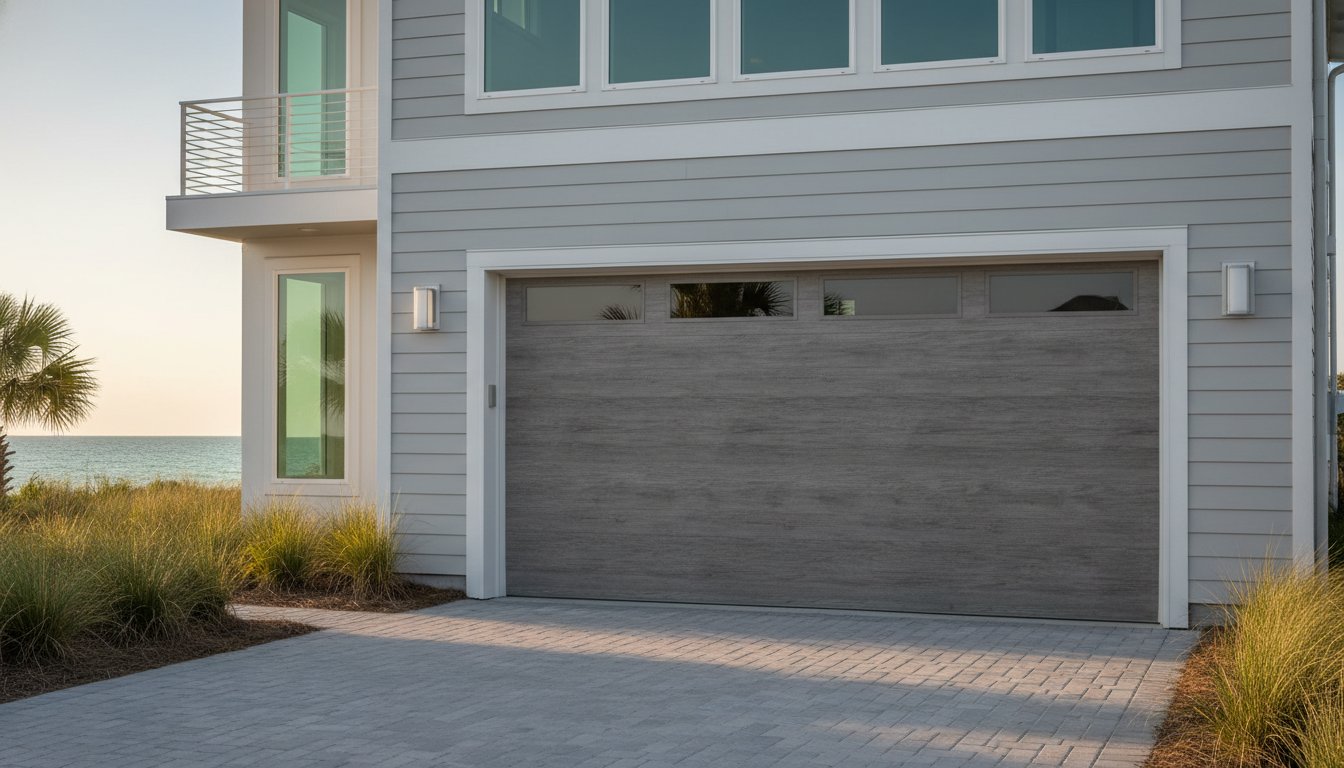
Did you know that a failing garage door can increase the internal pressure on your home's roof by as much as 500% during a major storm? For Gulf Coast homeowners, the salt air is a constant threat that does more than just ruin your curb appeal with unsightly rust streaks. It actively eats away at your springs and tracks, often leading to mechanical failures just when you need your door to be most secure. Finding the best garage doors for salt air is about more than aesthetics; it's a vital step in protecting your property and your family.
We know you're looking for a solution that offers the beauty of wood without the constant maintenance and corrosion. You shouldn't have to replace your door every few years because of the environment. This guide explores the most durable, salt-resistant materials and hardware designed to handle coastal life. We'll also cover the upcoming 9th Edition Florida Building Code requirements for 160 mph impact resistance to ensure your home stays compliant and safe for years to come.
Key Takeaways
- Discover why aluminum and fiberglass are the superior choices for enduring high-humidity coastal environments without rotting or rusting.
- Identify the critical hardware upgrades, such as powder-coated tracks and stainless steel components, that prevent salt-induced mechanical failure.
- Learn the "Rinse and Repeat" maintenance rule and why silicone-based lubricants are mandatory for protecting moving parts from salt trapping.
- Master the process of choosing the best garage doors for salt air that also comply with the strict 2026 Florida Building Code wind-load requirements.
- Understand the long-term financial benefits of investing in corrosion-resistant materials to avoid frequent replacements and maintain your property value.
Understanding the Coastal Challenge: Why Salt Air Destroys Garage Doors
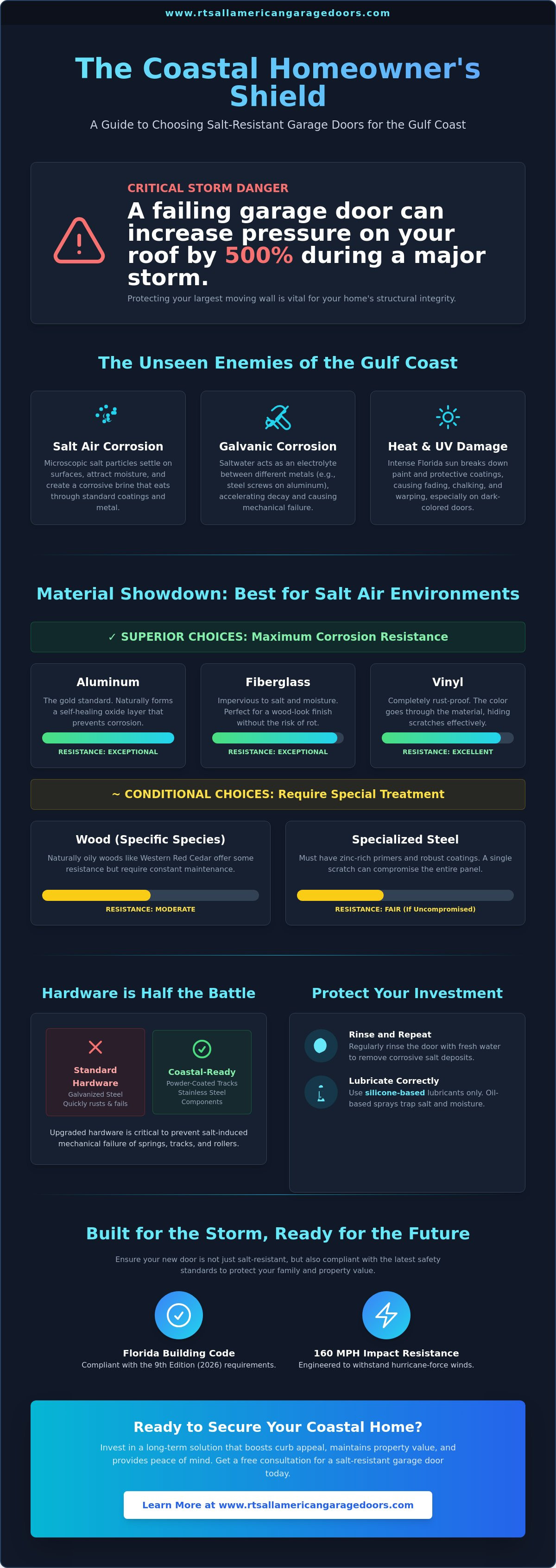
Living near the Gulf means dealing with a relentless environment that never stops testing your home's exterior. The salt spray effect is the primary culprit behind most premature failures. Microscopic salt particles travel on the breeze and settle on every surface of your door. Because salt is hygroscopic, it attracts and holds moisture directly against the metal. In the high-humidity climate of the Gulf Coast, this creates a permanent layer of brine that eats through standard protective coatings. Selecting the best garage doors for salt air involves understanding this chemistry before you make an investment.
Standard galvanized steel doors rely on a thin layer of zinc for protection. While this works well inland, the constant moisture in coastal areas leads to rapid oxidation. We define the "Critical Zone" as any home within five miles of the Gulf. In this area, the salt concentration is high enough to turn a small scratch into a structural nightmare within a single season. It's vital to distinguish between cosmetic surface rust and structural integrity failure. Surface rust looks bad, but structural failure means the door can no longer meet wind-load requirements, leaving your home vulnerable during a hurricane.
When researching different garage door materials, you'll find that some are naturally better at resisting this chemical assault than others. The best garage doors for salt air utilize materials that don't react to this electrolyte, ensuring your door stays functional for its intended lifespan.
The Impact of Galvanic Corrosion on the Gulf Coast
Galvanic corrosion occurs when salt water acts as an electrolyte between two different types of metal, such as a steel screw and an aluminum panel. This process creates a literal electrical circuit that accelerates the decay of the less noble metal. We see this happen much faster in Pensacola Beach than in inland communities because the salt concentration is significantly higher. This is particularly dangerous for the moving parts of your system. Salt air accelerates metal fatigue in torsion springs, leading to sudden, dangerous breaks that can trap your car inside the garage.
Heat and UV Exposure: The Hidden Coastal Killers
The intense Florida sun is just as damaging as the salt. Constant UV exposure breaks down the chemical bonds in paint and clear coats, causing them to chalk and fade. Once the protective topcoat is compromised, the salt air has a direct path to the underlying material. Dark-colored doors are especially prone to heat warping under direct Gulf sunlight, as they absorb massive amounts of thermal energy. For long-term curb appeal, UV-resistant topcoats are a non-negotiable requirement for any coastal installation.
The Best Garage Door Materials for Salt Air Environments
Selecting the best garage doors for salt air requires moving beyond standard residential options found at big-box retailers. You need materials that naturally resist the chemical reaction between salt and metal. Aluminum stands as the gold standard for coastal durability because it naturally forms a protective oxide layer. This layer acts as a self-healing shield against corrosion. Fiberglass is another top-tier choice. It is completely impervious to salt and moisture, making it the ideal solution for homeowners who want a wood-look finish without the risk of rot or swelling. For those prioritizing impact resistance and ease of cleaning, vinyl doors offer a rust-proof surface with color that goes all the way through the material, hiding scratches and dents effectively.
Many homeowners still prefer the traditional look of wood. If you choose this route, specify naturally oily species like Western Red Cedar. These woods contain natural tannins and oils that resist moisture absorption. However, if you prefer the strength of steel, look for Wayne Dalton Classic Steel Garage Doors that utilize zinc-rich primers. This engineering provides a sacrificial layer of protection that prevents rust from reaching the steel core. For homes in high-risk V-zones, referencing a DASMA Technical Data Sheet helps clarify how specific door constructions handle storm surges and salt-laden winds. If you aren't sure which material fits your property best, you can explore our full range of Wayne Dalton Carriage House Steel Garage Doors and specialty options online.
Aluminum and Glass: Modern Style Meets Salt Resistance
Anodized aluminum frames are exceptionally resilient against the constant salt spray found in Baldwin County and Pensacola Beach. Unlike painted frames that can chip and peel, anodized finishes are part of the metal itself. Pairing these frames with tempered glass allows you to flood your garage with natural light while maintaining a secure, weather-tight seal. This combination provides a sleek, modern aesthetic that won't degrade when the wind picks up off the Gulf.
Fiberglass and Composite: The Maintenance-Free Wood Alternative
Molded fiberglass is a game-changer for the Mobile climate. It perfectly mimics the deep textures of wood grain but remains entirely salt-proof. These doors often feature thick polyurethane insulation, which is vital for keeping your garage cool during oppressive Alabama summers. You can read more about the benefits of insulated garage doors in Mobile, AL to see how these systems contribute to lower energy bills and improved structural rigidity. This material choice ensures your best garage doors for salt air investment lasts for decades rather than years.
Beyond the Panels: Salt-Resistant Hardware and Components
Most homeowners spend their time comparing panel styles and colors, but the mechanical system is what truly determines the lifespan of your installation. Even the best garage doors for salt air will fail prematurely if the tracks, rollers, and springs aren't engineered for a marine environment. Standard galvanized steel tracks are the industry norm, but they don't stand a chance against the constant brine of the Gulf Coast. We recommend powder-coated tracks for any home within five miles of the water. This process applies a thick, baked-on finish that seals the metal away from corrosive salt particles. Without this protection, rust forms in the track curves within months, leading to a noisy, grinding operation that eventually burns out your opener.
The hardware components—hinges, rollers, and fasteners—should be upgraded to 304 or 316-grade stainless steel. While 304-grade is excellent for most areas, 316-grade is the superior choice for waterfront properties because it contains molybdenum. This element provides specific resistance to chloride-induced pitting, which is the most common form of metal decay near the ocean. Pairing this high-grade hardware with nylon rollers that feature sealed bearings ensures that salt and sand stay out of the moving parts. This keeps your door operating quietly and prevents the internal bearings from seizing up due to corrosion.
Don't overlook the springs. Torsion springs are under immense tension and are the most dangerous part of the system when they fail. Standard springs will rust and snap quickly in high-humidity zones. High-cycle, galvanized torsion springs or those with a specialized protective coating are mandatory for long-term safety. These components are the mechanical heart of your door, and their failure can leave you stranded during a storm evacuation.
Protecting the Mechanical Heart of Your Door
Spring failure is the #1 service call we receive in coastal Alabama and Florida. When salt air causes even minor pitting on a spring, it creates a stress point that leads to a sudden, violent snap. Investing in high-cycle, coated springs is a practical way to avoid these emergency repairs. Consistent garage door maintenance service for salt-exposed hardware is the only way to catch these issues before they turn into a safety hazard. Powder-coating your tracks further extends the life of the system by preventing the "rust-bleed" that often stains the door panels themselves.
Weather Seals and Thresholds: The First Line of Defense
Weather seals act as the primary barrier between the harsh Gulf environment and your home's interior. We use oversized bottom seals to block wind-blown salt and abrasive sand from entering the garage. Side and top weatherstripping create a pressurized seal that helps defend against storm surges and driving rain. High-quality seals protect the interior garage environment by maintaining a consistent humidity level and preventing salt deposits from settling on your tools, vehicles, and storage items.
Maintenance Strategies: Extending the Life of Your Coastal Door
Even the best garage doors for salt air require a disciplined maintenance routine to survive the Gulf's humidity. Salt is relentless. It works 24 hours a day to compromise your door's finish and mechanical components. We follow the "Rinse and Repeat" rule: a thorough fresh water rinsing every three months is mandatory for any home within five miles of the coast. This simple act removes the accumulated brine before it has a chance to penetrate the protective topcoat or settle into the hinges.
Lubrication is another area where coastal homeowners often make mistakes. Never use heavy grease on your tracks or rollers. Grease is a magnet for salt and wind-blown sand, creating an abrasive paste that grinds down metal components. Instead, use a high-quality silicone-based spray. Silicone provides a dry, protective barrier that repels moisture without trapping debris. This keeps your system running smoothly and prevents the "binding" often caused by salt buildup in the tracks.
Perform a visual inspection once a month to look for "spidering." These are thin, vein-like rust lines that appear under the paint. If you catch spidering early, you can treat the area before it becomes a structural hole. Because of the aggressive environment, coastal doors need a professional tune-up twice a year. An inland door might last with annual service, but Gulf Coast systems face double the wear and tear from corrosion. If you're noticing new noises or sluggish movement, it's time to schedule a professional inspection to protect your investment.
The 10-Minute Salt Flush Routine
Rinsing your door doesn't have to be a major chore. Follow this simple guide to keep your system clean:
- Wet the surface: Use a standard garden hose to soak the panels from top to bottom.
- Clean the hardware: Direct the water into the tracks and over the hinges to flush out trapped salt.
- Use mild detergent: If there's visible grime, use a soft cloth and a gentle car-wash soap. This won't strip the UV-resistant coatings.
- Warning: Never use a high-pressure power washer. The force can tear through weather seals and drive salt deeper into the mechanical bearings.
Professional Corrosion Audits
A professional technician sees things the average homeowner might miss. During a coastal safety inspection, we look for internal corrosion inside the spring coils and pitting on the cables. Catching these issues early allows for proactive torsion spring replacement before a dangerous break occurs. Our brand relies on standardized pricing, so you'll always know the cost of these coastal upgrades upfront without any hidden surcharges or "coastal tax" markups.
Choosing for the Gulf Coast: Wind Load and Local Standards
Selecting the best garage doors for salt air is only half the battle for Gulf Coast residents. While corrosion resistance keeps your door looking sharp, wind-load capacity keeps your home standing. In regions like Pensacola and Mobile, a garage door represents a massive structural opening. If that door fails during a storm, the internal pressure on your roof can increase by as much as 500%, often leading to catastrophic structural failure. This is why the Florida Building Code (FBC) mandates strict design pressures for coastal installations.
The upcoming 9th Edition of the FBC, scheduled to take effect on December 31, 2026, expands the requirement for 160 mph impact resistance to new residential construction within five miles of tidal waters. This means your search for the best garage doors for salt air must prioritize products that carry a Florida Product Approval number or a Miami-Dade Notice of Acceptance (NOA). Wayne Dalton provides several wind-load options specifically engineered to meet these rigorous standards without sacrificing the salt-resistant qualities we've discussed in previous sections.
Proper installation does more than just meet local code; it directly impacts your wallet. In Baldwin County and coastal Alabama, insurance providers often offer significant credits for homes with certified hurricane-rated openings. By choosing a door that is both salt-resistant and storm-rated, you reduce your long-term maintenance costs and your annual premiums simultaneously. It's a logical problem-solution approach that prioritizes safety and financial clarity.
Hurricane-Proofing and Salt Resistance: A Dual Necessity
A truly coastal-ready door requires a reinforced strut system. These heavy-duty steel supports are installed on the back of the door panels to prevent them from buckling under the extreme pressure of a hurricane. For a deep dive into these requirements, see our hurricane proof garage door installation guide. These systems are essential in High-Velocity Hurricane Zones (HVHZ). Don't forget that these safety upgrades often qualify you for hurricane garage door home insurance discounts, making the initial investment much easier to manage.
The RTS All American Advantage
We live and work in Pensacola and Mobile. Our team understands exactly how the salt air eats through standard hardware because we see it every day. We don't just sell doors; we install systems designed to survive this environment. By exclusively using Wayne Dalton panels and LiftMaster openers, we ensure your home is equipped with components tested for coastal durability and safety. We believe in transparency and integrity, providing you with clear pricing and expert advice you can trust. Contact us today for a coastal-ready garage door consultation and let's make sure your home is ready for whatever the Gulf throws its way.
Secure Your Coastal Home for the Long Haul
Protecting your home from the relentless Gulf Coast environment requires a strategy that addresses both corrosion and structural strength. By prioritizing materials like aluminum or fiberglass and insisting on powder-coated hardware, you stop rust before it has a chance to compromise your system. Remember that consistent freshwater rinsing and professional bi-annual tune-ups are the most effective ways to ensure your mechanical components remain reliable during storm season. Choosing the best garage doors for salt air isn't just about curb appeal; it's a necessary step to safeguard your property and your peace of mind.
With over 15 years of experience serving the Gulf Coast, our team understands the unique challenges facing homeowners in Pensacola and Mobile. As an expert Wayne Dalton Authorized Dealer, we provide specialized solutions that meet the strictest local wind-load codes. Our local technicians live and work in your community, and we pride ourselves on transparent, standardized pricing without hidden costs. We're ready to help you find a door that stands up to the salt and the wind.
Get a Free Quote on Salt-Resistant Garage Doors
Take the first step toward a more durable home today. We look forward to providing the honest, expert service you deserve.
Frequently Asked Questions
How often should I wash my garage door if I live on the beach?
You should rinse your door every three months as a baseline for most coastal warranties. However, if your home sits directly on the Gulf front, a monthly freshwater flush is a much safer bet. This frequency prevents salt crystals from bonding to the finish and hardware. Use a standard garden hose and a soft cloth to reach the hinges and tracks where salt often hides.
Will a stainless steel garage door ever rust?
Yes, even stainless steel can develop rust if it isn't maintained or if the wrong grade is used. Salt air can cause "tea staining" or surface pitting over time. Choosing 316-grade stainless steel provides the highest level of protection against chloride-induced decay. Regular cleaning is still necessary to keep the protective chromium oxide layer intact and prevent oxidation from taking hold.
Can I paint my existing garage door with a rust-resistant coating?
You can apply aftermarket coatings, but they rarely match the durability of a factory-applied finish. Most DIY paints don't bond well to galvanized steel once salt has already started the oxidation process. If your door is already showing signs of "spidering" or structural rust, painting is only a temporary cosmetic fix. It's usually more cost-effective to invest in a door designed for the environment.
What is the best material for a garage door in a high-humidity area like Mobile, AL?
Aluminum and fiberglass are the top choices for high-humidity areas like Mobile. These materials don't absorb moisture and are naturally resistant to the corrosion that plagues standard steel. Aluminum naturally creates its own protective oxide layer, while fiberglass is completely impervious to rot. These options ensure your door remains functional and looks great despite the oppressive humidity and constant salt spray.
Do coastal garage doors require special springs?
Yes, we strongly recommend using high-cycle, galvanized, or powder-coated torsion springs for coastal homes. Standard oil-tempered springs rust quickly when exposed to salt air, which leads to sudden, dangerous breaks. These specialized springs are designed to resist the chemical breakdown caused by high humidity. Investing in better spring technology is one of the most effective ways to prevent emergency service calls and safety hazards.
How much more does a salt-resistant garage door cost compared to a standard one?
Salt-resistant materials typically require a higher initial investment than standard galvanized steel. Choosing the best garage doors for salt air, such as aluminum or fiberglass models, involves specialized manufacturing and upgraded hardware components. While the upfront cost is higher, you save money over time by avoiding frequent replacements and costly repairs. You should check with a local professional for current market rates in your specific area.
Are aluminum garage doors strong enough for hurricane-force winds?
Modern aluminum doors are absolutely strong enough when they are engineered with the correct wind-load reinforcements. Manufacturers use heavy-duty struts and reinforced tracking to ensure these doors meet strict Florida and Alabama building codes. An aluminum door can be both lightweight for daily use and incredibly tough during a storm. Always verify that the specific model you choose is rated for the wind speeds in your zone.
What happens if salt gets into my garage door opener?
Salt is highly conductive and can cause short circuits in the electronic motherboards of your opener. It also acts as an abrasive that wears down plastic gears and dries out essential lubricants. If you notice a white, powdery residue on your opener, it's a sign of salt accumulation. Using a wall-mount opener or ensuring your weather seals are tight can help protect these sensitive mechanical and electronic components.