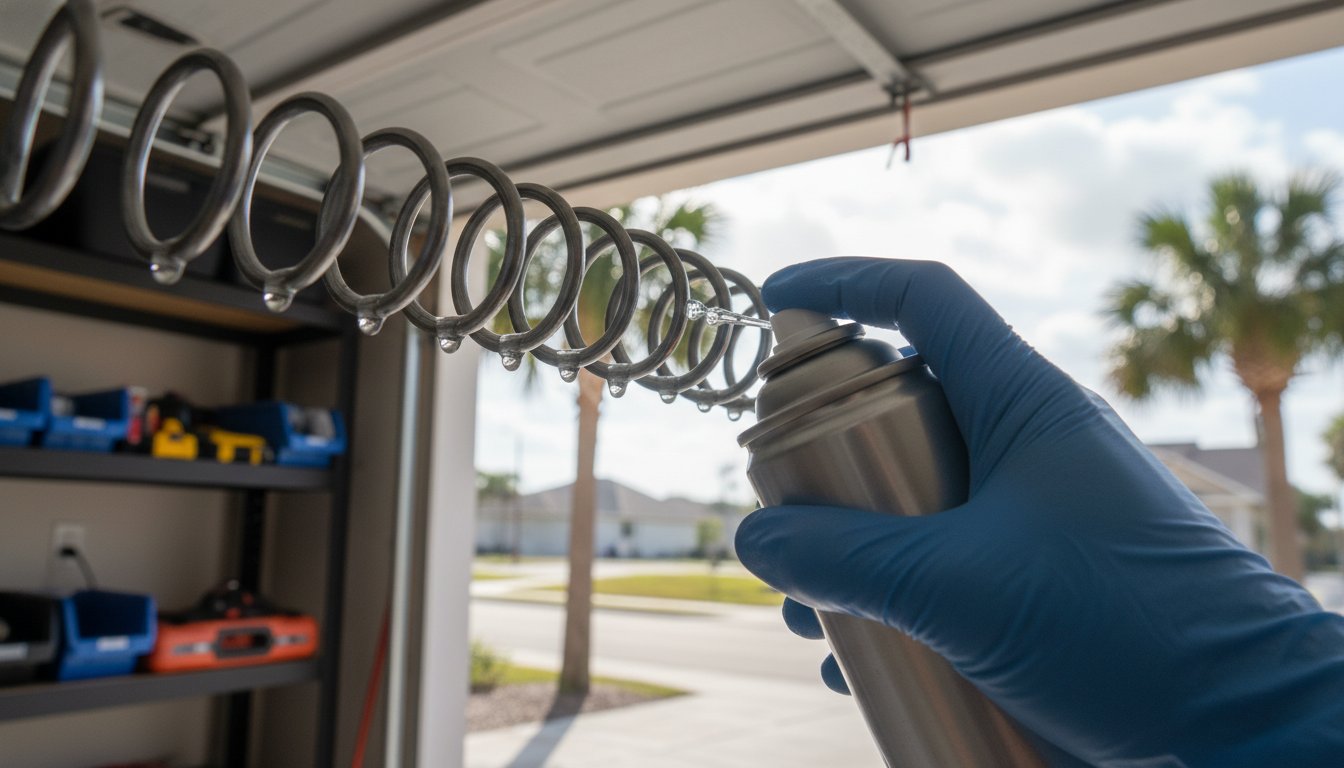
That high-pitched screech from your garage door isn't just an annoyance; it's the sound of salt air and humidity eating away at your home's most dangerous mechanical component. You need to lubricate garage door springs before that grinding noise turns into a snapped coil and an expensive emergency replacement. In our Gulf Coast climate, proactive maintenance is the only way to protect your investment from the premature corrosion that leads to structural failure.
We understand the hesitation that comes with DIY garage door care. It's natural to worry about the safety of high-tension parts or feel confused by the dozens of lubricant options available at the hardware store. You want a quiet door and the peace of mind that comes with knowing your system is secure. This 2026 guide provides the exact steps and professional-grade products you need to safely maintain your hardware and extend its lifespan.
You'll learn the critical difference between silicone sprays and white lithium grease. We also outline clear safety protocols to ensure you stay out of harm's way while working on torsion or extension systems. By the end of this article, you'll have a straightforward maintenance routine that keeps your garage door operating reliably through every season.
Key Takeaways
- Protect your system from the Gulf Coast’s harsh humidity by learning how friction and salt air lead to premature metal fatigue.
- Choose the correct specialized products and learn why you should lubricate garage door springs with silicone or lithium grease instead of standard household oils.
- Prioritize safety by mastering the steps to disconnect your opener and secure the door before performing any maintenance tasks.
- Recognize the visual red flags, such as coil gapping or deep-seated rust, that indicate a spring is no longer safe to operate and needs professional attention.
- Improve performance by cleaning away old debris and salt buildup, allowing your lubricant to penetrate deep into the hardware for long-lasting protection.
The Importance of Lubricating Garage Door Springs in the Gulf Coast Climate
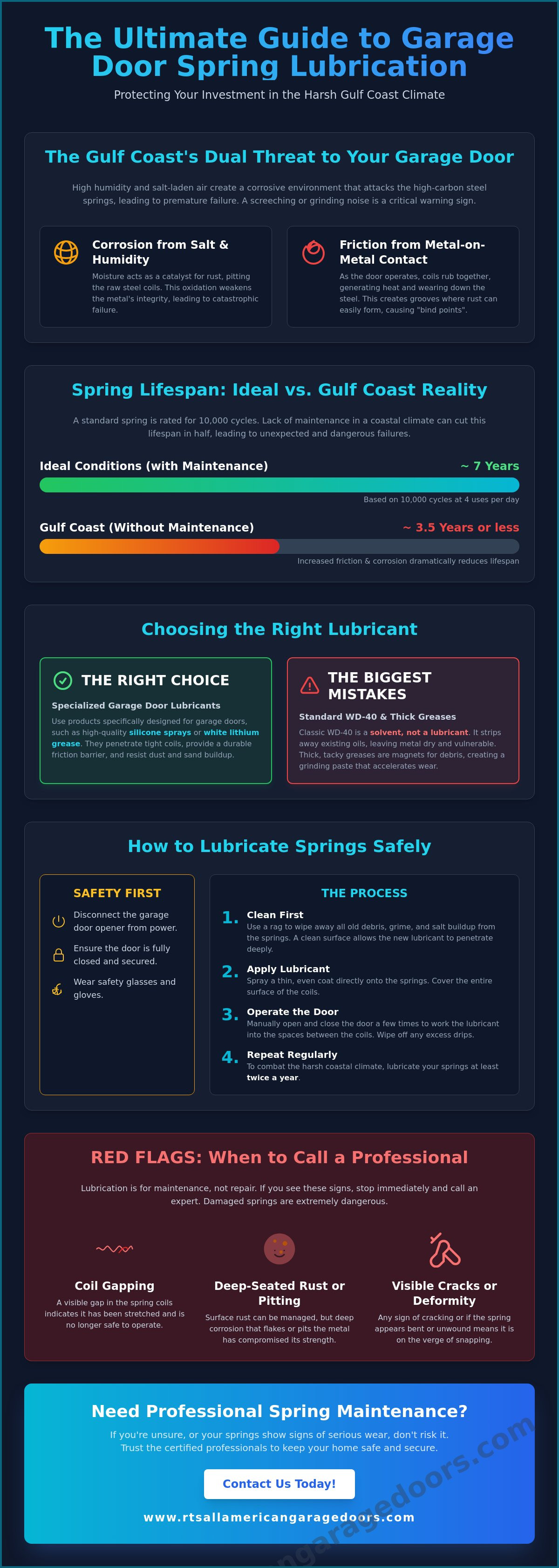
Living on the Gulf Coast means your home is under constant attack from salt air and intense humidity. While most homeowners focus on their HVAC or roof, your garage door system is often the first to show signs of environmental stress. High-carbon steel springs are the muscles of your door. They do the heavy lifting every time you leave for work or return home. When you fail to lubricate garage door springs, you aren't just dealing with a noisy annoyance. You're allowing friction and oxidation to weaken the metal until it reaches a breaking point.
In Pensacola and Mobile, the moisture in the air acts as a catalyst for rust. Without a protective layer of lubricant, the raw steel of the coils begins to pit and corrode. This chemical reaction is why a garage door tune-up service Mobile AL is so critical for coastal residents. A quiet, smooth-running door is the primary indicator of a healthy mechanical system. If your door screeches or grinds, it’s a warning that the internal garage door components are struggling against unnecessary resistance. Taking twenty minutes to apply the right product can save you hundreds in emergency repair costs later.
Friction vs. Corrosion: The Dual Threat
Every time your door moves, the individual coils of the spring rub against one another. This metal-on-metal contact generates heat and wears down the surface of the steel. When you add salt air to the mix, rust forms in the tiny grooves created by that friction. These rusted areas become "bind points" where the spring can no longer expand or contract smoothly. These points create uneven tension, which is the leading cause of premature failure. Even though many 2026 spring models come with improved factory coatings, they still require supplemental lubrication to stay flexible and resilient.
How Long Should Garage Door Springs Last?
Standard residential springs are typically rated for 10,000 to 20,000 cycles. To be clear, one cycle is defined as the door opening and closing once. If you use your door four times a day, a 10,000-cycle spring should last about seven years under ideal conditions. However, the harsh Florida and Alabama environment is far from ideal. A lack of maintenance can cut this lifespan in half. Without regular oiling, the increased friction causes metal fatigue much faster than the manufacturer intended. If you want to get the full value out of your hardware and prevent a snapped spring at an inconvenient time, you must lubricate garage door springs at least twice a year.
Choosing the Right Lubricant: Silicone vs. Lithium vs. WD-40
Walking into a hardware store in Baldwin County can be overwhelming when you're faced with an entire aisle of spray cans. Selecting the wrong product won't just fail to quiet your door; it can actually accelerate wear on your high-tension hardware. To effectively lubricate garage door springs, you need a product that penetrates the tight space between coils while resisting the sticky buildup of dust and Gulf Coast sand. Most homeowners reach for whatever is under the kitchen sink, but professional maintenance requires a more intentional approach to chemical compatibility.
The goal is to provide a thin, durable barrier that reduces friction without creating a mess. Thick, "tacky" greases are often a mistake for residential springs. While they provide excellent lubrication for industrial machinery, in a garage environment, they act like a magnet for debris. This creates a grinding paste that eats away at the steel. For a deeper look at the full scope of care your door requires, consult this comprehensive garage door maintenance guide to see how lubrication fits into your annual checklist.
Why You Must Avoid Standard WD-40
The biggest mistake you can make is using the classic blue-and-yellow can of WD-40 on your springs. It's a common myth that this is a catch-all lubricant. In reality, standard WD-40 is a "Water Displacement" solvent and degreaser. It's designed to break down rust and strip away old oil. If you apply it to your springs, it will temporarily quiet the noise, but it will quickly evaporate and leave the metal bone-dry and vulnerable to the salt air. If you're loyal to the brand, only use the WD-40 Specialist line specifically labeled as a silicone or lithium lubricant. If you're worried about the current state of your hardware, it's often safer to schedule a professional inspection before applying new chemicals over old corrosion.
The Best Products for 2026 Maintenance
For 2026, the industry standard for coastal homes has shifted heavily toward high-performance silicone sprays. Silicone is a "dry" lubricant, meaning it leaves a slippery film that doesn't feel wet or tacky to the touch once it sets. This is vital for garage door springs because it allows the coils to slide against each other without attracting the grit that leads to binding. White lithium grease is another viable option for heavy-duty load-bearing parts like hinges, but it's often too thick for the tight tolerances of torsion springs. Look for professional-grade aerosols with a precision straw. This tool is essential for ensuring the lubricant reaches the inner core of the torsion coils where the most significant friction occurs.
Step-by-Step Guide: How to Lubricate Garage Door Springs Safely
Safety is the most critical part of this process. Before you even touch a can of spray, you must prioritize your physical well-being. Start by unplugging the garage door opener from the outlet. This prevents anyone from accidentally activating the door while your hands are near the moving parts. For an extra layer of security, use a C-clamp or the manual slide lock on the door track to ensure the door stays firmly on the ground. These high-tension components can be dangerous if they move unexpectedly, so never skip these preliminary steps.
In our humid environment, springs often collect a layer of salt-crusted grime and old, hardened grease. If you apply new lubricant over this "gunk," it won't reach the metal surface where it's needed most. Take a clean, lint-free rag and wipe down the entire length of the spring first. You don't need a heavy degreaser; a simple dry wipe is usually enough to clear away the debris. Once the metal is clean, you're ready to lubricate garage door springs effectively.
To avoid a messy floor and oil-stained walls, use the precision straw that comes with your aerosol can. Apply the lubricant in a steady, controlled motion. You aren't looking to drench the metal; a thin, even coat is all that's required. After you finish the application, remove your clamps and plug the opener back in. Cycle the door three or four times. This movement allows the lubricant to work its way deep into the individual coils and distribute itself evenly across the hardware.
Lubricating Torsion Springs (Above the Door)
The torsion spring is the heavy coil mounted on the metal bar directly above the door header. Since it's located high up, use a sturdy ladder and position yourself to the side of the spring rather than directly underneath it. Spray the entire length of the coil while slowly rotating the spring bar by hand if possible. There's a critical safety warning here: never touch or attempt to adjust the winding cones at the ends of the spring. These are under extreme pressure and require professional tools for any mechanical adjustment.
Lubricating Extension Springs (Along the Tracks)
Extension springs run horizontally along the upper tracks on either side of the door. When you lubricate garage door springs of this type, you must also treat the safety cable that runs through the center of the coil. This prevents the cable from fraying against the internal metal. Don't forget the pulleys at the end of the springs; a quick shot of silicone on the central bearing will keep them spinning smoothly. While you're working near the tracks, it's the perfect time to check for garage door weather seal replacement needs to keep the Alabama humidity out of your workspace.
Signs Your Springs Need More Than Just Lubricant
Maintenance is a powerful tool for longevity, but it isn't magic. There comes a point where even the highest quality silicone spray cannot reverse the effects of years of salt air exposure or mechanical wear. You must be able to distinguish between a spring that needs a quick tune-up and one that's on the verge of a dangerous failure. When you lubricate garage door springs, you're looking to reduce friction, but lubricant cannot restore the structural integrity of fatigued steel. If you notice the opener is straining or the door feels exceptionally heavy during manual operation, the springs have likely lost their lifting power.
Listen closely to the sounds your door makes during a cycle. While a light squeak is usually a cry for more oil, sharp popping or loud banging sounds are much more serious. These noises often indicate that the coils are binding so severely that they're jumping or that an internal fracture is starting to give way. If you see heavy, deep-seated corrosion that has pitted the metal, the steel is already compromised. In these cases, adding more lubricant is like putting a bandage on a structural crack. It might quiet the noise for a day, but it won't prevent the spring from snapping.
Visual Inspection Checklist
Perform a visual check every time you prepare to lubricate garage door springs. For extension systems, look for "stretched" areas where the coils no longer sit tightly together; this is a clear sign the metal has been overextended. On torsion systems, the most common failure is a clean break, which leaves a visible two-inch gap in the middle of the spring. You should also look for "gapping" between coils while the door is closed. Spring fatigue is the weakening of steel over time as it reaches the end of its rated cycle life, and once it starts, replacement is the only safe path forward.
When Lubrication Can’t Fix a Noisy Garage Door
It's vital to know when to Fix a Noisy Garage Door through cleaning versus when the noise signals a mechanical failure. Squeaks usually come from the springs, but a heavy grinding sound often points to failing roller bearings or a misaligned track. Lubricant won't solve a track that has been knocked out of plumb by a vehicle or a shifting foundation. Furthermore, spraying a broken or severely cracked spring is a significant safety hazard. The lubricant can make the metal slippery and unpredictable, increasing the risk of an accidental release of tension. If you've spotted any of these red flags, schedule a professional spring inspection to ensure your home remains secure and your family stays safe.
Professional Spring Maintenance and Replacement in Pensacola
While a homeowner can certainly lubricate garage door springs to maintain a quiet system, mechanical adjustments require a different level of expertise. There's a fine line between routine upkeep and dangerous repair work. When your springs show the visual red flags of fatigue, such as the gapping or deep-seated rust discussed earlier, the time for aerosol cans has passed. Attempting to replace or tighten a compromised spring without the proper training is one of the most common causes of serious home repair injuries. We believe in empowering homeowners with knowledge, but we also prioritize your safety above all else.
At RTS All American, our technicians approach every service call with a focus on integrity and transparency. We don't believe in vague estimates or hidden fees. Instead, we use a standardized pricing structure that serves as a verbal handshake with our customers. When you schedule a professional maintenance visit, we do more than just lubricate garage door springs. We perform a full system diagnostic to ensure every component, from the cables to the rollers, is operating within safe parameters. This thoroughness is what defines our blue-collar professional standards and provides you with true peace of mind.
Why Professional Help is Non-Negotiable for Repairs
Torsion springs are under extreme torque. They store a massive amount of mechanical energy that is required to lift doors that can weigh several hundred pounds. Managing this tension safely requires specialized tools like professional winding bars and a deep understanding of the physics involved. A slip of a wrench can lead to a catastrophic release of force. Our team has extensive experience with Wayne Dalton garage door repair Pensacola, handling the specific hardware requirements of these popular systems with precision and care. We have the training to adjust high-tension parts without putting your property or your person at risk.
Schedule Your 2026 Tune-Up with RTS All American
Our local technicians live and work right here in Baldwin County and Pensacola. We take immense pride in our reputation as the trustworthy local expert. Regular professional maintenance is an investment in your home's security and its market appeal. Beyond just preventing a noisy door, keeping your system in peak condition is a proven strategy for increasing home value with a new garage door or a well-maintained existing one. Don't wait for a spring to snap and leave your car trapped in the garage. Contact RTS All American for expert spring service today and ensure your garage door remains a reliable, quiet part of your daily routine.
Secure Your Home's Entry for the Long Haul
Maintaining your garage door system is about more than just a quiet operation; it's about protecting your home from the corrosive Gulf Coast air. You now have the knowledge to choose the right silicone-based products and the safety steps required to lubricate garage door springs effectively. Consistent cleaning and oiling are your best defenses against the premature metal fatigue caused by our local humidity. By taking these small steps now, you prevent the stress of a snapped spring and an inoperable door later.
However, recognizing when a spring is past its prime is just as important as the maintenance itself. If you've spotted gapping or heavy rust, don't risk a DIY repair on high-tension hardware. RTS All American brings over 15 years of local expertise in Pensacola and Mobile to every job. We provide standardized, transparent pricing so you never have to worry about unexpected costs or hidden fees. Our live, local technicians answer every call, ensuring you get the dependable, honest service your home deserves.
Schedule Your Professional Spring Inspection & Tune-Up today to ensure your system remains safe and reliable for years to come. Your peace of mind is our highest priority.
Frequently Asked Questions
How often should I lubricate my garage door springs?
You should lubricate your garage door springs at least once every six months. In coastal areas like Pensacola and Mobile, the high humidity and salt air accelerate metal corrosion, making bi-annual maintenance essential. If you notice your door becoming noisy between these intervals, perform an extra application. Regular attention prevents the steel from drying out and snapping prematurely due to environmental stress.
Can I use WD-40 to lubricate my garage door?
Don't use standard WD-40 for long-term lubrication. It is a solvent designed to displace water and break down rust, which means it actually strips away protective oils. While it might stop a squeak for a few hours, it evaporates quickly and leaves the steel vulnerable to the elements. Only use WD-40 if the product is specifically labeled as part of their Specialist line for silicone or white lithium grease.
What is the best lubricant for garage door springs in 2026?
High-performance silicone spray is the best choice to lubricate garage door springs in 2026. Silicone is a dry lubricant that creates a slippery barrier without attracting the dust and sand common in our region. It penetrates deep into the coils to provide long-lasting protection against friction. White lithium grease is also acceptable for hinges, but silicone’s ability to repel moisture makes it superior for springs.
How do I know if my garage door springs are about to break?
Look for visible gaps in the coils or stretched sections where the spring has lost its tension. If your garage door feels significantly heavier when you try to lift it manually, the springs are likely failing. You should also listen for loud banging or popping sounds during operation. These signs indicate metal fatigue that no amount of lubricant can fix, requiring immediate professional attention.
Is it safe to lubricate my own garage door springs?
It is safe to lubricate your own springs as long as you follow strict safety protocols. Always unplug the opener and lock the door in the down position before you begin. You should never attempt to adjust, tighten, or remove the springs yourself. Lubrication is a topical maintenance task that is safe for homeowners, but any mechanical work involving high-tension parts must be left to professionals.
Why is my garage door still noisy after I lubricated the springs?
Noise often stems from other components like worn roller bearings, dry hinges, or misaligned tracks. If you lubricate garage door springs and the screeching continues, check the rollers for flat spots or seized bearings. Lubricant won't fix a door that is physically rubbing against the track or a motor that is reaching the end of its life. A comprehensive tune-up usually resolves these lingering sounds.
Should I lubricate the garage door tracks as well?
You should not lubricate the inside of the garage door tracks. Adding oil or grease to the tracks actually collects hair, dust, and debris, which eventually gums up the rollers and causes the door to stutter. Instead, use a damp cloth to wipe the tracks clean and remove any salt buildup. Proper maintenance focuses on the moving bearings and springs, while the tracks should remain clean and dry.
What happens if I never lubricate my garage door springs?
Neglecting lubrication leads to excessive friction and rapid corrosion, especially in our humid climate. The individual coils will eventually bind and grind against each other, causing the steel to weaken and snap unexpectedly. This failure can damage your garage door opener and leave your vehicle trapped inside. Regular maintenance is the only way to ensure the full cycle lifespan the manufacturer intended for your hardware.