That loud, metallic bang coming from your garage isn't just a nuisance. It's often a warning that your door's counterbalance system has reached its breaking point. Most homeowners don't think about their springs until the door feels like it weighs hundreds of pounds or refuses to budge. When you're looking at repair options, the debate of torsion vs extension springs usually comes down to more than just a line item on a quote. You want a system that operates smoothly and keeps your family safe from the risk of a falling door.
We agree that a reliable garage door is essential for your peace of mind and daily routine. This guide will show you how these two systems differ in mechanics and lifespan so you can make an informed decision for your home. We'll also explain why the 9th Edition of the Florida Building Code, taking effect on December 31, 2026, makes choosing durable torsion springs a necessity for coastal residents facing higher wind load requirements. By the end, you'll understand which system offers the best long-term value and safety for your property.
Key Takeaways
- Learn why the mechanical design of torsion systems provides a smoother, more controlled lift compared to the jerky movement of extension springs.
- Compare the cycle lifespans of torsion vs extension springs to understand why one choice offers significantly better long-term value.
- Discover how containment systems in modern setups prevent broken components from becoming dangerous projectiles in your garage.
- Identify how Gulf Coast humidity and salt air accelerate rust and why heavy-duty hardware is vital for wind-load doors.
- Understand the importance of professional installation and high-quality components for maintaining a safe and quiet garage door system.
Understanding the Mechanics: Torsion vs Extension Springs
Your garage door is likely the heaviest moving object in your home. Whether you have a Wayne Dalton Classic Steel door or a custom wood model, these systems can weigh between 150 and 400 pounds. The motor on your LiftMaster opener isn't designed to lift that dead weight alone. It relies on a counterbalance system to do the hard work. When comparing torsion vs extension springs, the main difference is how they store and release the energy required to move the door. This Garage Door Springs Explained resource provides a look at how these mechanical components work with your hardware to ensure safe, reliable operation.
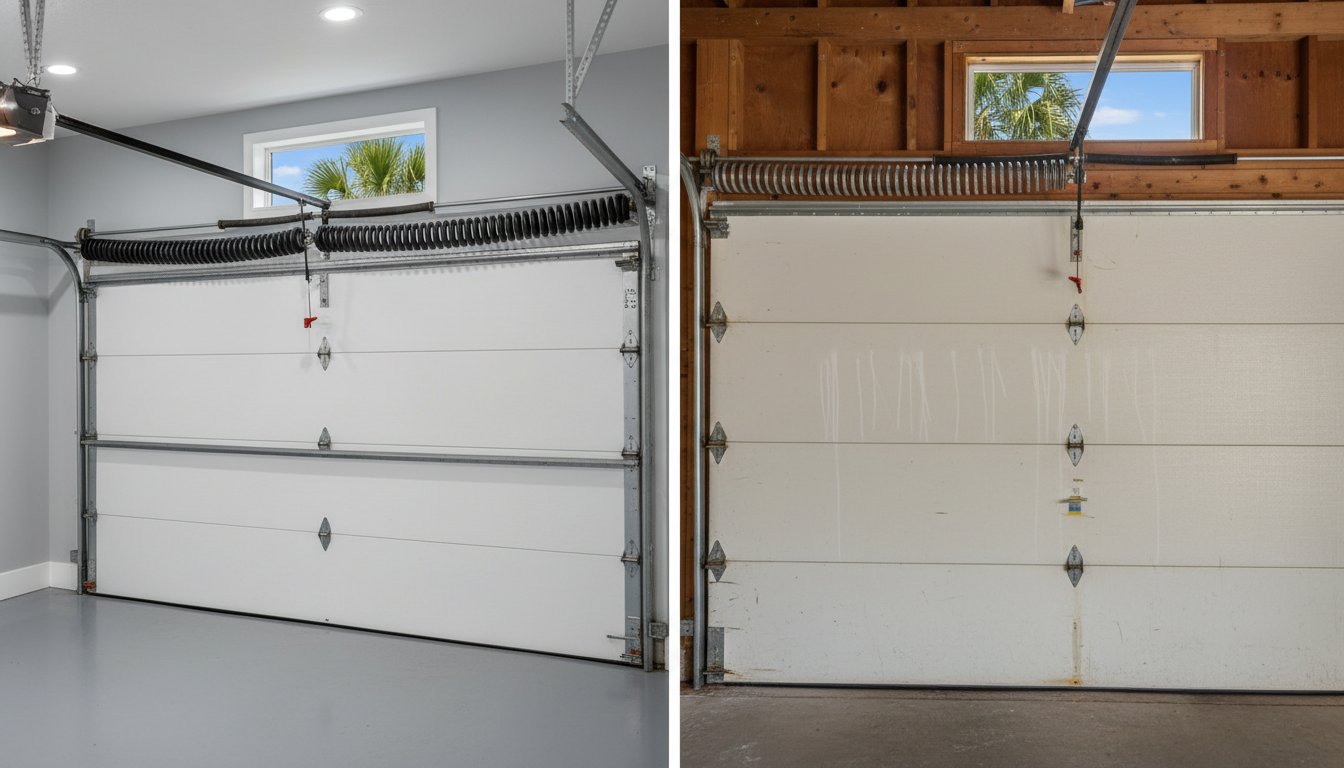
Identifying which system you have is straightforward. If you see long, thin springs running alongside the upper tracks, you have an extension system. These are side-mounted and often look cluttered due to the extra pulleys involved. If you see one or two thick coils wrapped around a bar above the door, that's a torsion system. The header-mounted configuration of torsion springs is cleaner and takes up less space near the tracks. Choosing between torsion vs extension springs often depends on the available headroom in your garage and your goals for long-term durability.
What Are Extension Springs?
You'll find extension springs mounted above the horizontal tracks on the left and right sides of your garage. These springs function like a heavy-duty version of a slinky. They expand as the door descends and contract to help pull it back up. Because they move independently, they can sometimes cause the door to lift unevenly if one spring wears out faster than the other. This system usually includes a set of pulleys and safety cables. These cables are vital because they catch the spring if it snaps under tension, preventing it from flying across the room and causing damage.
What Are Torsion Springs?
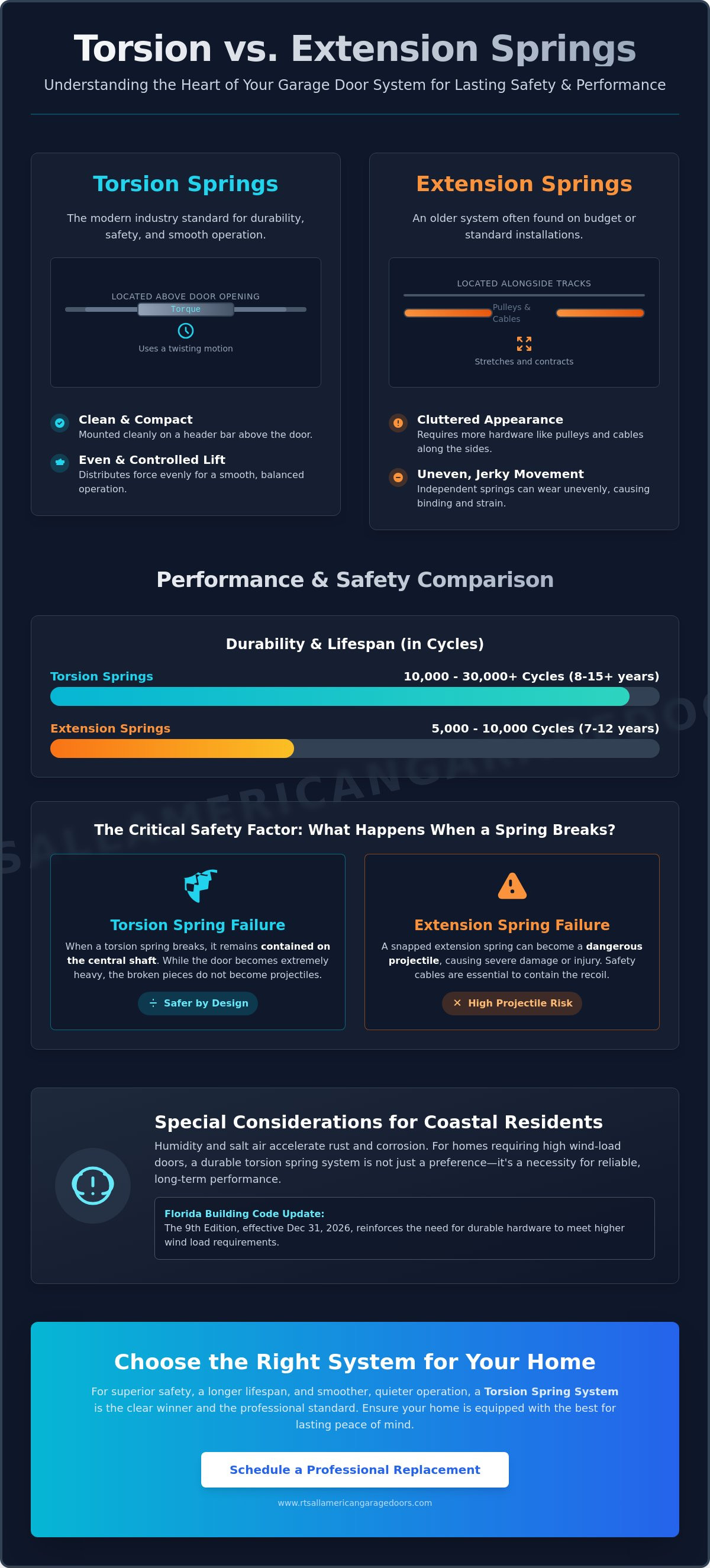
Torsion springs are the modern industry standard for safety and durability. They sit on a solid metal bar, called a shaft, located on the header directly above the garage door opening. Instead of stretching, they use a twisting motion to apply torque. This design allows for a much smoother operation because the force is distributed evenly across the entire shaft. The system consists of the spring itself, the center bearing, the shaft, and drums at each end. Heavy-duty cables wrap around these drums to lift the door. Because the spring stays on the bar even if it breaks, it's generally considered a safer option for busy households.
Torsion vs Extension Springs: A Detailed Performance Comparison
Choosing between torsion vs extension springs isn't just a matter of mechanics. It's about how long your system lasts before requiring another repair. Performance varies significantly between these two types, affecting everything from how quiet your garage is to how often you need a technician at your home. While extension springs are often found on older or budget-friendly installations, torsion systems are engineered for superior control and a longer service life.
Durability and Longevity
In the garage door industry, we measure a spring's life in "cycles." One cycle equals the door opening and closing exactly once. Standard extension springs are typically rated for 5,000 to 10,000 cycles. For a family using the garage four times a day, that might only last 7 to 12 years. Torsion springs offer a much higher standard of durability. They are generally rated for 10,000 to 30,000 cycles, providing 8 to 15 years of reliable use. If you want even more value, high-cycle torsion springs are available that are rated for 20,000 or more cycles. Because torsion springs distribute weight across a central shaft, they maintain their tension longer without the sagging common in stretched extension coils.
Balance and Operational Control
A properly balanced door should stay in place when opened halfway. Torsion springs achieve this balance with precision because they apply torque evenly through the drums and cables. This creates a steady, controlled lift. Extension springs operate independently on each side of the door. Over time, one spring may lose tension faster than the other. This often leads to a lopsided opening that forces the door to bind in the tracks. This jerky movement doesn't just sound bad; it puts unnecessary strain on your LiftMaster opener's motor and gear assembly. If your door feels heavy or moves unevenly, it may be time to consider a torsion spring replacement to restore smooth operation.
Space and maintenance also play a role in your decision. Extension springs require more hardware, including pulleys and extra cables, which increases the number of moving parts that can wear out. Torsion systems are more compact but require enough headroom above the door for the shaft. Regardless of the type you choose, regular lubrication is mandatory to prevent rust and friction. In coastal environments, salt air can quickly degrade metal components, making high-quality hardware a necessity rather than an upgrade. Understanding the differences in torsion vs extension springs helps you choose the system that best matches your home's needs and your expectations for safety.
The Safety Factor: Why Torsion Systems Win
Safety is the most critical factor when evaluating torsion vs extension springs. Both systems manage a massive amount of potential energy to lift doors weighing up to 400 pounds. However, the way they handle a mechanical failure is completely different. One system is designed to contain its energy, while the other can become a serious hazard to your vehicles and family if it snaps. Understanding these risks helps you choose a system that prioritizes long-term security over a lower initial price tag.
The Danger of Snapped Extension Springs
Extension springs store energy by physically stretching along the horizontal tracks. This creates a high-tension "slingshot" effect. If an extension spring breaks while the door is moving, that stored energy is released instantly. Without a properly installed safety cable, the metal spring can fly across the garage with enough force to pierce drywall or shatter a car windshield. You can read more about these hazards in our detailed look at Is a Broken Garage Spring Dangerous? The Truth About Spring Safety. Safety cables are the only thing standing between a broken spring and a dangerous projectile, but these cables can also rust or fray over time, especially in our humid Gulf Coast climate.
Torsion Spring Safety Mechanisms
Torsion springs offer a much higher level of protection because they are mounted on a solid metal shaft. When a torsion spring reaches the end of its life and breaks, it stays on that bar. You will hear a loud, startling noise, but the spring itself won't fly anywhere. This containment makes the failure predictable and much safer for anyone nearby. The door will simply feel incredibly heavy or refuse to open, signaling that it's time for a professional repair. Because the energy is kept on the header, the risk of property damage or personal injury is significantly lower compared to extension systems.
Managing this much tension requires specialized tools and technical expertise. We never recommend that homeowners attempt to adjust or replace these components themselves. The risk of a winding bar slipping or a cable snapping is too high for a DIY project. Professional installation ensures that the springs are wound to the correct tension for your specific door weight, which prevents premature wear on your LiftMaster opener. When you choose a torsion system, you're investing in a fail-safe design that keeps your garage a safe environment for your family and vehicles. Integrity in your garage door system starts with choosing the safest hardware available, and in the debate of torsion vs extension springs, torsion is the clear winner for safety-conscious homeowners.
Gulf Coast Considerations: High Winds and Salt Air
Living along the Gulf Coast brings unique mechanical challenges that standard garage door guides often overlook. In cities like Mobile and Pensacola, the debate of torsion vs extension springs isn't just about cycle life; it's about surviving the elements. High humidity and salt air act as catalysts for corrosion, turning a small amount of surface rust into a structural failure faster than in inland regions. Choosing the right hardware is a matter of home security and long-term value.
Springs for Hurricane-Rated Doors
Coastal homeowners must ensure their systems meet specific wind-load requirements. The 9th Edition of the Florida Building Code, scheduled to take effect on December 31, 2026, adopts ASCE 7-22 wind load calculations. These updates mean garage doors in our area must be engineered to withstand higher design pressures. Reinforced hurricane-rated doors are significantly heavier than standard models because of their heavy-duty internal bracing. Extension springs often struggle to safely counterbalance this extra weight, which leads to premature wear and jerky movement. Torsion springs provide the robust lifting power required to handle these reinforced steel doors safely. For a deeper dive into these requirements, see our Hurricane Proof Garage Door Installation: The 2026 Homeowner’s Buying Guide.
Combating Salt Air Corrosion
Salt air is a constant factor for homes in Gulf Breeze and Pensacola Beach. It accelerates metal fatigue, making standard extension springs brittle and prone to snapping. While some homeowners consider galvanized springs for their silver appearance, these can actually lose tension faster due to the coating process. We typically recommend oil-tempered, high-cycle torsion springs for coastal environments. These springs are treated to resist oxidation and maintain their structural integrity through thousands of cycles. Even with high-quality hardware, regular maintenance is vital. You can learn How to Lubricate Garage Door Springs Properly to protect your investment from the salty breeze.
Integrity and transparency are our core values. We know that living near the water shouldn't mean paying more for essential safety repairs. That's why we maintain standardized pricing for all local residents. We don't believe in "coastal surcharges" or hidden fees just because you live near the water. Whether you need a simple adjustment or a full torsion vs extension springs conversion, you'll receive the same honest rates we provide to every neighbor in Baldwin County. We take pride in our craft and treat every residential system with the highest level of care.
Don't wait for a storm to find out if your springs are up to the task. If you notice rust or hear grinding noises, it's time for an expert evaluation. Contact us today for a professional torsion spring replacement to ensure your home is ready for whatever the Gulf Coast throws your way.
Professional Spring Replacement: The RTS All American Standard
Replacing garage door springs is a task that requires precision and a deep understanding of mechanical tension. With over 15 years of experience serving Baldwin County, we've handled thousands of service calls involving both systems. Whether you're dealing with a snapped wire or deciding between torsion vs extension springs for a new installation, our team prioritizes your home's safety and long-term value. We use only high-quality components designed to withstand the unique demands of the Gulf Coast environment, ensuring your repair lasts through years of daily use.
The Conversion Process: Upgrading to Torsion
Many homeowners choose to move away from older extension systems to gain the safety and balance benefits of torsion hardware. This conversion is a structured process that starts with a thorough assessment of your door's weight and available headroom. We ensure the new assembly is perfectly matched to your specific door model to prevent unnecessary wear on your opener.
- Step 1: We calculate the door's exact weight to select the correct spring wire gauge and length for a perfect counterbalance.
- Step 2: Our technicians install the new galvanized shaft, cable drums, and the torsion spring assembly onto the header above the door.
- Step 3: We perform precision balancing, adjusting the spring tension until the door stays in place at any height and can be lifted easily with one hand.
Why Local Homeowners Trust RTS
Integrity is at the heart of everything we do. When you call us, you won't talk to a distant call center. You'll speak with live, local technicians who understand the specific needs of Pensacola and Mobile residents. We have extensive expertise in servicing Wayne Dalton classic steel doors and pairing them with high-performance LiftMaster belt or chain drive openers. This specialized knowledge ensures that your torsion vs extension springs choice is backed by hardware that fits your door's engineering perfectly.
Our "All American Standard" means you never have to worry about hidden surcharges or vague estimates. We provide standardized rates for our labor and parts, serving as a verbal handshake with every customer. This transparency builds the trust that has defined our reputation in the community for over a decade. We treat every residential system with the same care we'd give our own homes. Every step we take is intentional, leading toward a quiet, smooth-operating door that protects your family and vehicles for years to come.
Secure Your Home with the Right Spring System
Choosing between torsion vs extension springs is a decision that impacts your home's safety and your daily peace of mind. While extension springs are a common sight on older systems, the superior balance and containment of torsion springs make them the clear choice for modern homeowners. This is especially true as we approach the December 31, 2026, effective date for the 9th Edition of the Florida Building Code. The heavy-duty lifting power of a torsion system is essential for the reinforced, hurricane-rated doors required in our coastal environment.
We bring over 15 years of local experience to every driveway in Mobile and Pensacola. Our team believes in total transparency, which is why we provide standardized pricing with no hidden fees on every service call. If you're currently facing a heavy door or a snapped spring, our emergency service is ready to restore your system's integrity quickly and safely. We take pride in our craft and treat every residential system with the highest level of care.
Schedule your expert garage door spring repair with RTS All American today!
You deserve a garage door that operates quietly and reliably every time you press the button. Let's make sure your home is equipped for the years ahead.
Frequently Asked Questions
Which is cheaper: torsion or extension springs?
Extension springs are generally less expensive to install during the initial setup. They require less complex hardware, which keeps the starting price for materials and labor lower. When comparing torsion vs extension springs over a ten-year period, torsion systems often prove more economical. They last twice as long as extension models and reduce the need for frequent service calls to replace worn-out pulleys and safety cables.
Can I replace my own garage door springs?
You shouldn't attempt to replace garage door springs yourself. These components store an immense amount of energy required to lift doors that weigh up to 400 pounds. One mistake with a winding bar or a loose bolt can result in severe injury or property damage. Professional technicians use specialized tools and safety protocols to manage this tension. It's a high-risk task that always requires a trained expert.
How long do torsion springs last compared to extension springs?
Torsion springs typically last between 10,000 and 30,000 cycles, which averages 8 to 15 years for most households. Extension springs have a shorter lifespan of 5,000 to 10,000 cycles, or roughly 7 to 12 years of average use. If you use your garage as the primary entrance to your home, investing in high-cycle torsion springs is a smart move. These are rated for 20,000 or more cycles and provide much better long-term value.
Why is my garage door spring making a loud squeaking noise?
Squeaking is usually a sign of metal-on-metal friction or a lack of proper lubrication. The coils rub together as they wind and unwind, which creates that high-pitched sound. Regularly lubricating your springs with a silicone-based spray can prevent this noise and protect the metal from salt air corrosion. If the noise continues after you've applied lubricant, it's time for a professional to inspect the system for fatigue or misalignment.
Can I convert my extension spring system to a torsion system?
You can convert an extension spring system to a torsion system to improve your door's safety and performance. This upgrade involves removing the side-mounted hardware and installing a new metal shaft, drums, and torsion springs above the door opening. While it requires a higher initial investment, it provides a smoother and more durable operation. This conversion is highly recommended for homeowners installing heavier hurricane-rated doors or high-quality wood models.
What are the signs that my garage door spring is about to break?
A door that feels incredibly heavy when you try to lift it manually is the most common sign of a failing spring. You might also notice your LiftMaster opener straining or hear unusual grinding noises during operation. Visually inspect the springs for any gaps in the coils or heavy rust buildup. If the door hangs unevenly in the tracks, one spring has likely lost its tension and needs to be replaced immediately.
Are torsion springs quieter than extension springs?
Torsion springs are significantly quieter because they operate with a controlled twisting motion on a central shaft. This design eliminates the vibration and rattling common with side-mounted extension springs that stretch along the horizontal tracks. Extension systems also rely on pulleys that can squeal as they age. A torsion system provides a much smoother sound, making it the best choice for garages located near bedrooms or living areas.
How do I know which spring size I need for my door?
Spring size is a precise calculation based on the door's total weight, height, and drum diameter. Using a spring that isn't perfectly matched to your door will leave it unbalanced and can damage your opener's motor. Technicians measure the wire gauge, inside diameter, and total length of the spring to ensure an exact fit. We always recommend a professional measurement to avoid the safety hazards of an improperly balanced garage door.