Imagine the wind howling off the Gulf Coast while you stare at your garage door, wondering if that thin metal will hold or if it's about to become a sail that pulls the roof off your home. It's a heavy thought that keeps many neighbors up at night during hurricane season. You know your home is only as strong as its weakest opening, and for most houses, that is the garage. While the ideal solution is a full set of hurricane rated garage doors Mobile AL homeowners often need a reliable way to retrofit their current setup before the next storm hits.
We understand the stress of navigating local wind-load ratings and the fear of making a DIY mistake that snaps a torsion spring. Safety is the bottom line. This guide provides a clear, step-by-step path to installing garage door storm braces correctly. You'll learn how to secure your door against 2026 standards, protect your property value, and potentially lower your insurance premiums by up to 45 percent. We'll cover everything from hardware alignment to weight distribution so you can face the next weather map with professional confidence.
Key Takeaways
- Understand why reinforcing your garage door is the most effective way to prevent catastrophic roof lift-off and structural failure during a Gulf Coast storm.
- Learn how to inspect your tracks and header to decide if a retrofit kit or a full upgrade to hurricane rated garage doors Mobile AL is your best move.
- Master the step-by-step installation process, including the specific tools and safety protocols needed to anchor braces into wood or concrete.
- Compare the financial savings of manual storm braces against the convenience and superior impact protection of a permanent wind-rated door system.
- Discover how a professional pre-season tune-up verifies your door's integrity and helps you secure potential insurance premium reductions.
Why Garage Door Storm Brace Installation is Critical for Mobile and Baldwin County
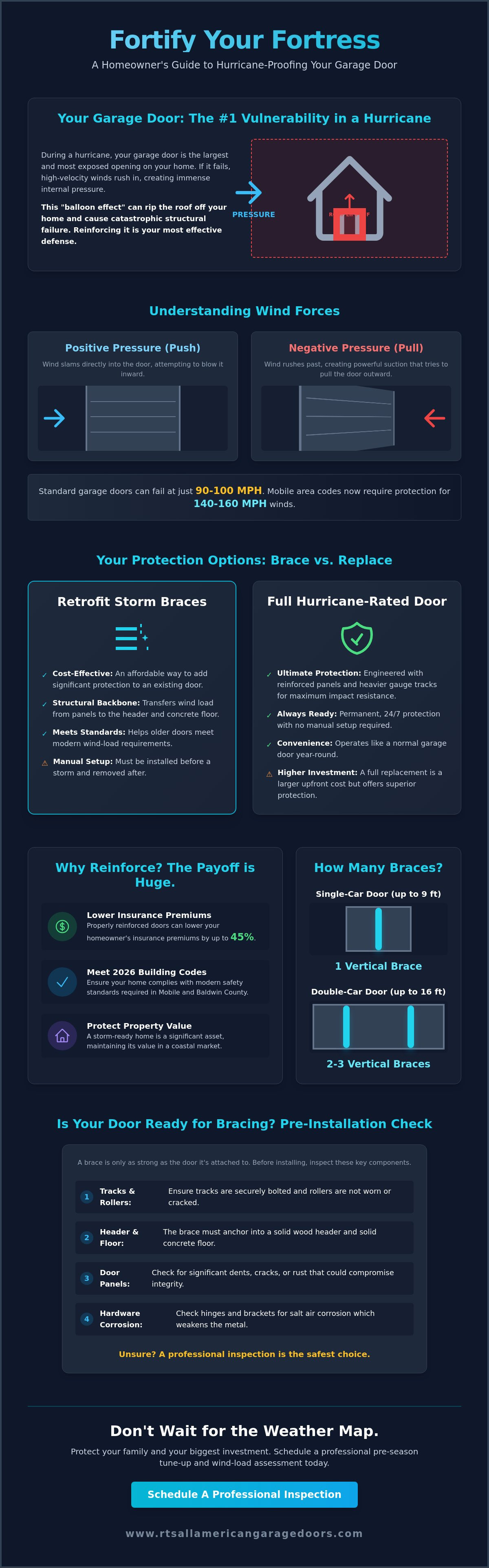
The garage door is usually the largest opening in your home's exterior. Because of its massive surface area, it faces the most intense forces during a storm. If this door fails, it isn't just a matter of replacing a few panels. A collapsed door allows wind to rush into the garage, creating a surge of internal pressure. This pressure acts like a balloon inflating inside your house, pushing upward on the roof and outward on the walls. This phenomenon is responsible for a large percentage of catastrophic home failures during Gulf Coast hurricanes.
While many residents invest in hurricane rated garage doors Mobile AL to prevent this, others rely on retrofit bracing systems. These vertical braces act as a structural backbone. They transfer the immense wind load from the flexible door panels directly into the concrete floor and the heavy wooden header above the door. Understanding different garage door types and construction is vital here, as the effectiveness of a brace depends on how well it integrates with your specific door model. Statistical data from recent seasons shows that homes with reinforced garage openings are significantly more likely to remain structurally intact after a major landfalling storm.
The Science of Wind Pressure on Garage Panels
Wind doesn't just push on your door. It also pulls. Positive pressure occurs when wind hits the door directly, trying to blow it into the garage. Negative pressure, or suction, happens as wind rushes past the house, attempting to pull the door out of its tracks. Without reinforcement, standard residential doors often buckle or detach when wind speeds reach 90 to 100 mph. A storm brace prevents this by locking the door in place, ensuring it resists both the push and the pull of the storm.
2026 Local Building Codes and Wind Zones
In 2026, local building codes for the Mobile area have become more stringent to reflect the reality of coastal weather. Most zones now require openings to withstand wind speeds of 140 to 160 mph. For homeowners with older doors that don't meet these specs, a storm brace is a practical way to add a layer of protection. This is especially critical for coastal properties in Gulf Breeze and Pensacola Beach, where salt air can weaken standard hardware over time. Choosing hurricane rated garage doors Mobile AL or a certified bracing system ensures your home meets these modern safety expectations.
Evaluating Your Door: Is a Storm Brace Right for You?
A storm brace is a powerful tool, but it isn't a universal fix for every garage. Before you commit to a retrofit, you need to verify that your door's "bones" are strong enough to handle the stress. A brace works by transferring wind pressure to your home's structure. If your tracks are loose, your rollers are worn, or your mounting surfaces are soft, that pressure will simply tear the hardware out of the wall. We recommend a thorough inspection of your door's current state to ensure a brace is a viable safety measure rather than a false sense of security.
Determining how many braces you need depends on the width of your door and your specific wind zone. For a standard single-car door up to 9 feet wide, one vertical brace is usually sufficient. Double-car doors that reach 16 feet wide typically require two or three braces to meet safety standards. If you are unsure about your door's integrity, scheduling a professional inspection can clarify whether a retrofit is safe or if you should move toward a full hurricane proof garage door installation.
Identifying Your Current Wind Load Rating
Start by looking for the manufacturer label on the inside edge of your door panels. This sticker provides the design pressure ratings. You can compare these numbers against the latest industry wind load standards for garage doors to see how far your current setup falls short. If you live in coastal Baldwin County, check your hinges and tracks for salt air corrosion. Rusty hardware is brittle and will likely snap under the high-velocity winds common to our area, making even the best brace ineffective.
Header and Floor Requirements for Bracing
For a brace to work, it must anchor into solid material. Your garage needs a structural wood header above the door that is at least 2x6 inches. If you have a finished ceiling that covers the header, you'll need to cut a small access point or install a mounting plate. On the bottom, the anchor bolt must set into at least 4 inches of solid concrete. If your garage floor is thin or cracked near the door, the anchor won't hold when the wind starts pulling. These technical details are why many neighbors eventually choose hurricane rated garage doors Mobile AL, as they provide built-in protection without the need for manual setup or floor anchors.
Step-by-Step Guide to Garage Door Storm Brace Installation
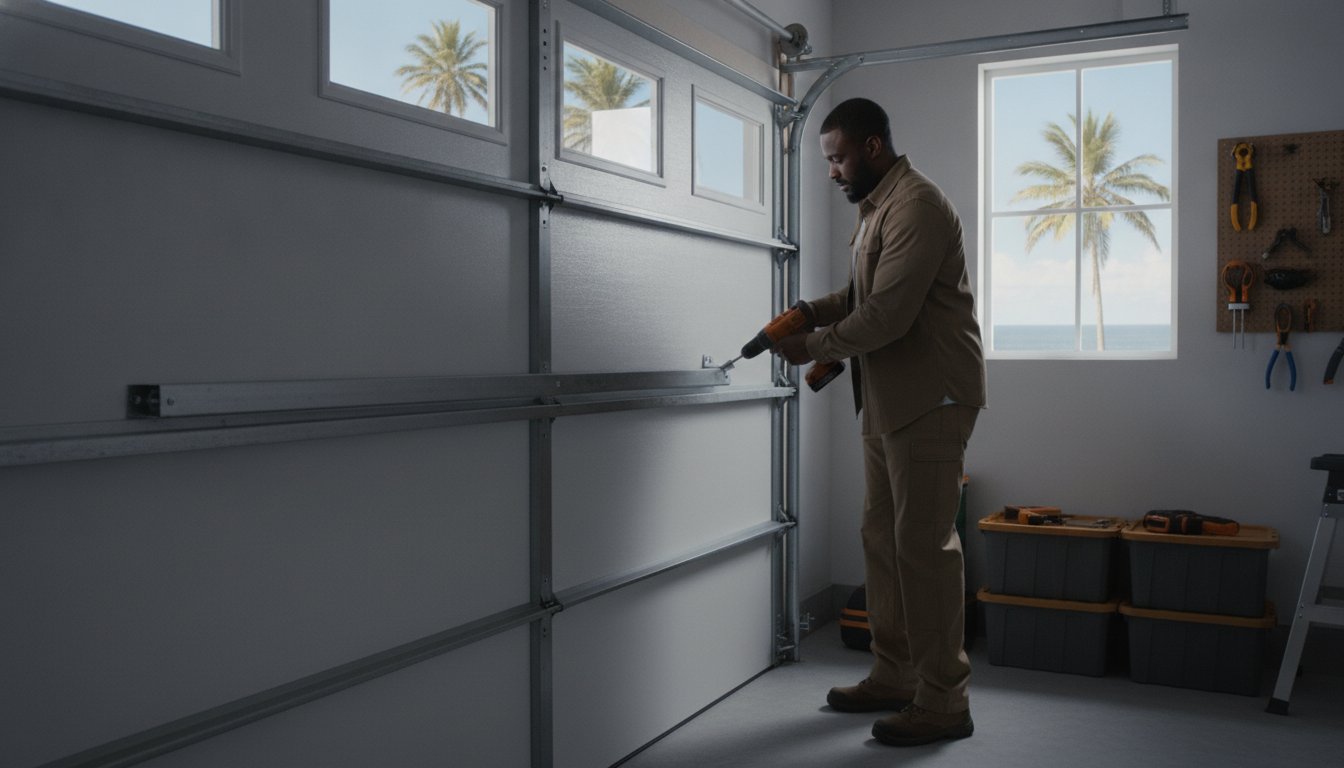
Installing a storm brace is a disciplined task that requires precision to ensure your home remains secure. Before you start, gather the necessary tools. You'll need a hammer drill for the concrete floor, high-quality masonry bits, a level to check for plumb, and a socket set for securing the lag bolts. Safety is the first step in any technical job. Begin by disconnecting your LiftMaster garage door opener from the power source and the door's carriage. This prevents the motor from engaging while you're working and ensures the door stays firmly on the ground.
One critical detail many DIY guides miss is the impact of weight on your door's mechanics. While storm braces are typically removable, any permanent mounting hardware or additional U-bars added to the panels will change the door's balance. If you find the door is difficult to lift manually after installation, your torsion springs likely need a professional adjustment. Operating an unbalanced door can lead to premature failure of your opener's drive gear. For many, the complexity of maintaining this balance is a reason to upgrade to fully engineered hurricane rated garage doors Mobile AL homeowners trust for hands-off protection.
Follow these three primary steps for a successful retrofit:
- Step 1: Measuring and Marking. Locate the vertical center of your door panels. Use a level to mark a perfectly straight line from the header down to the floor. This ensures the brace sits exactly where it can support the most pressure.
- Step 2: Hardware Installation. Mount the top bracket into the structural wood header above the door. Next, prepare the floor for the bottom anchor.
- Step 3: Fitting and Adjustment. Place the brace into the brackets. Adjust the height and tensioning feet until the brace is snug against the door panels without forcing them outward.
Securing the Floor Anchor Correctly
Drilling into a concrete slab requires patience. Use your hammer drill to create the anchor hole, but stay at least six inches away from the edge of the concrete to prevent the slab from cracking under pressure. The anchor must be installed flush with the floor so it doesn't damage your tires when the brace is in storage. Use a blow-out bulb or shop vac to clear every bit of dust and debris from the hole to ensure a permanent bond for the anchor sleeve.
Aligning the Top Bracket and Tensioning
Load distribution only works if the brace is perfectly plumb. Use your level on the front and side of the brace to verify it is vertical. Once aligned, tighten the tensioning hardware. You want to remove all "play" or rattling between the brace and the door. A properly tensioned brace should feel like a solid structural pillar. Firmly shake the brace to test the fit; it should remain silent and immobile, providing the rigid support needed to withstand high-velocity winds.
Bracing vs. Full Replacement: Making the Right Choice for 2026
Choosing between a retrofit kit and a full replacement is a decision that balances your immediate budget with your need for long-term security. A storm brace is a reactive tool. You have to be physically present to install it every time a tropical warning is issued. If you are out of town or simply unable to lift the heavy steel bars when a storm shifts path, your garage remains vulnerable. In contrast, Wayne Dalton classic steel doors are engineered with internal reinforcement. They provide 24/7 protection without any manual labor. You don't have to worry about finding your tools or clearing out the garage floor anchors while the wind is already picking up.
Impact ratings are another major differentiator. While braces help with wind pressure, they don't offer true impact resistance. According to the Mobile building code updated on December 17, 2024, doors in high-wind zones must often meet strict impact standards to stop flying debris from breaching the home. A brace might keep the door in the tracks, but a large piece of debris can still punch through a non-rated panel. Investing in hurricane rated garage doors Mobile AL homeowners trust ensures you meet the "Large Missile D" testing standards required for modern coastal safety.
Insurance and ROI Considerations
Most insurers in the Gulf Coast market offer significant credits for professional opening protection. To qualify for the maximum credit, which can range from 30 to 45 percent of your wind premium, every opening in the home must be protected. You can read more about hurricane garage door home insurance discounts to see if your current setup qualifies for these savings. Beyond monthly premiums, consider the resale market. In 2026, a reinforced door is a major selling point in Mobile and Pensacola. You can see how a new garage door increases home value by looking at recent local real estate trends where storm readiness is a top priority for buyers.
Durability in Salt Air Environments
Coastal living is tough on metal components. While many brace kits use aluminum, the hardware on a full hurricane-rated system often features heavy-duty galvanized or powder-coated steel. If you live within five miles of the coast, check out our guide on the best garage doors for salt air to find materials that won't pit or rust. Keeping your storm hardware rust-free requires regular cleaning and lubrication, but a permanent door system usually requires less frequent maintenance than a removable brace that sits in a damp garage corner. Request a quote today to compare the long-term benefits of a new installation versus a retrofit for your specific home.
Professional Storm Prep: Ensuring Your Garage Door is Hurricane-Ready
Setting up a storm brace is a significant step toward safety, but the job isn't finished until you verify the entire system is functional. A professional garage door tune-up service in Mobile, AL is the best way to identify hidden mechanical weaknesses before the first tropical warning of the season. Our technicians inspect every component, from the integrity of the hinges to the torque of the mounting bolts. RTS All American Garage Doors also assists homeowners by verifying wind-load compliance, providing the documentation often required to secure those critical insurance premium reductions.
Precision is mandatory for floor and header anchoring. If an anchor is set into a weak part of the concrete or a bracket misses the structural center of the header, the brace will fail under the immense pressure of a storm. Professional installation ensures that these points are tested for maximum load-bearing capacity. After you remove the brace following a storm, always perform a final safety check. The door should operate smoothly without any new noises or resistance. If you've upgraded to hurricane rated garage doors Mobile AL homeowners trust, this routine maintenance ensures the engineered reinforcement stays ready for the next 20 years of Gulf Coast weather.
Spring Tension and Weight Distribution
Never adjust garage door springs yourself. These parts are under extreme tension and can be lethal if handled incorrectly. When you add reinforcement hardware or permanent mounting plates, you change the door's weight. RTS All American Garage Doors technicians recalibrate the torsion system to ensure the door remains perfectly balanced. An imbalanced door forces your LiftMaster opener motor to work twice as hard, which leads to stripped drive gears and premature motor failure. We make sure the system is light enough for the motor to handle easily while remaining strong enough to withstand the wind.
Schedule Your 2026 Storm Prep Inspection
RTS All American Garage Doors is a hardworking team of local experts dedicated to community safety. During a hurricane readiness consultation, we provide a transparent, no-nonsense evaluation of your current door's integrity. We serve neighbors across Pensacola and Baldwin County with the punctuality and honesty you expect from a local professional. Don't wait for a storm to enter the Gulf before checking your equipment. Contact us today to schedule your 2026 inspection and ensure your home is fully protected against the next major landfalling hurricane.
Protect Your Home with Professional Storm Readiness
Securing your garage isn't just about following a manual; it's about protecting your largest investment. You now know that a successful retrofit requires more than just a brace. It demands a solid structural foundation and a perfectly balanced torsion system to prevent opener failure. While a storm brace is a reliable last line of defense, many homeowners find that permanent hurricane rated garage doors Mobile AL offer the best long-term peace of mind and the highest insurance savings. Ensuring your door is correctly anchored and balanced is the only way to truly rest easy when a tropical system enters the Gulf.
Don't leave your safety to chance this season. Our team has provided local, family-owned expertise for over 15 years. We offer standardized, transparent pricing with no hidden surcharges, so you always know the bottom line before work begins. Our live, local technicians are ready to serve neighbors in Mobile and Pensacola with disciplined, honest service. Get a Professional Hurricane Readiness Inspection from RTS All American Garage Doors and ensure your home is prepared for whatever the weather brings. You've worked hard for your home, and we're here to help you keep it safe.
Frequently Asked Questions
Can I open my garage door while the storm brace is installed?
No, you must never attempt to operate your garage door while the braces are in place. These bars lock the panels directly to your home's header and floor. Engaging your automatic opener while they are attached will likely strip the drive gears in your motor or buckle the door panels. Always remove the pins and bars completely before you try to lift the door.
How many storm braces do I need for a double-car garage door?
A standard 16-foot double-car garage door typically requires two or three storm braces to meet safety standards. The exact number depends on the specific wind speed rating you are trying to achieve for your property. For homeowners looking for hurricane rated garage doors Mobile AL residents trust, a permanent reinforced system is often a more convenient alternative to this manual setup.
Are garage door storm braces required by law in Mobile or Pensacola?
Local building codes in Mobile and Pensacola require wind-load rated openings for all new home construction and additions over 400 square feet. While the law doesn't mandate braces for existing older homes, many insurance providers require them to qualify for wind-mitigation credits. We recommend checking your specific policy to see if a retrofit or a new door is necessary for your coverage.
Will a storm brace prevent my garage door from being dented by flying debris?
A storm brace will not protect your door panels from dents or punctures caused by flying debris. Braces are engineered to stop the door from blowing in or being pulled out by extreme wind pressure. If you want protection against "Large Missile" impacts like tree limbs or roof tiles, you'll need to upgrade to impact-rated hurricane rated garage doors Mobile AL.
How long does it take to deploy the braces once the anchors are installed?
Once the initial brackets and floor anchors are professionally installed, deploying the braces takes about five to ten minutes per unit. You simply slide the vertical bar into the top and bottom brackets and secure the locking pins. It's a straightforward process, but you should practice it at least once before a storm warning is actually issued.
Can I use a storm brace on an old wooden garage door?
We don't recommend using storm braces on old wooden doors. Wood panels can rot or develop hairline cracks over time, which means the mounting screws for the brace hardware won't hold under the intense pressure of a hurricane. If you have an older wood door, a full replacement with a modern steel system is the only safe way to secure your garage.
Do storm braces provide any insulation or energy efficiency benefits?
Storm braces offer zero insulation or energy efficiency benefits for your home. They are strictly structural tools designed for emergency weather events and are removed during normal conditions. If you want to lower your cooling costs during the Alabama summer, you should look into a polyurethane-insulated door model instead of a retrofit bracing kit.
What happens if I lose the hardware or pins for my storm brace system?
You must use the exact manufacturer-specified pins and hardware for your system to remain safe. Substituting generic bolts or pins from a hardware store can cause the brace to fail when it's under load. If you lose your hardware, contact your installer or the manufacturer immediately to order certified replacement parts before the next storm arrives.